
PODCAST
CHI WING LO: THE ARTIST WHO TEACHES US HOW TO LIVE AND ALLOWS US TO SELF REFLECT
LISTEN NOW


A Dialogue with History on the Dragon's Tail
GUI TEMPLE extends beyond a restaurant to a conversation with time, situated on the northernmost end of the Beijing Central Axis - a location historically known as the "Dragon's Tail." The venue occupies the west wing of the historic Hong'en Taoist Temple, a site boasting a continuous history of over 700 years. The temple's past is a timeline in itself, having evolved from a Yuan Dynasty Buddhist temple to a Qing Dynasty Taoist temple, and later, a 1950s factory and a 1990s vegetable market. After careful renovation, the wider complex has become a cultural museum, cementing its status as an essential cultural landmark.
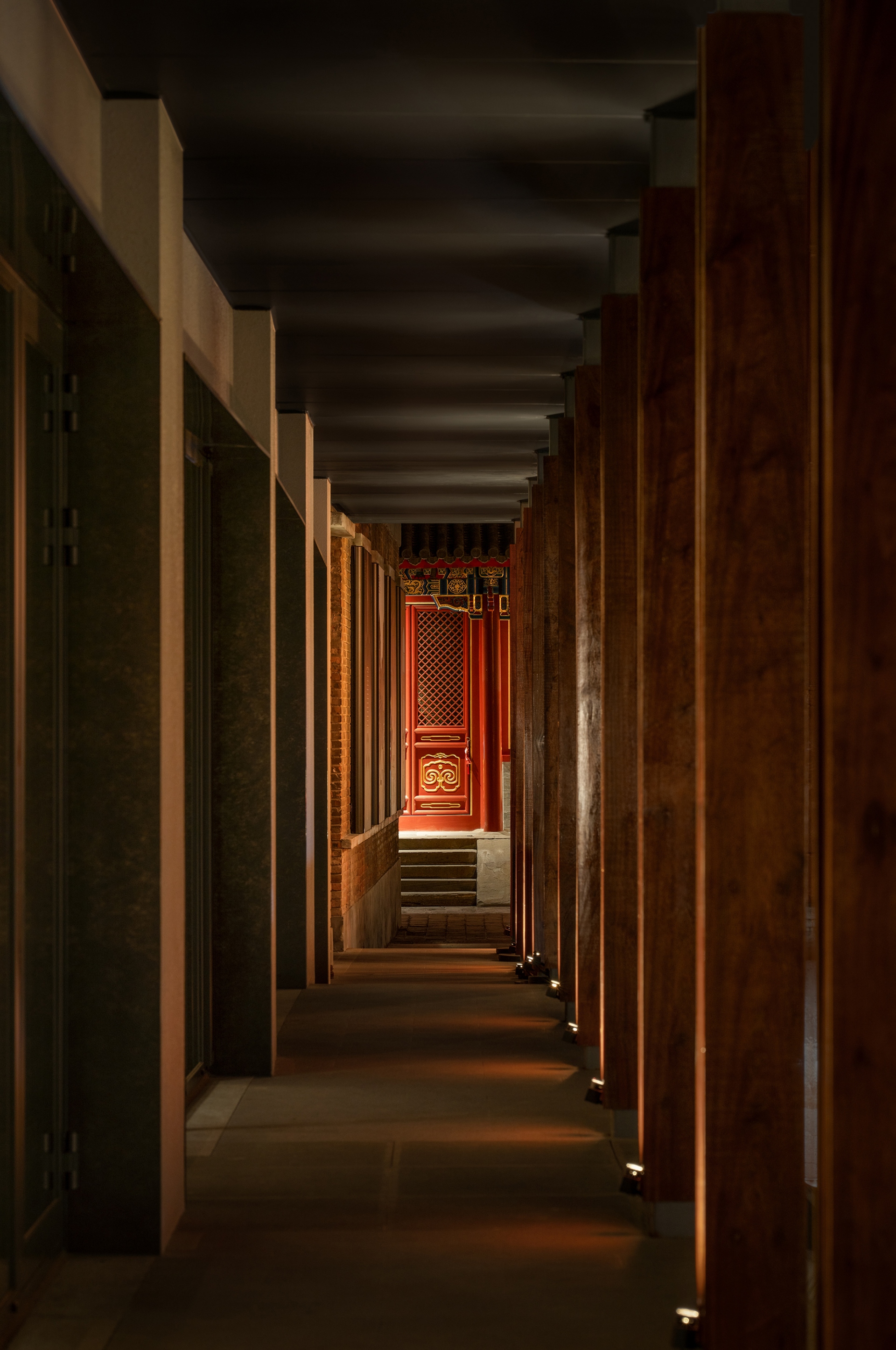
The restaurant's interior is a masterpiece of juxtaposition. The original west wing rooms are literally crossed by the Central Axis, and the design intentionally preserves the stark traces of the industrial era from the 1950s. This rough, honest texture is set against the ancient architectural symbols of red walls and flying eaves visible outside, offering DSC·Design rich inspiration to weave a continuation of historical narratives and modern life elements.
The Order of Neo-Jinghua Aesthetics
DSC·Design embraced "Neo-Jinghua Aesthetics" as the core concept, recalling the ceremonial order and sophisticated spatial aesthetics deeply embedded in Beijing's heritage. The design creates a new chapter of elegant luxury that seamlessly aligns with contemporary lifestyles, meticulously considering every element from color palette and structural form to art furnishings and minute details.
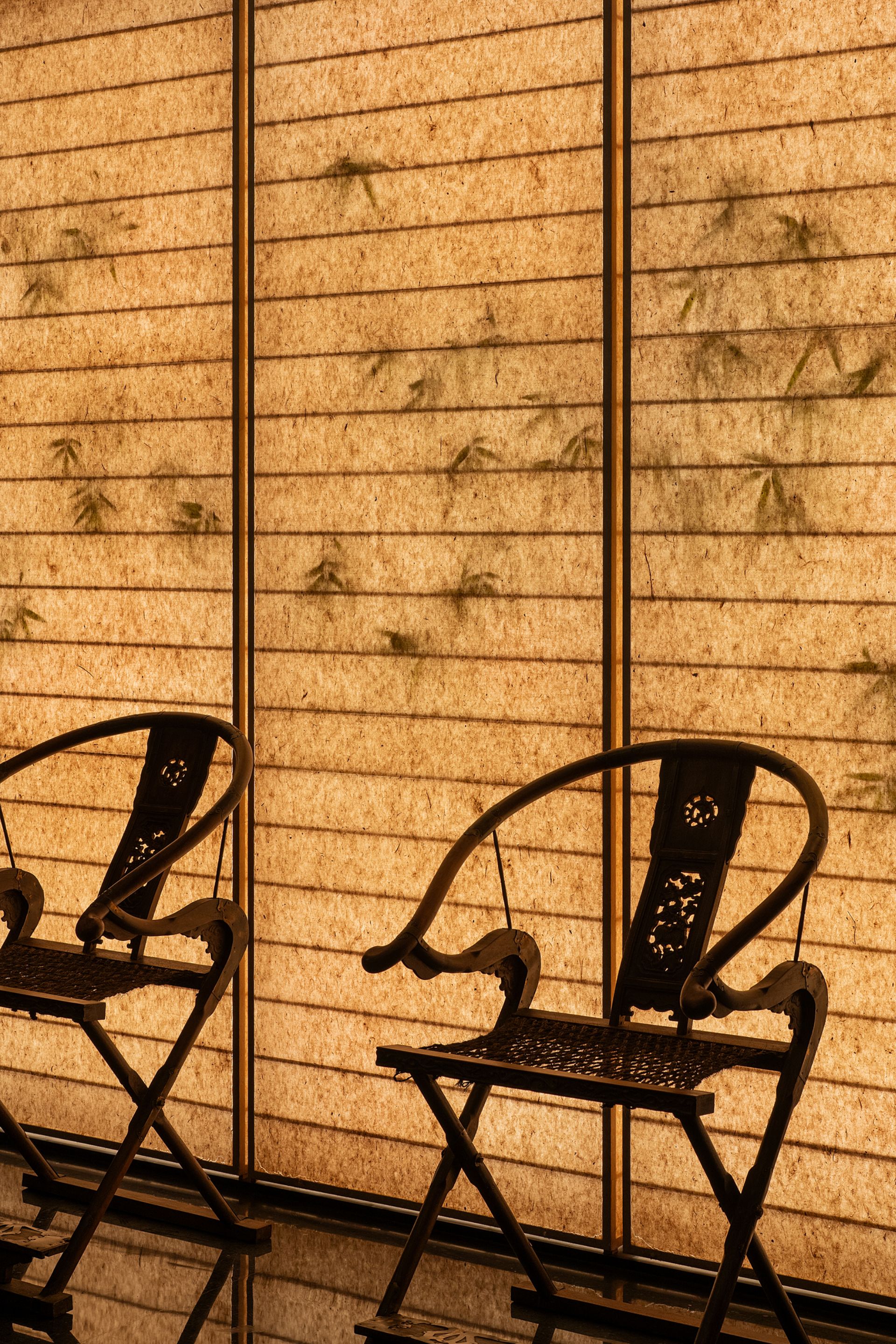

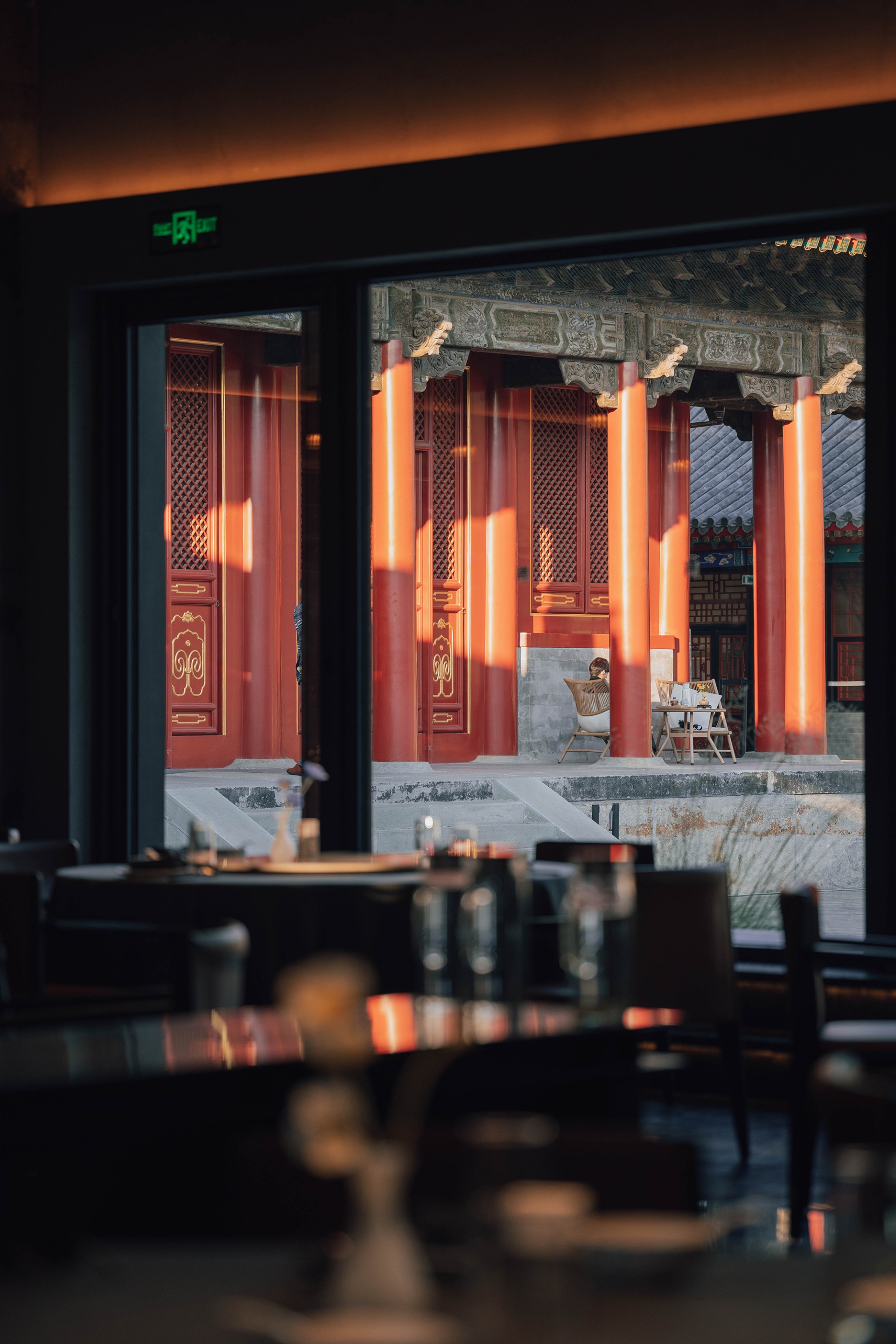
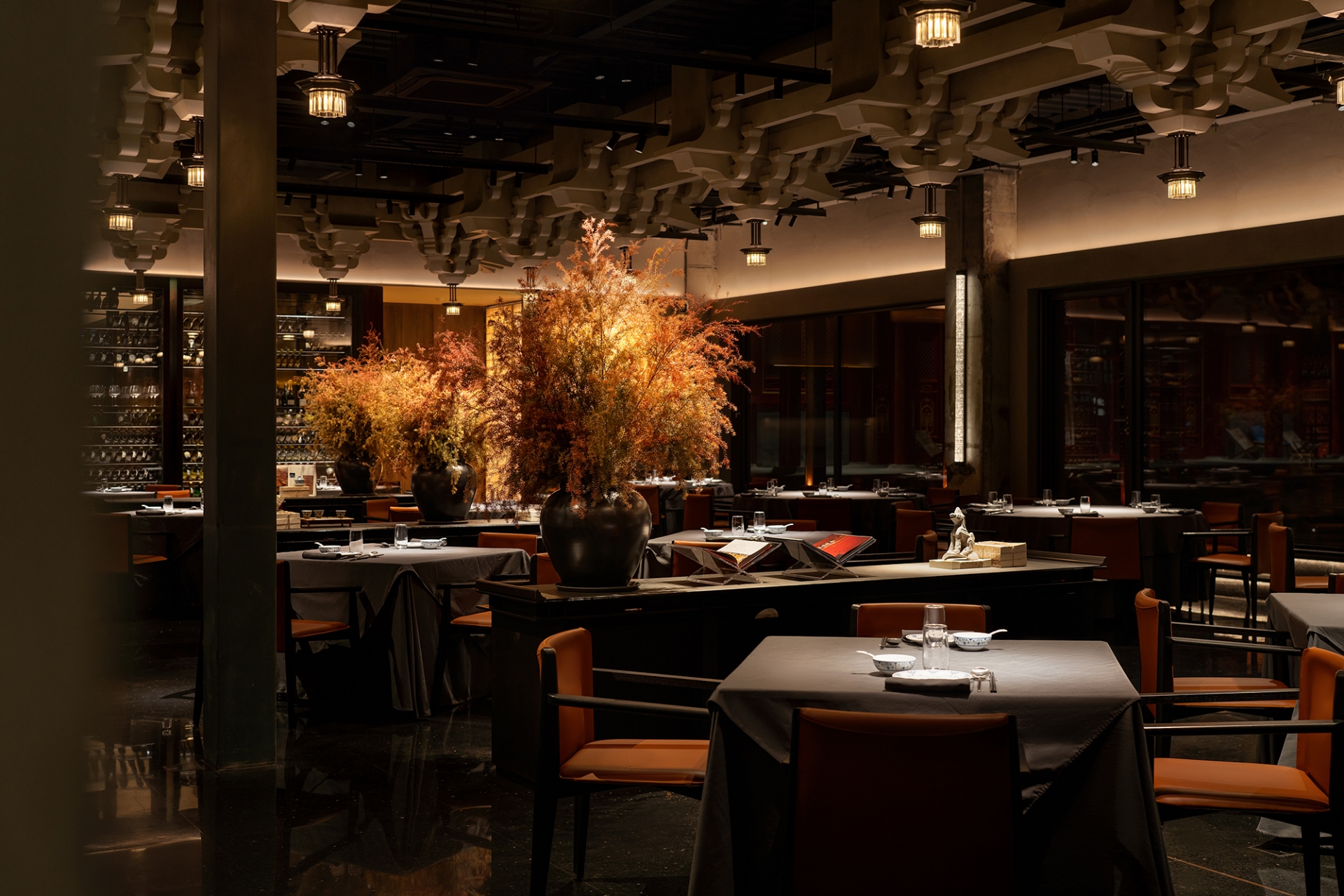
The long, industrial space of the original west wing is reimagined through a dialogue between symmetrical aesthetics and axial lines. This approach creates a series of progressive, ceremonious spaces - from the entrance to the main dining hall and culminating in the private rooms. Symmetrically placed windows, opened orderly in previously closed walls, foster an intimate interaction with the surrounding environment, visually integrating the temple's ancient architecture into the interior design.
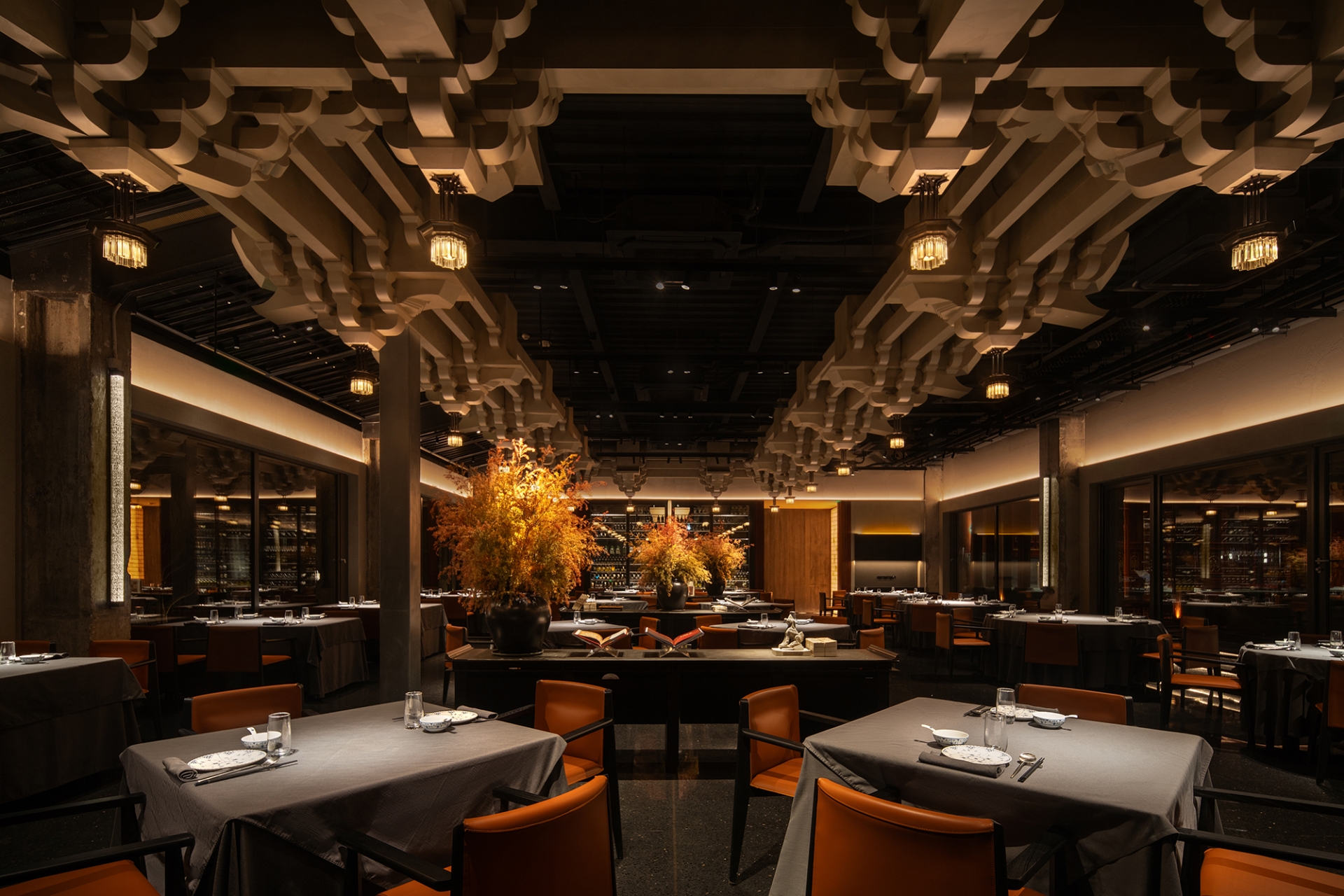
Within the dining hall, the traditional enclosure aesthetics of the Beijing Central Axis are referenced, setting a serene and harmonious tone. A sophisticated integration of old and new is evident in the ceiling: columns left by the old factory are topped with Qing Dynasty-style interlocking brackets, stripped of complex carvings to reveal a simple, modern contour. Integrated lighting subtly illuminates these brackets, creating an atmosphere reminiscent of the ceremonial elegance found in palace lanterns, effectively redefining an ancient architectural style for the modern era.

Journey and Detail
The design ensures the historical journey continues with every step. The corridor transitioning to the private rooms features a floor pattern that incorporates the design of the Beijing Central Axis itself, evoking the famous route from Yongdingmen Gate to the Bell and Drum Towers. This thoughtful spatial sequence creates a powerful sense of time travel for guests.
Attention to detail is paramount, with efforts to harmonize the factory's industrial traces with traditional aesthetic scenes. A subtle yet powerful example is the reimagining of the ancient literati's inkstone as a simple, elegant door handle.
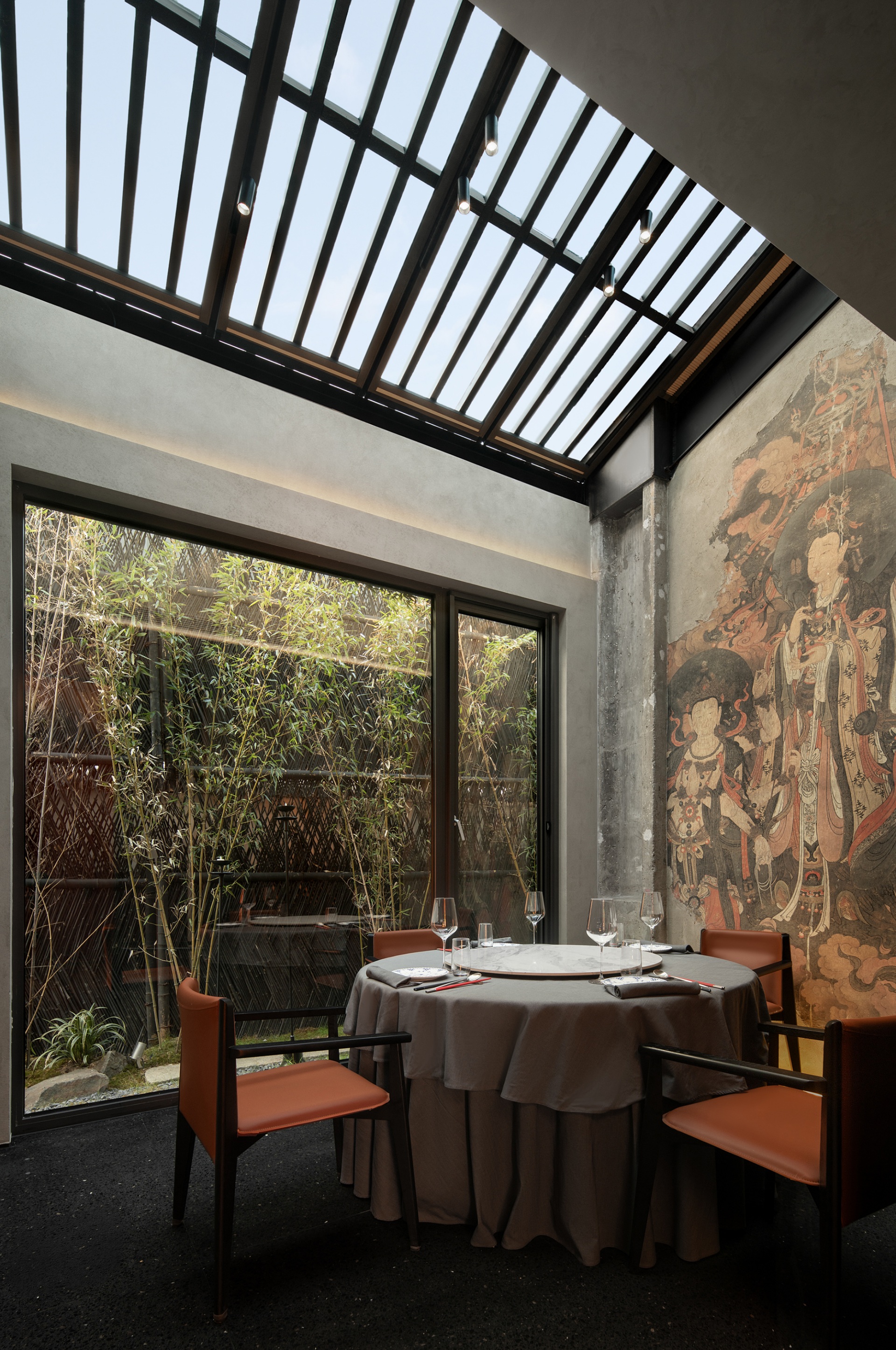
In the private rooms, the design intentionally reproduces the magnificent Ming Dynasty murals, treasures of the local Fahai Temple, acknowledging the historical memory of Hong'en Taoist Temple. Cement slurry is deliberately applied to the murals’ edges, poetically evoking the resurgence of a masterpiece once veiled by the passage of time. The overall material palette emphasizes rustic, natural textures, with red wooden structures blending seamlessly with large areas of cement cladding panels to evoke a tranquil, contemplative atmosphere.
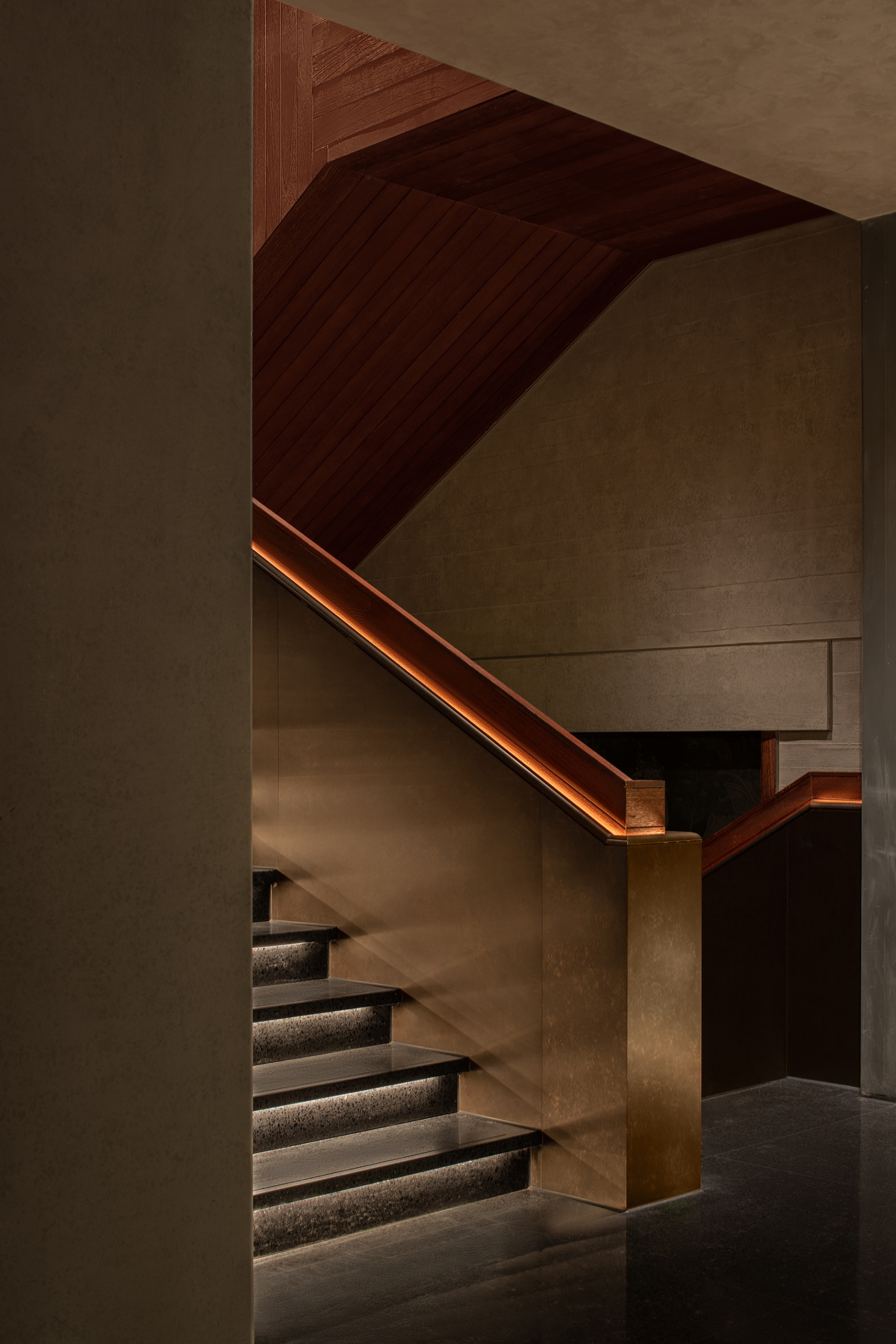
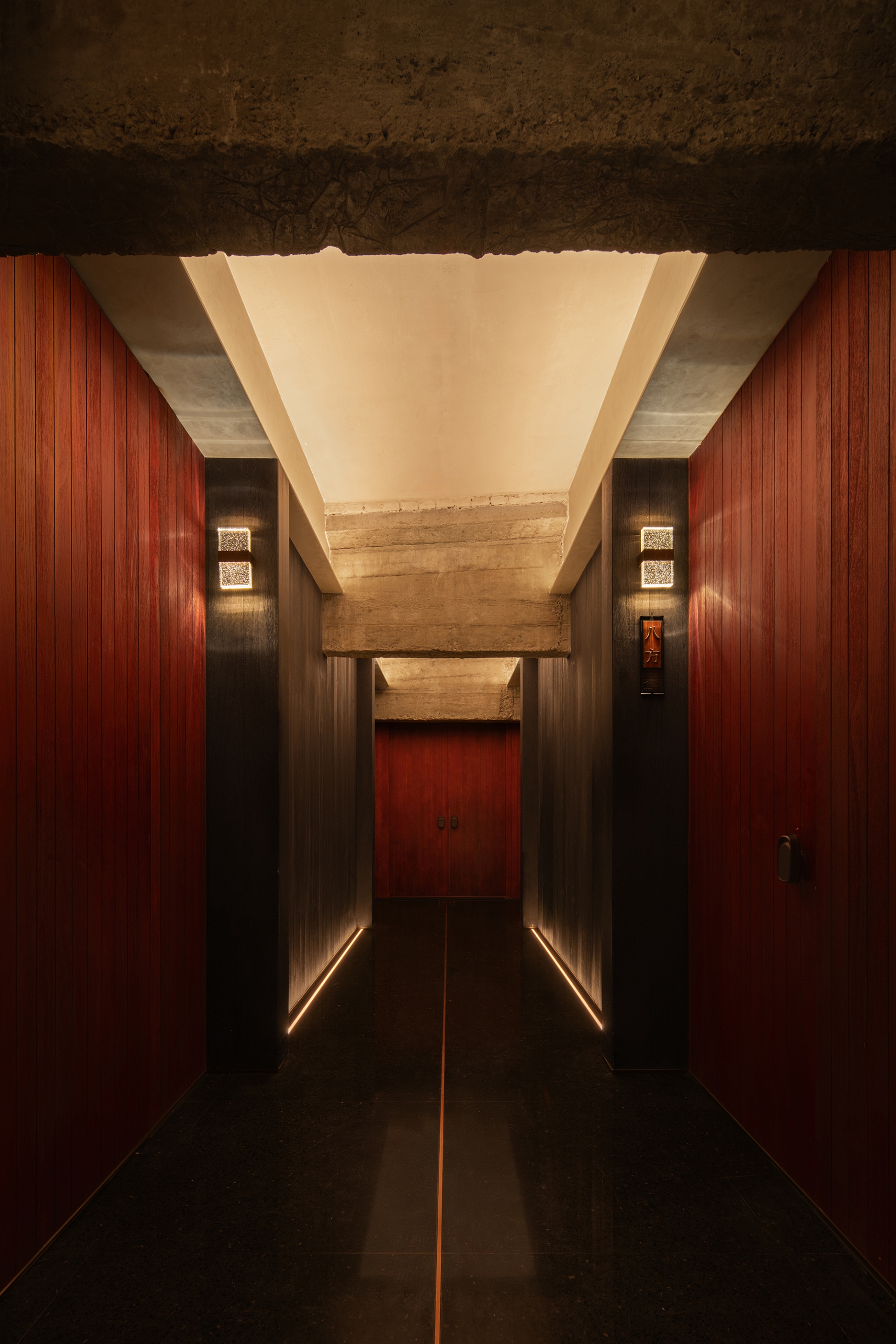
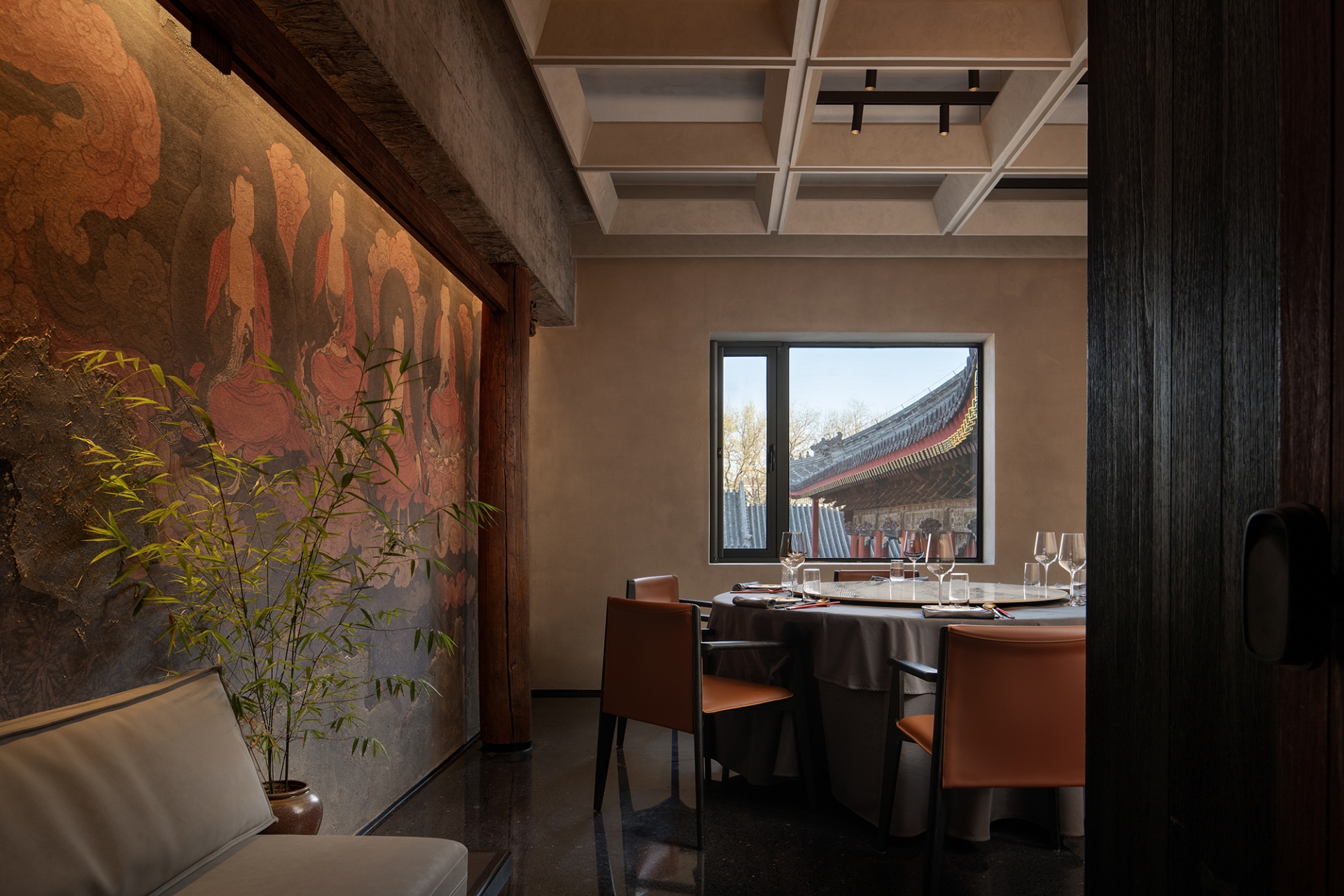
The Apex: The 'GUI' Room
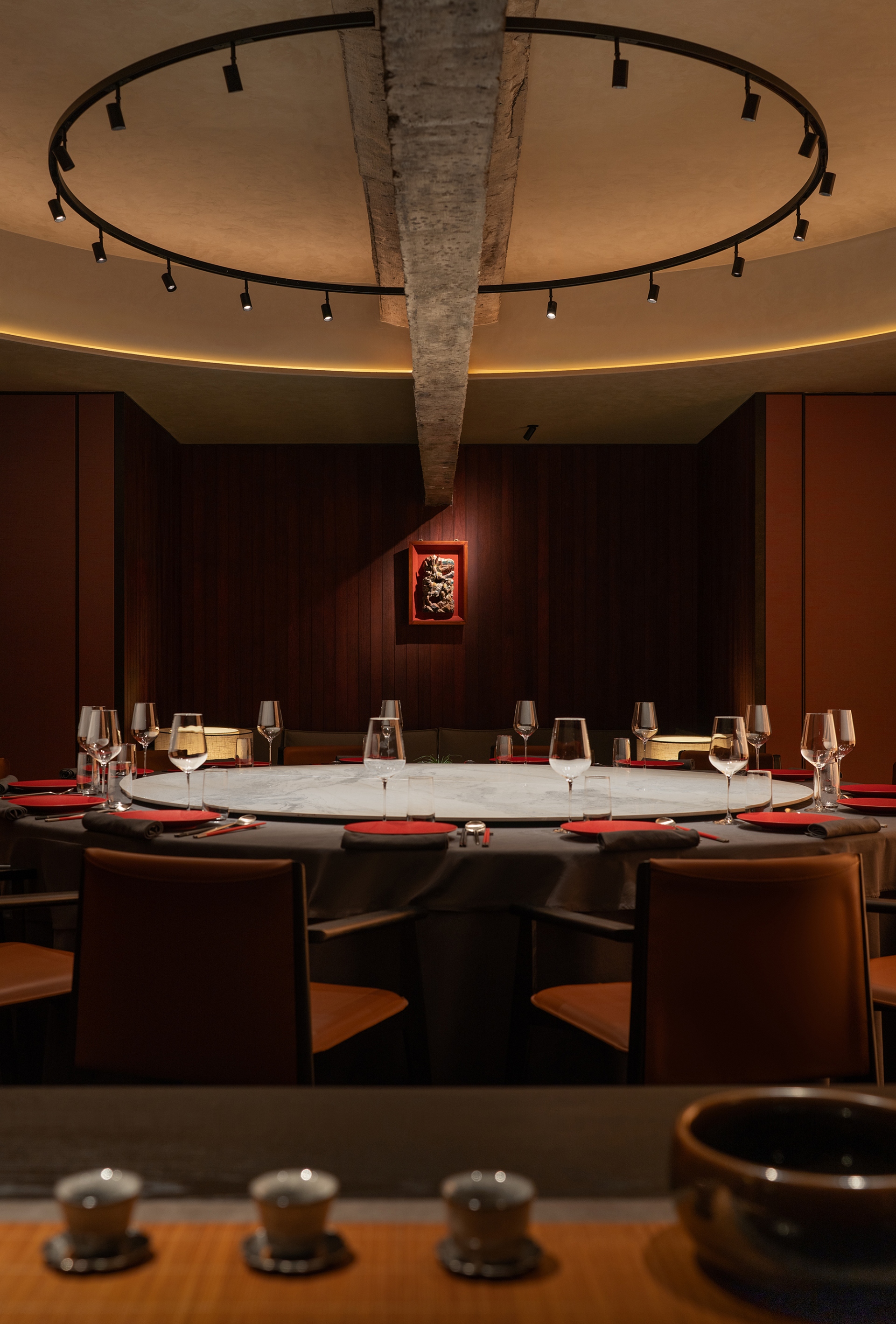
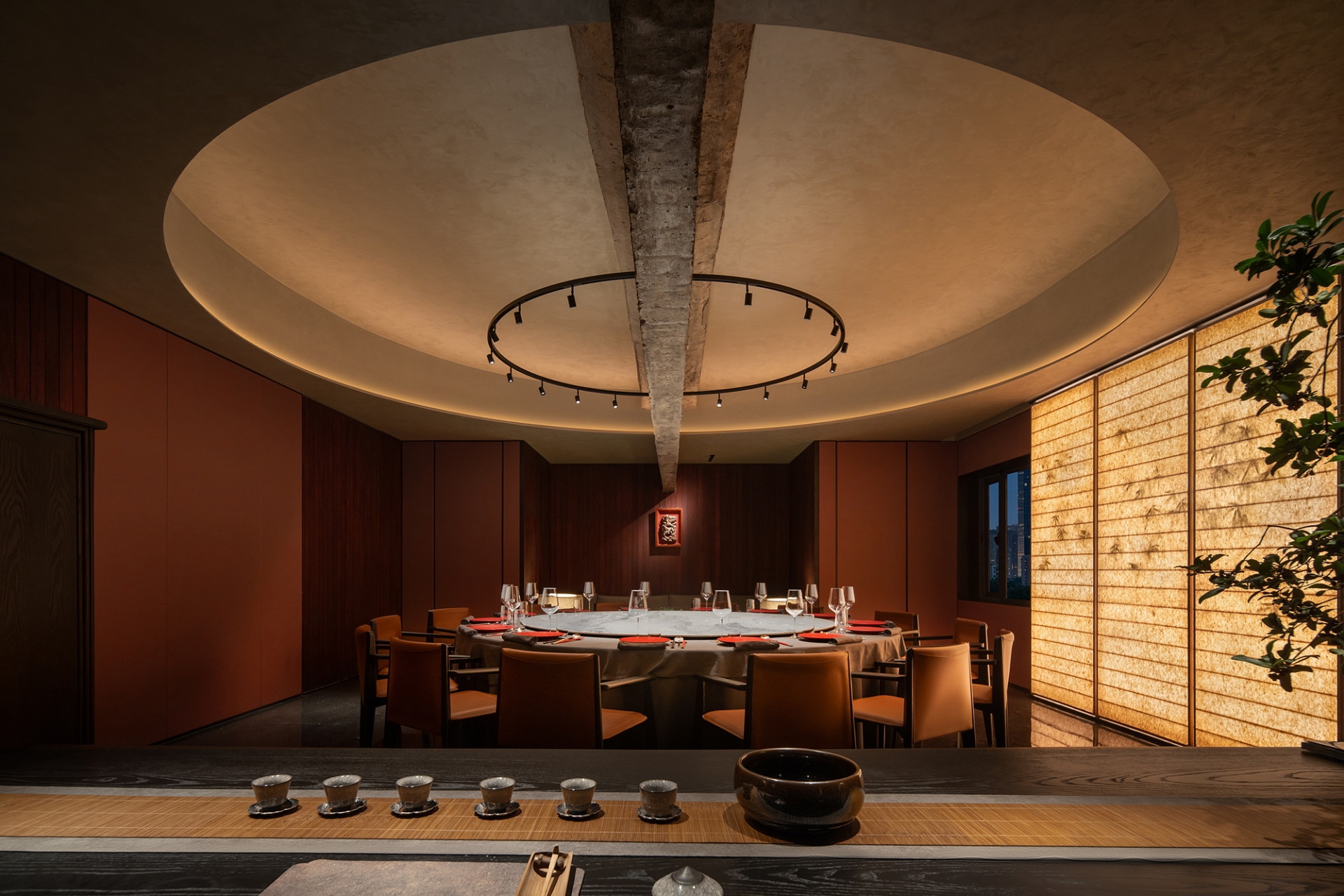
Ascending to the second floor, the rough textures of the industrial ceiling beams are preserved, naturally integrating with the quaint space to create a striking visual impact. This floor is home to the largest private room, aptly named "GUI." Here, the grand experience of "Neo-Jinghua Aesthetics" reaches its visual and conceptual zenith.
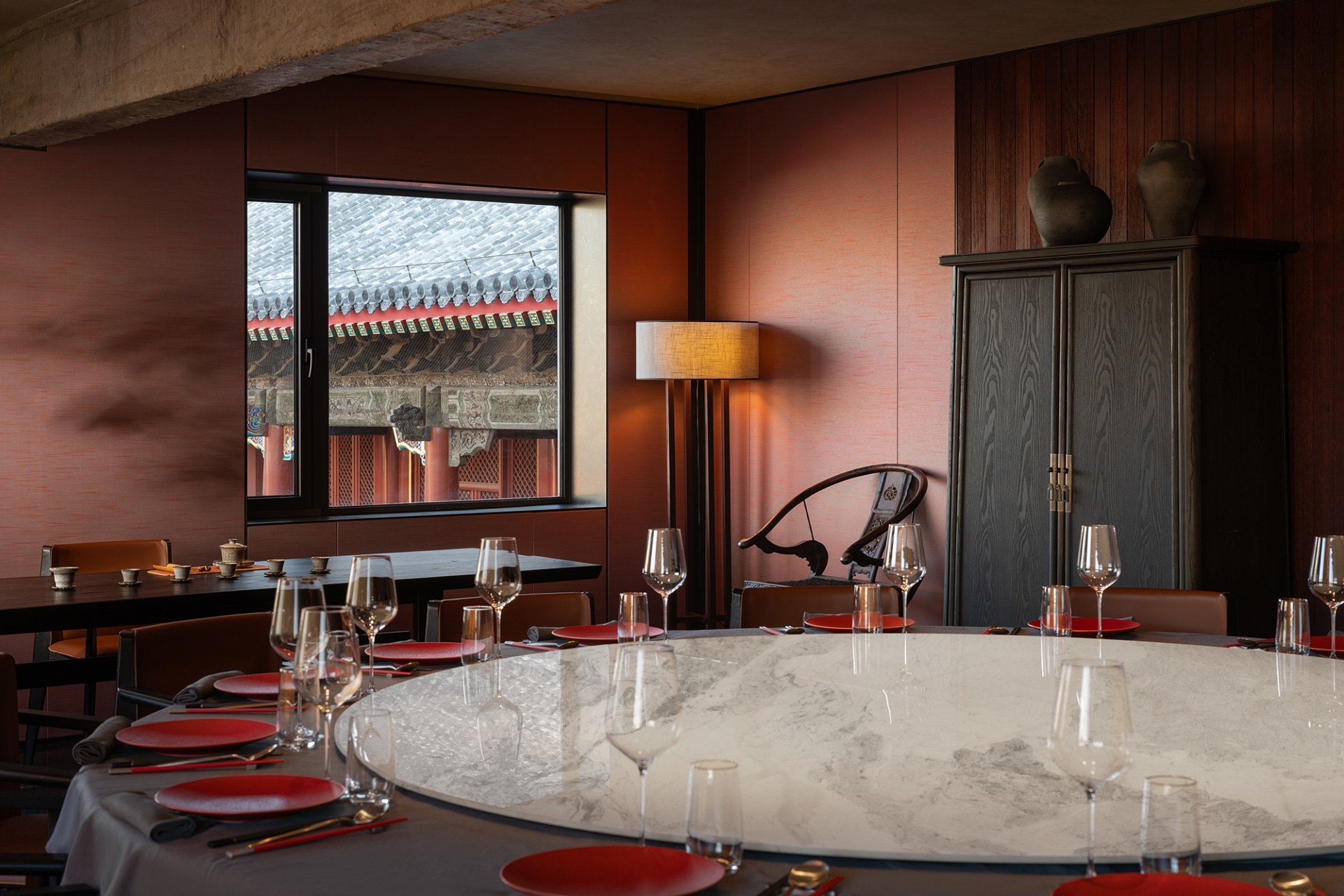
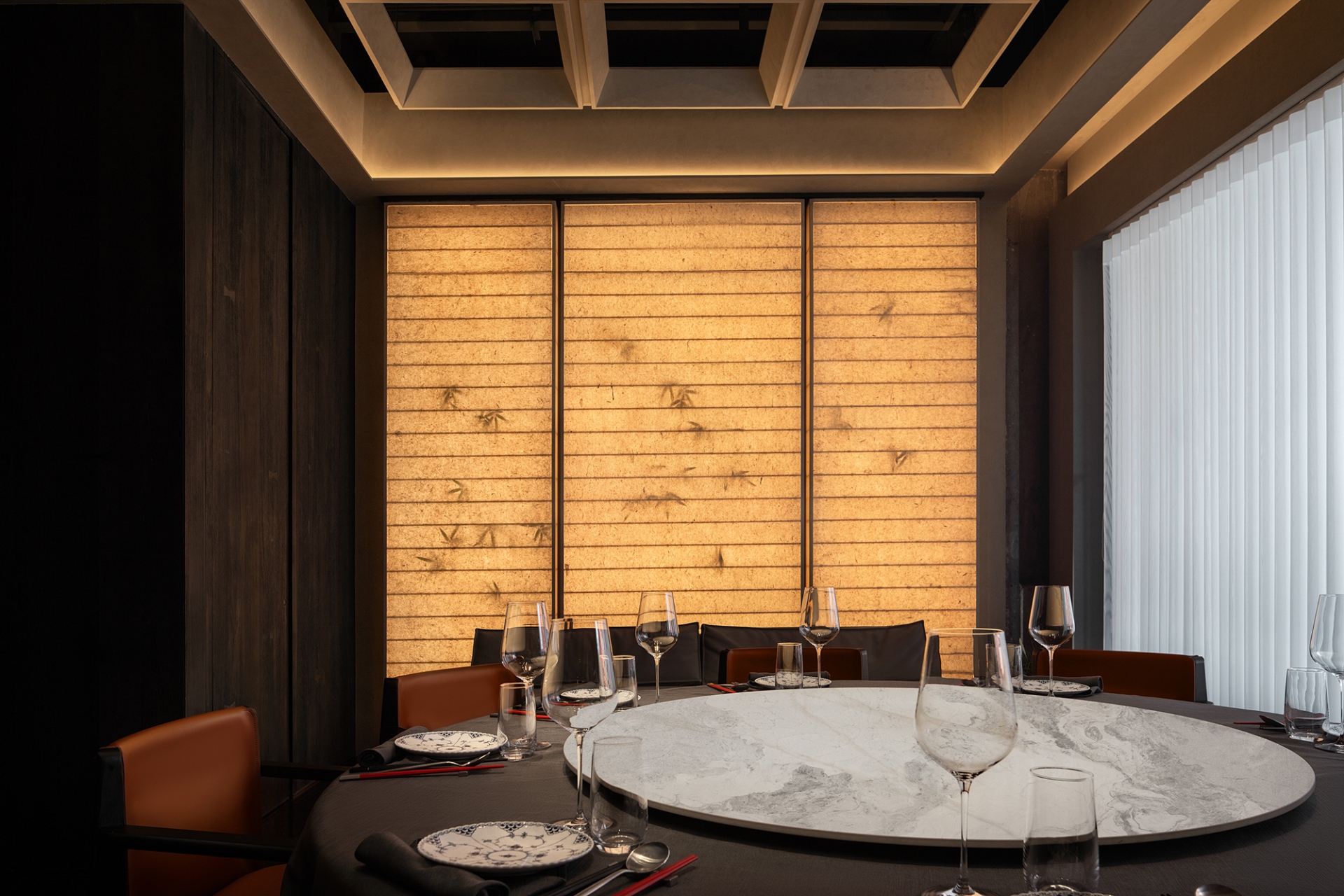
The room is a study in Oriental philosophy, featuring both a traditional long table and a modern banquet round table, set against a warm red backdrop—a reference to the Eastern aesthetic of square and circle. The colors of imperial yellow and red, symbolic of nobility and prosperity in the Forbidden City, are used to powerful effect. The central, circular concave ceiling with a beam, inspired by the shape of an ancient sundial, aligns with a golden landscape wall on one side, metaphorically narrating the evolution of the Beijing Central Axis throughout history. The gentle lighting highlights a central relief artwork, evoking the image of the sun rising and casting its light over the axis.
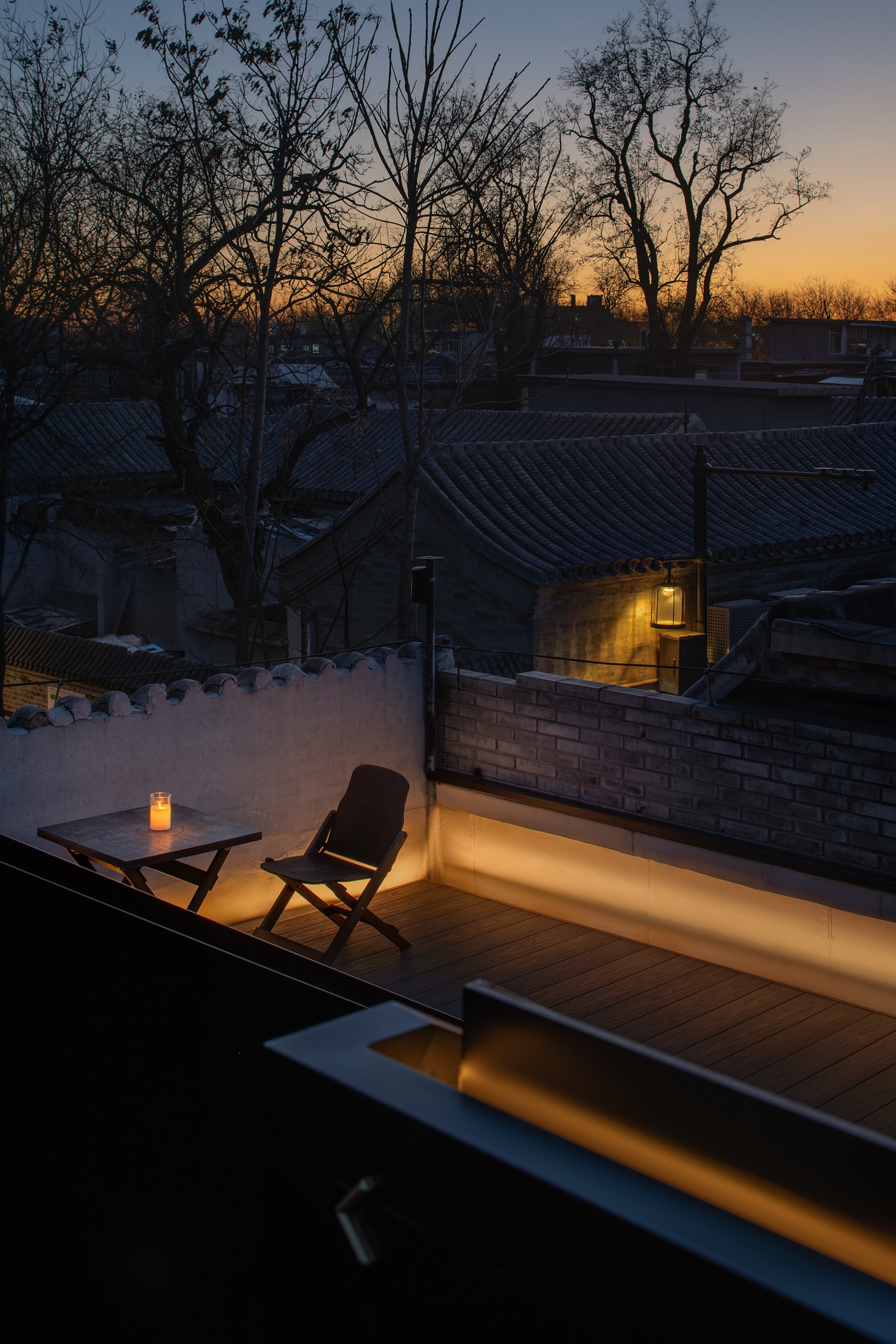
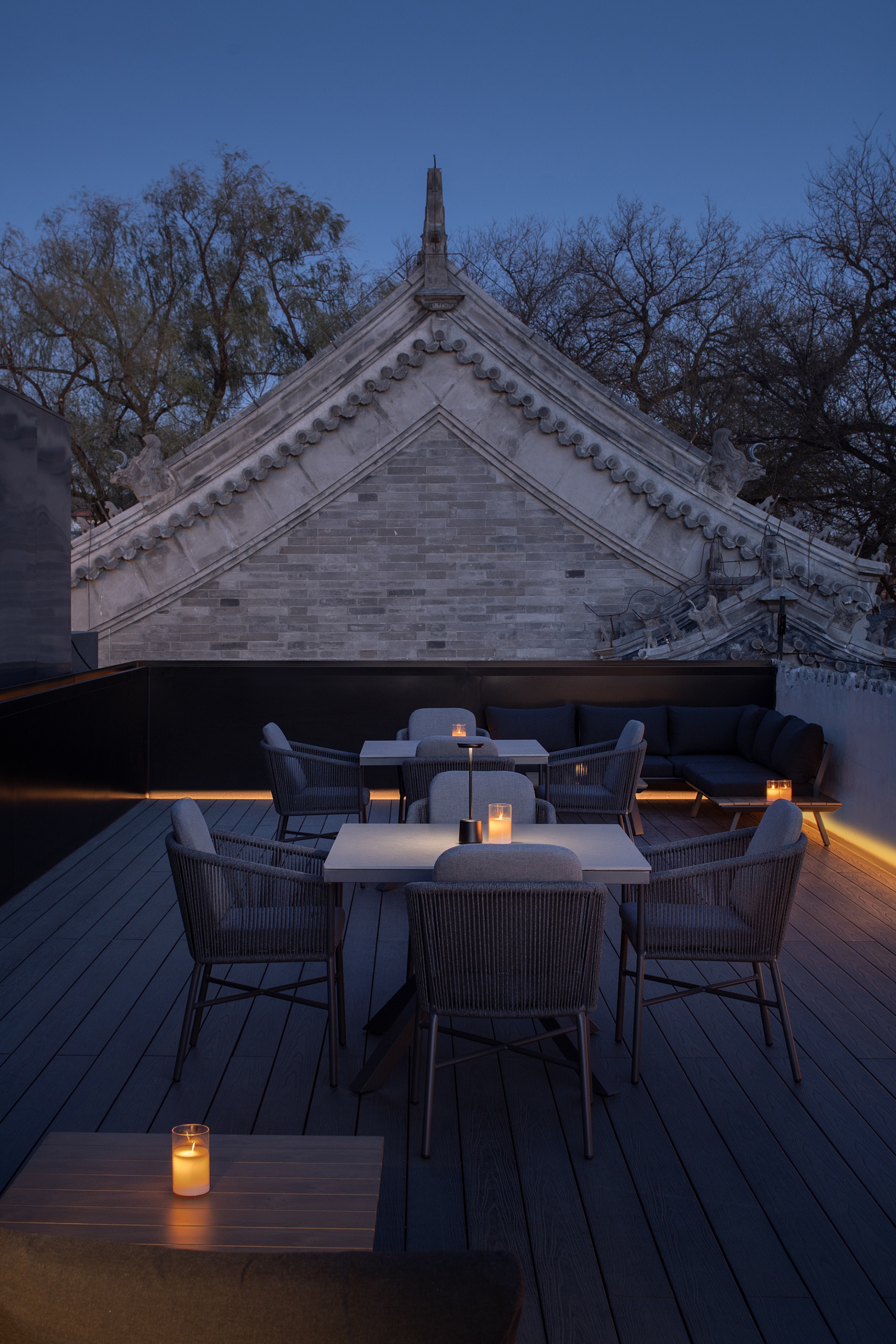
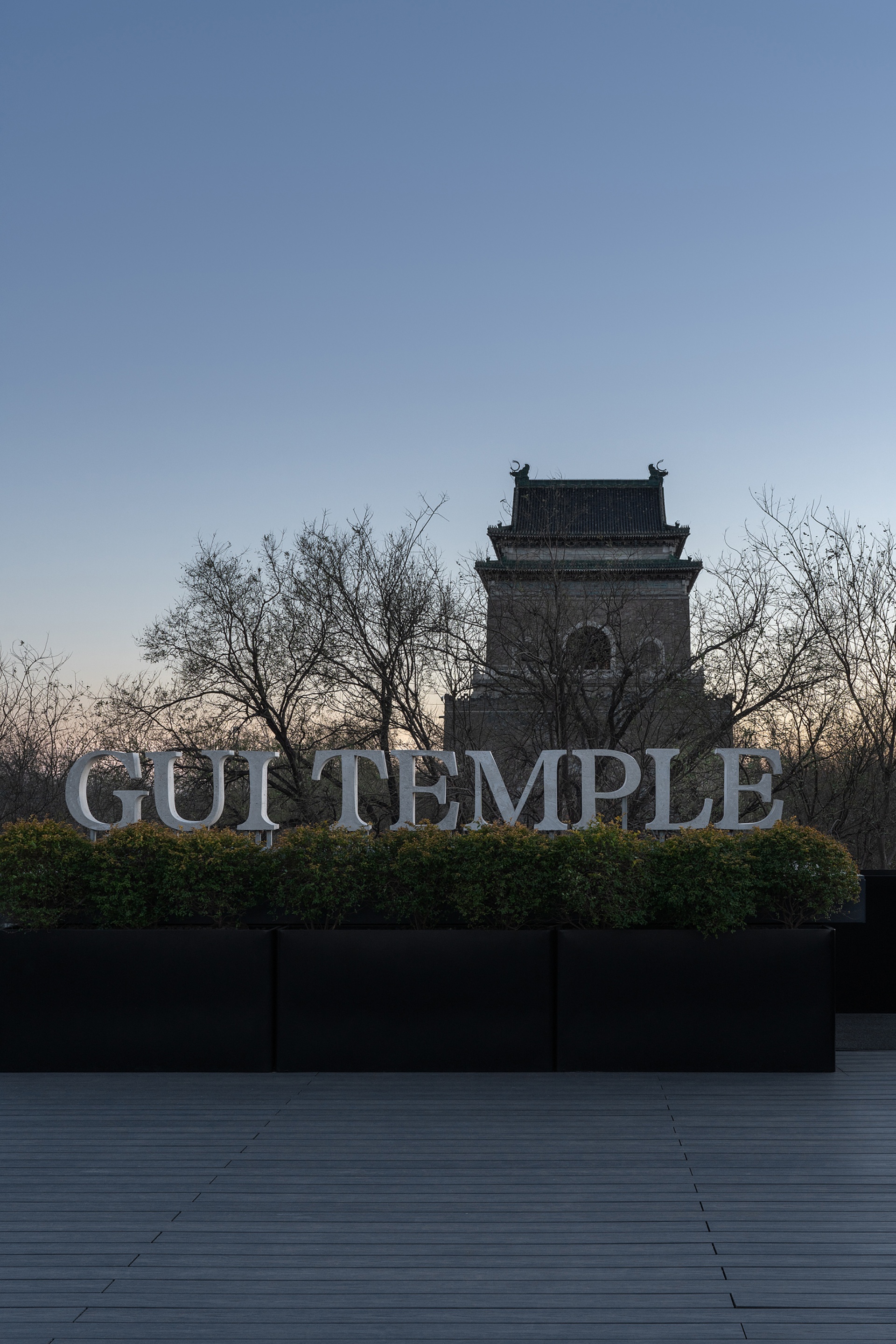
Finally, a spacious terrace on the second floor offers guests a privileged view of the Bell Tower. Here, in the heart of a bustling metropolis, GUI TEMPLE provides a quiet sanctuary—a place to savor the flavors of Beijing cuisine while experiencing a profound connection to China's cultural and spiritual continuity.