PODCAST
WHAT MAKES A GOOD CONVERSATION? LOOK NO FURTHER THAN OUR ART OF THE CONVERSATION, FEATURING UNCONVENTIONAL STORIES AND PEOPLE WHO MOVE AND INSPIRE
LISTEN NOW


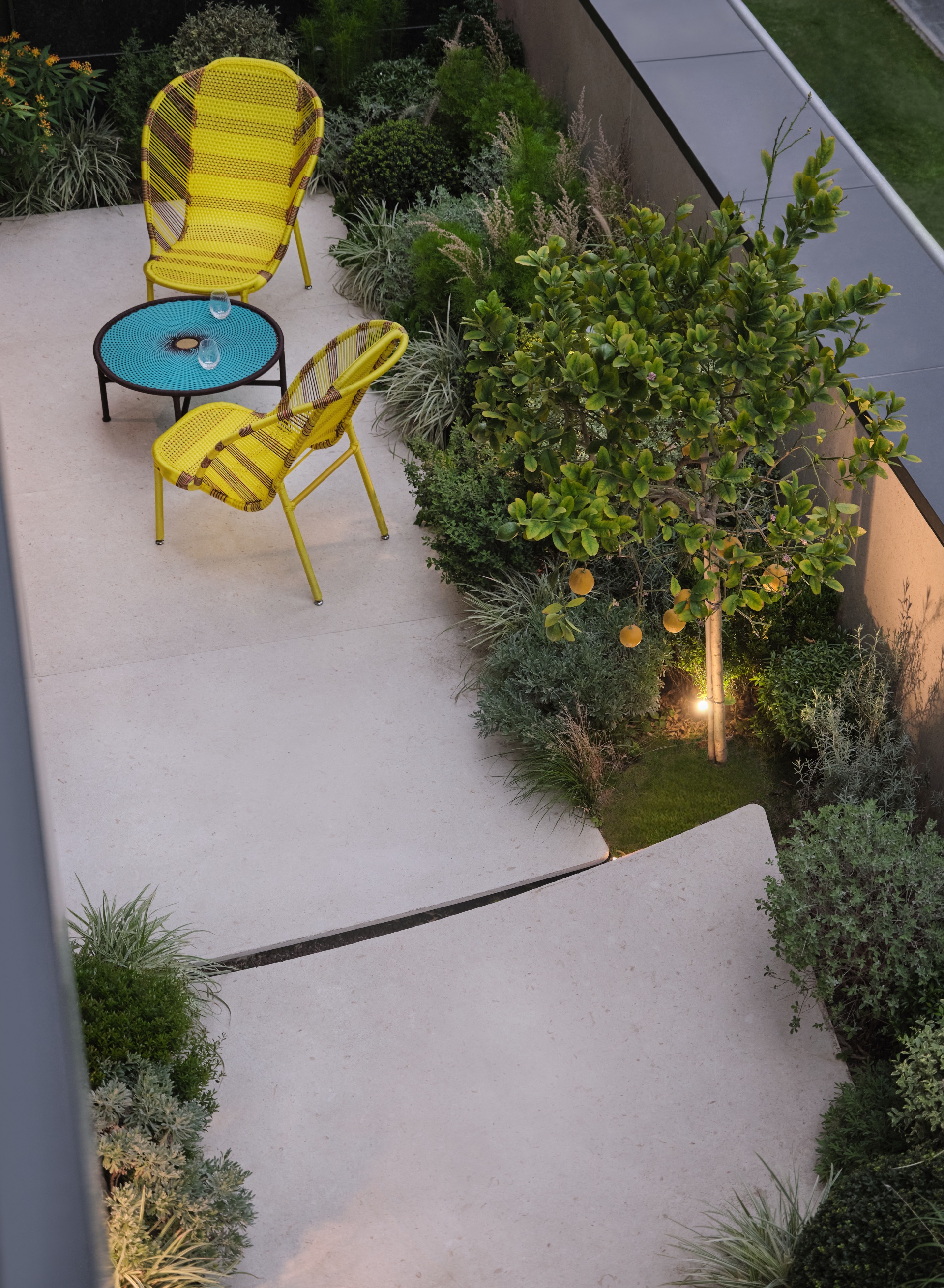
The project by EK Design is rooted in the concept of ‘The Growing Garden’, an exploration of how art can grow organically within space. What emerges is not a defined or static environment, but an evolving spatial ecology - where structure, light, and plants continue to grow, and art gently permeates throughout, leaving room for imagination to breathe.
The original structure—a disparate collection of street-level retail and upper-tier villas—was a study in fragmentation. With a convoluted entry sequence that stifled both light and logic, the building demanded a radical intervention. Chief designer Mao Hua answered with a total reorganization of the spatial rhythm, establishing a majestic cruciform framework that serves as the project’s new heartbeat. By clarifying the linear sequence, EK Design linked the entrance, north courtyard, and central garden into a singular, ascending axis of growth.
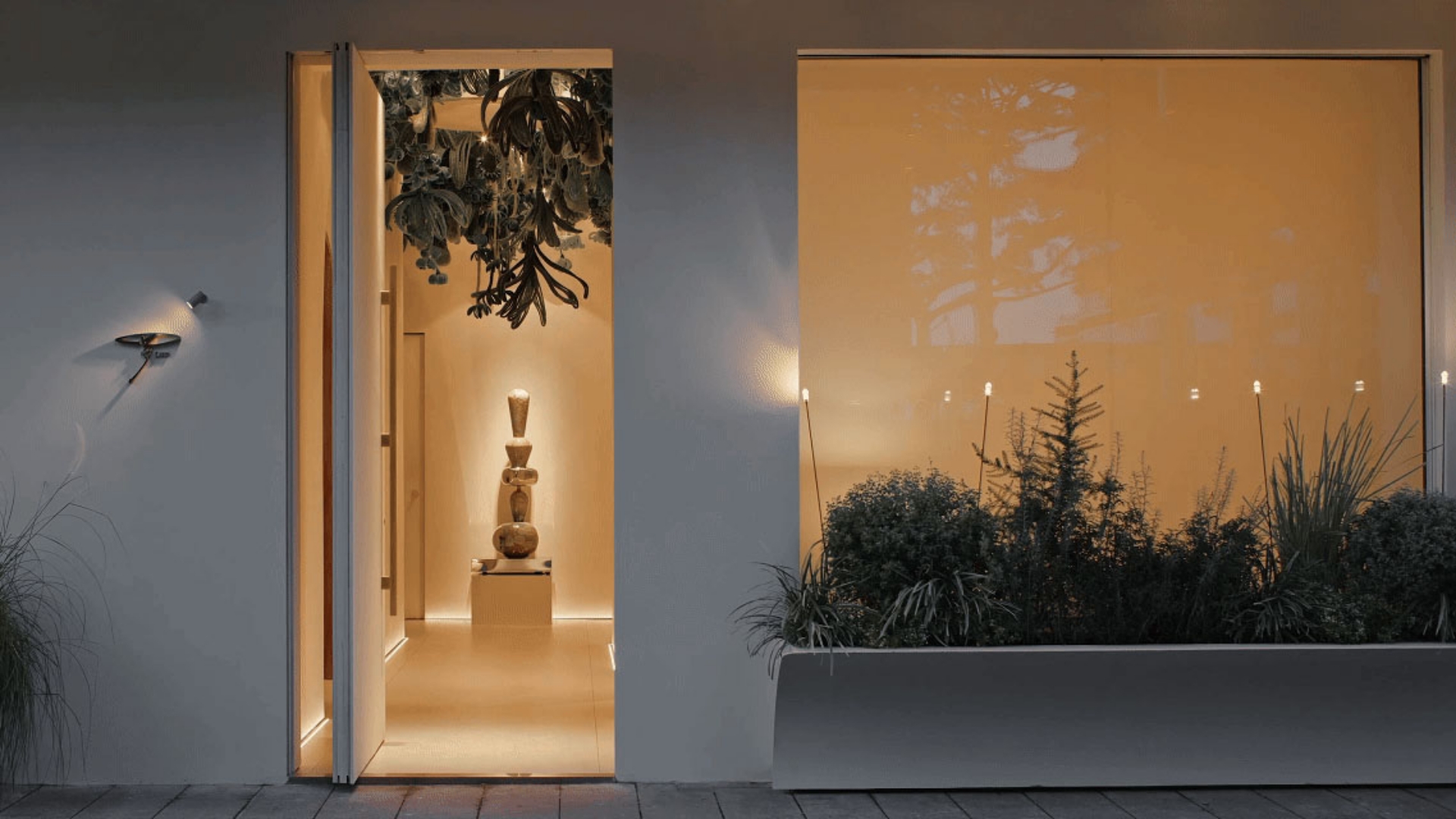
At the street interface, the building begins to whisper. A vertical garden climbs the exterior walls, while adjustable frosted glass panels act as a permeable skin. This flexible boundary oscillates between transparency—allowing glimpses of lush interior planting—and a soft opacity that creates an embracing, private forecourt. It is here that the dialogue between the urban bustle and interior tranquility begins.
Inside, the vertical rhythm is dictated not by utility, but by the quiet logic of a living organism. Light cascades through a central atrium, while flora emerges from hand-sculpted wall crevices like moss on a cliffside. Art installations do not merely hang; they unfold across floors and ceilings, inviting the eye to drift freely. This is an unbounded realm where nature and architecture are no longer distinct, but symbiotic.
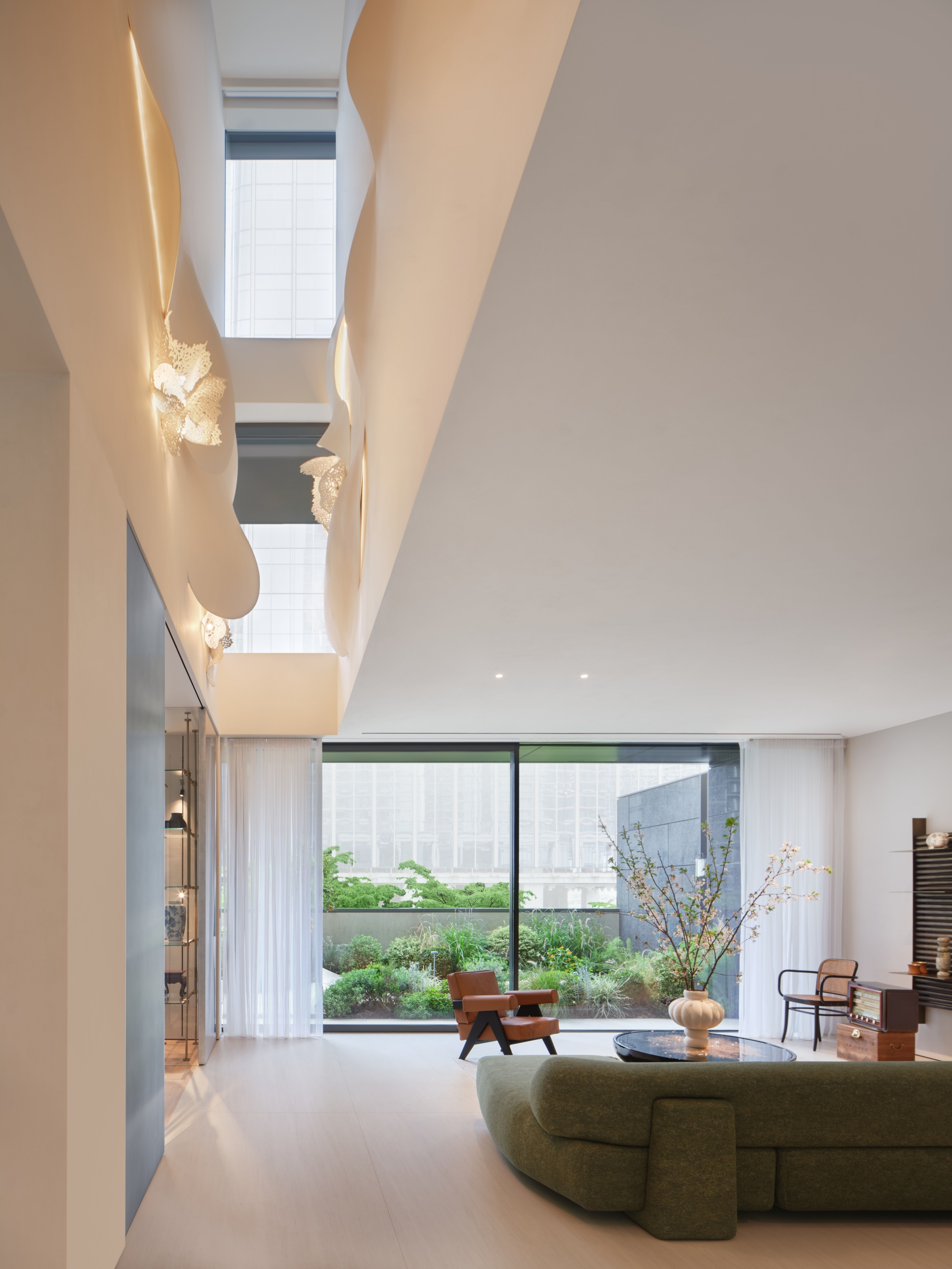
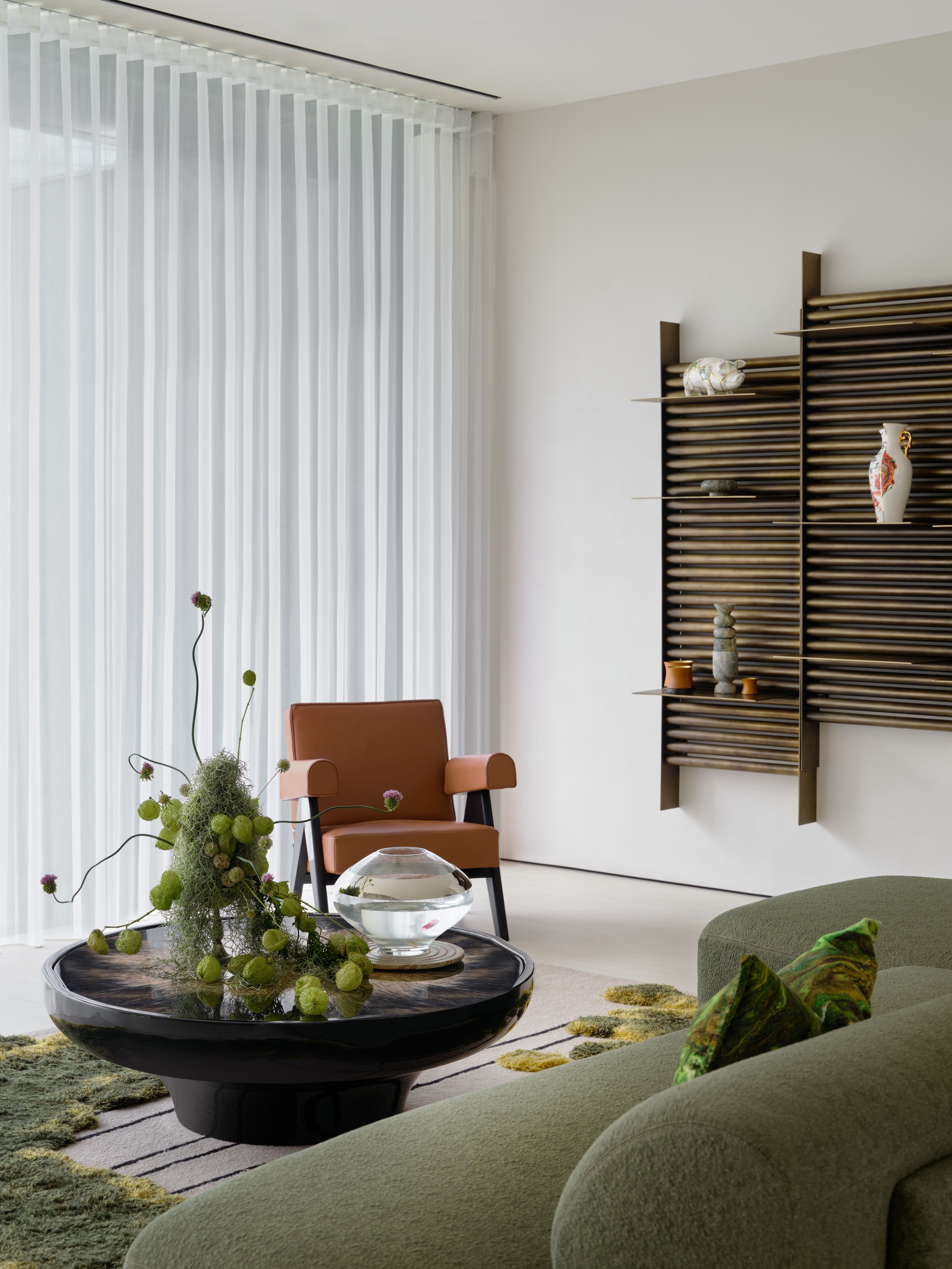
Here, the structure opens, light breathes, and the space itself comes alive—forming an unbounded realm where ‘The Growing Garden’ quietly takes root and thrives.
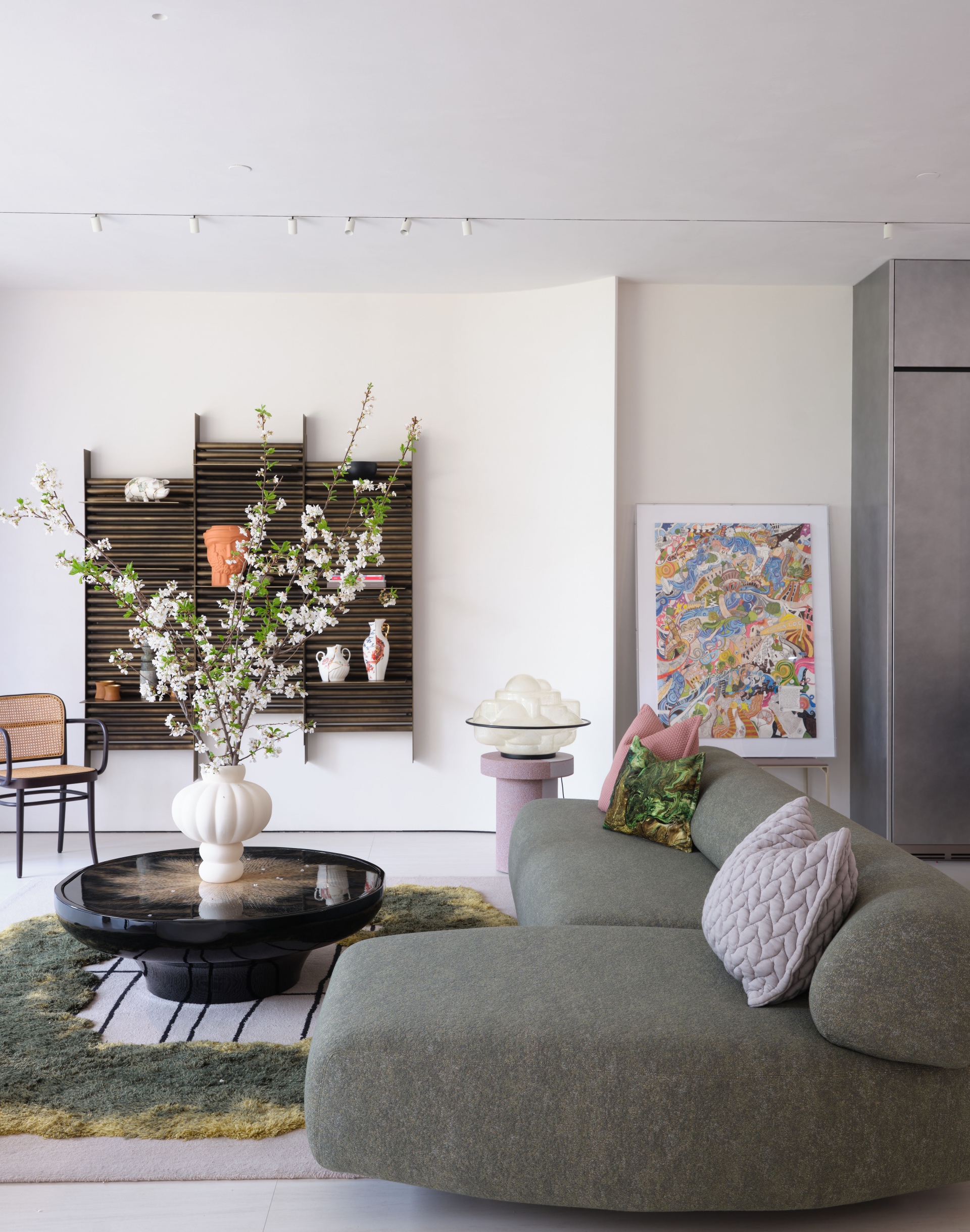
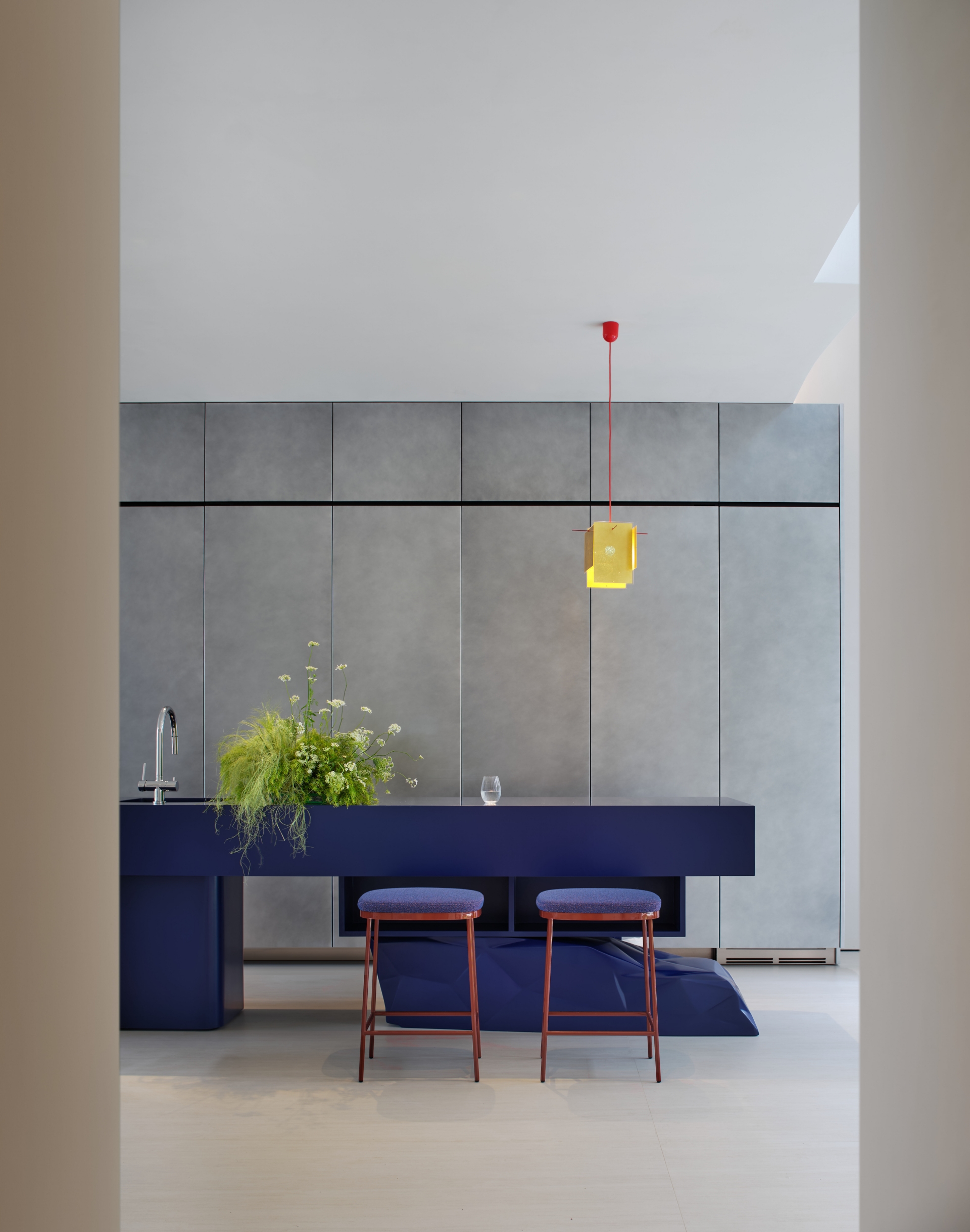
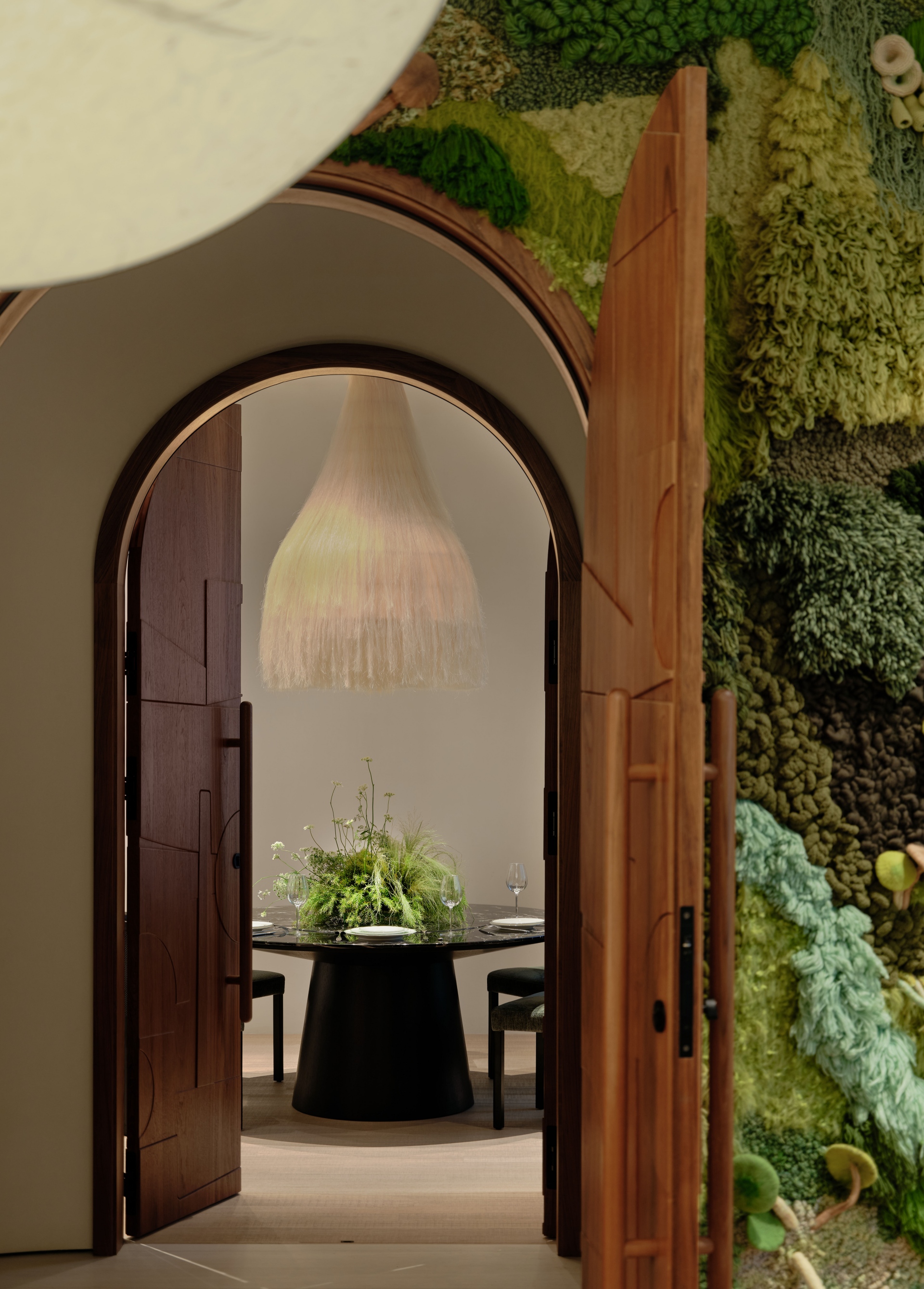
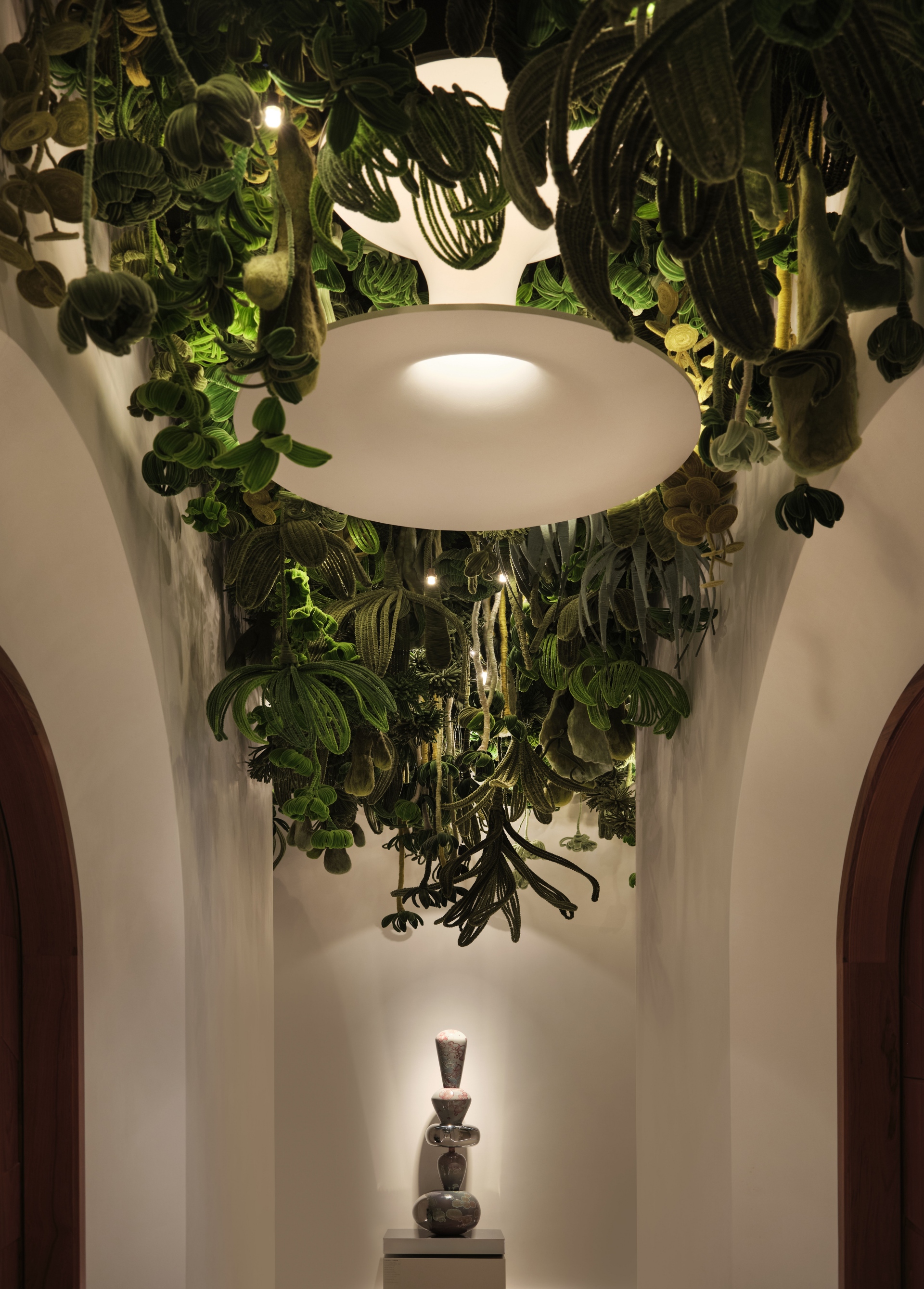
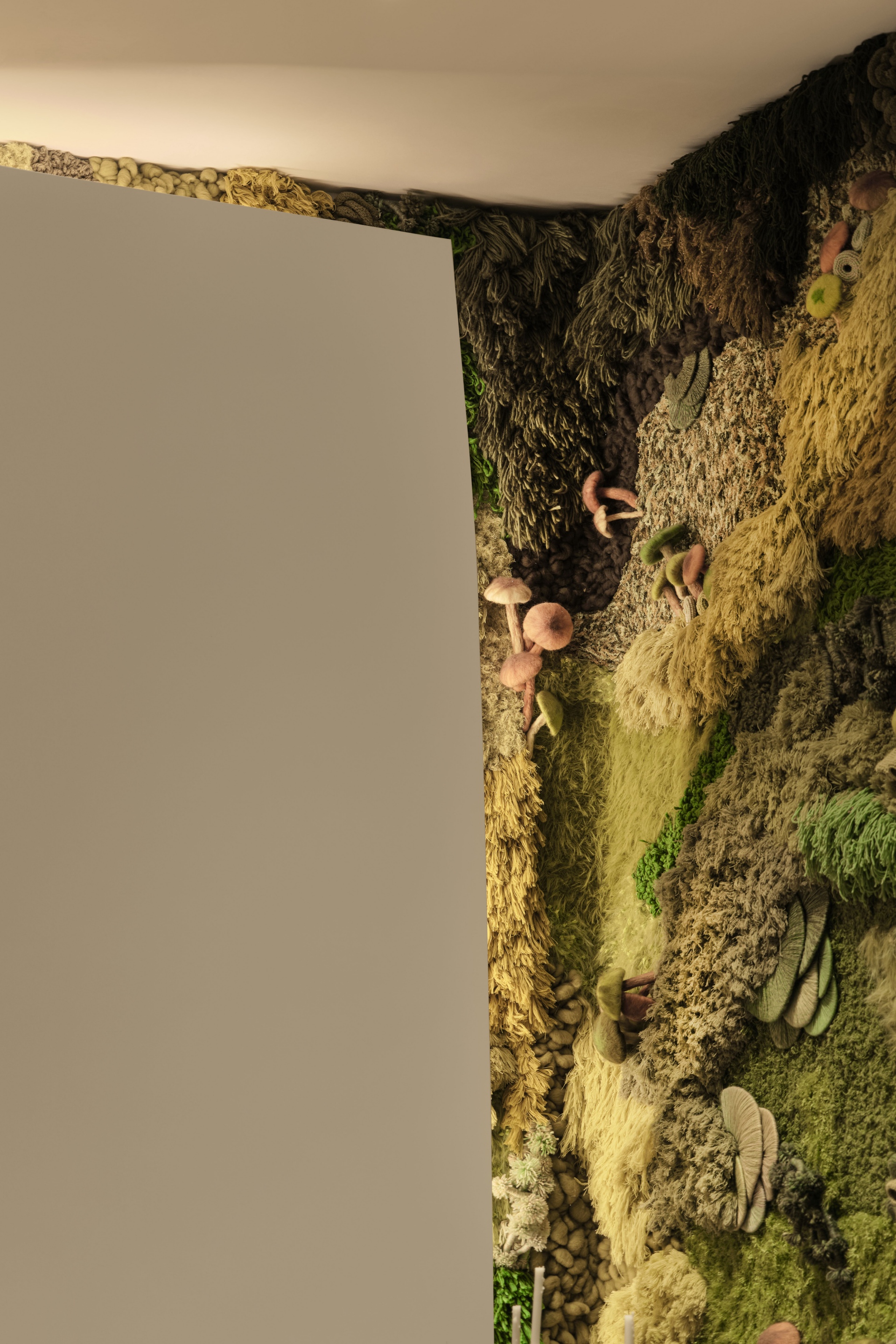
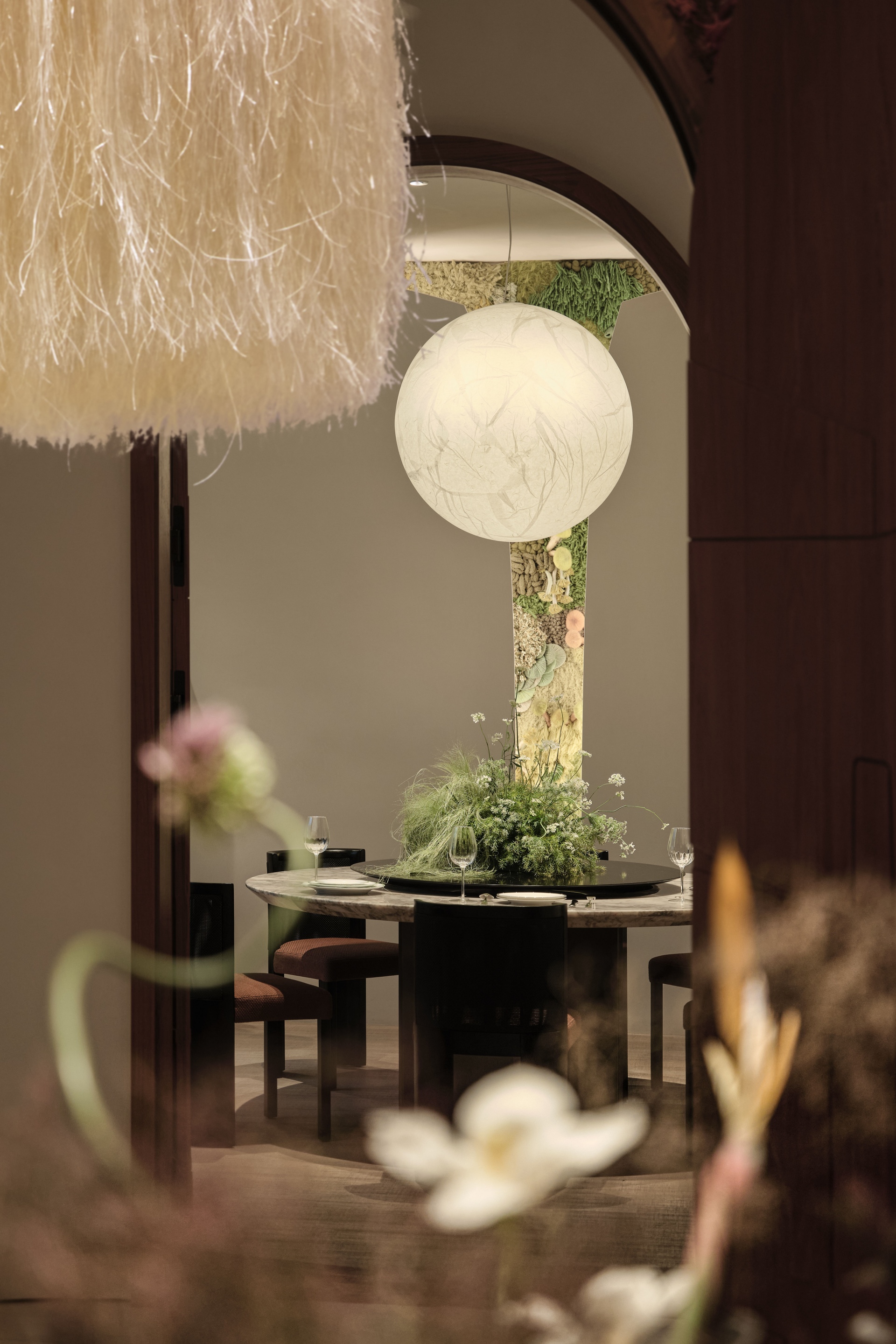
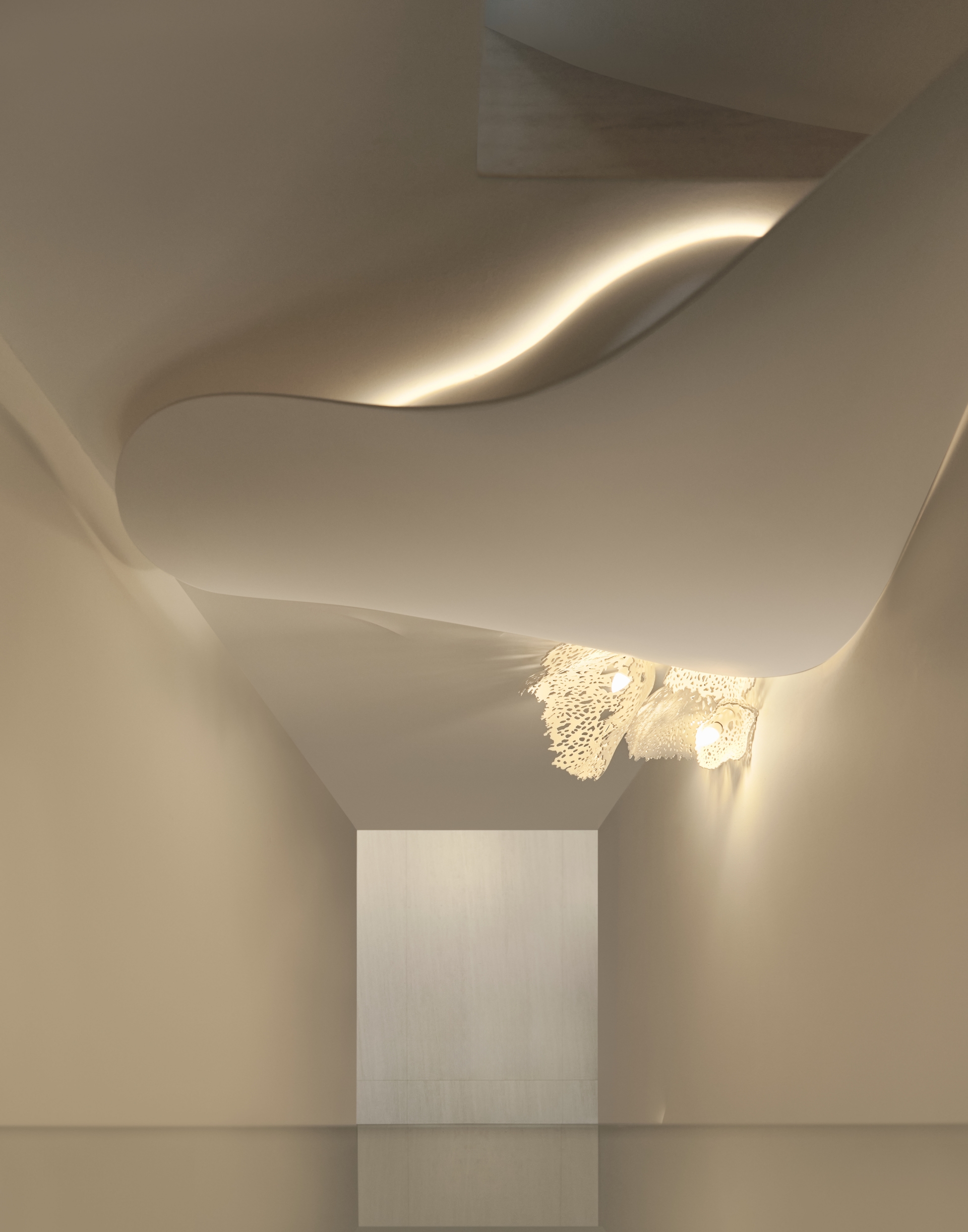
Art at the Bay Park Center Private Club is a state of becoming. In the entrance foyer, a curved sculpture mirrors the biomimetic ceiling, where fiber plantings descend like willow branches. Circular light fixtures diffuse illumination through these synthetic tendrils, transforming the ceiling into a canopy of light and growth. In the dining quarters, the experience becomes more tactile; a plush wall of biomorphic foliage and soft-hued fungal sculptures appears to ‘break through’ the wooden architecture, suggesting that the garden is reclaiming the room.
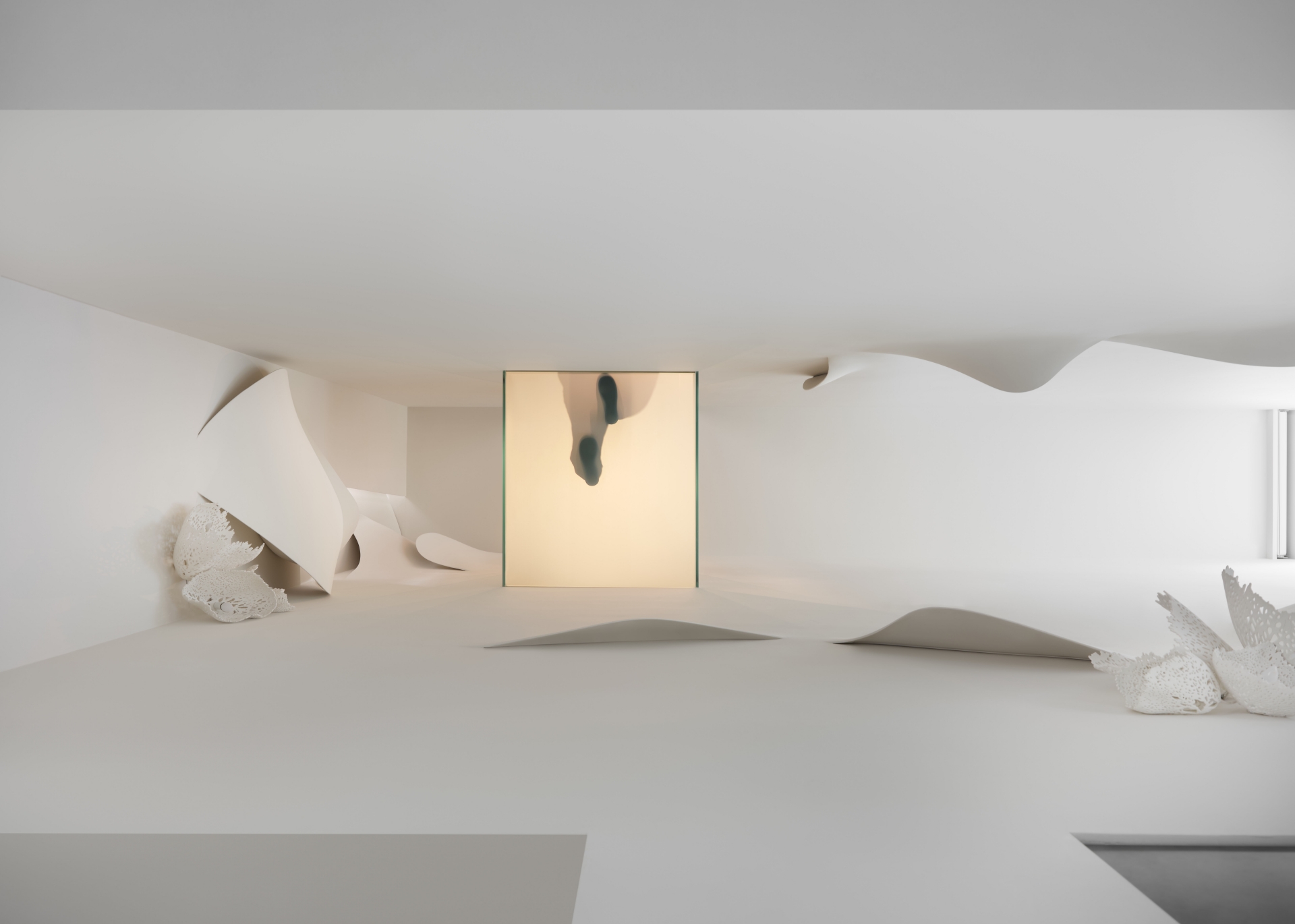
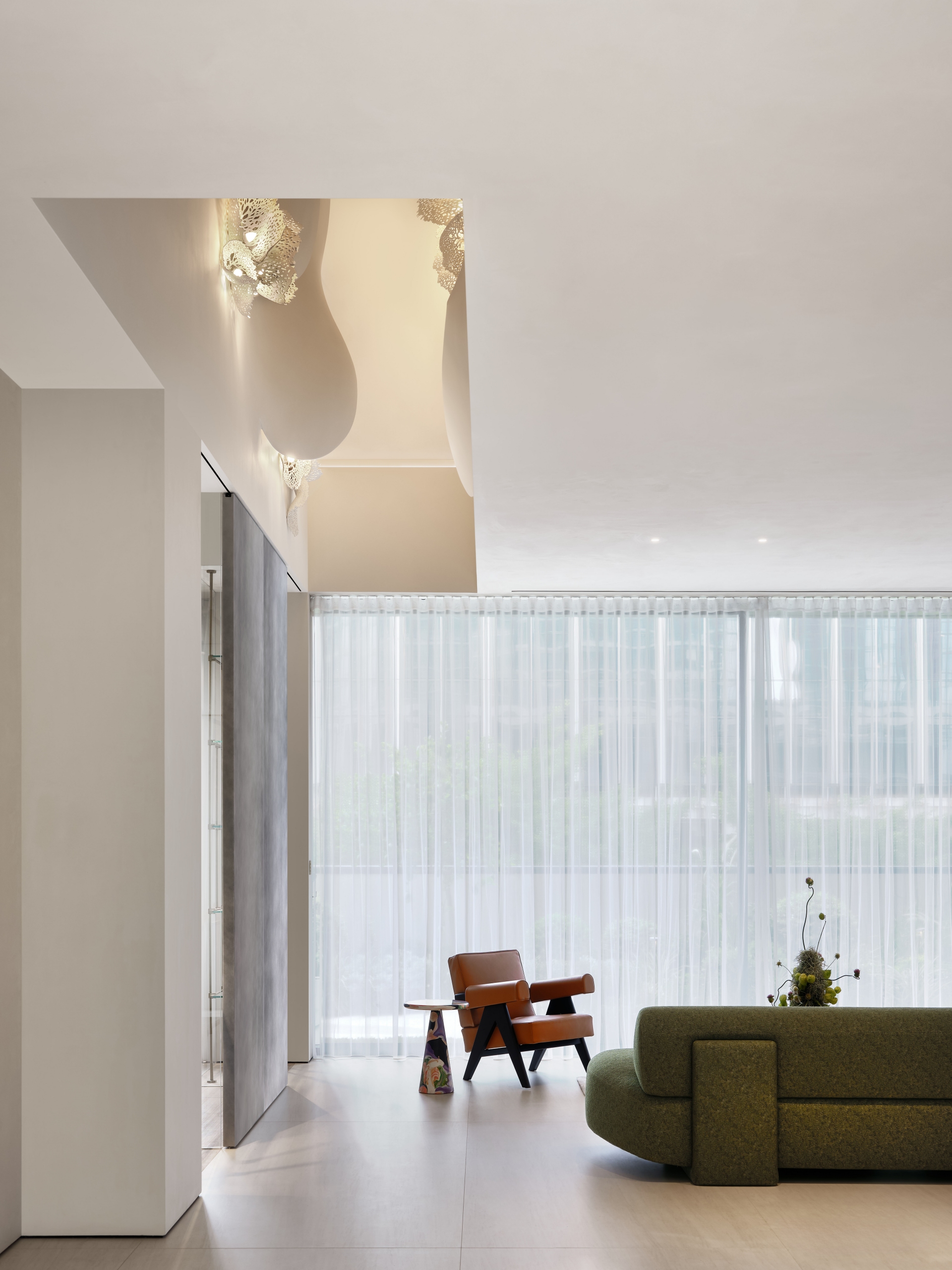
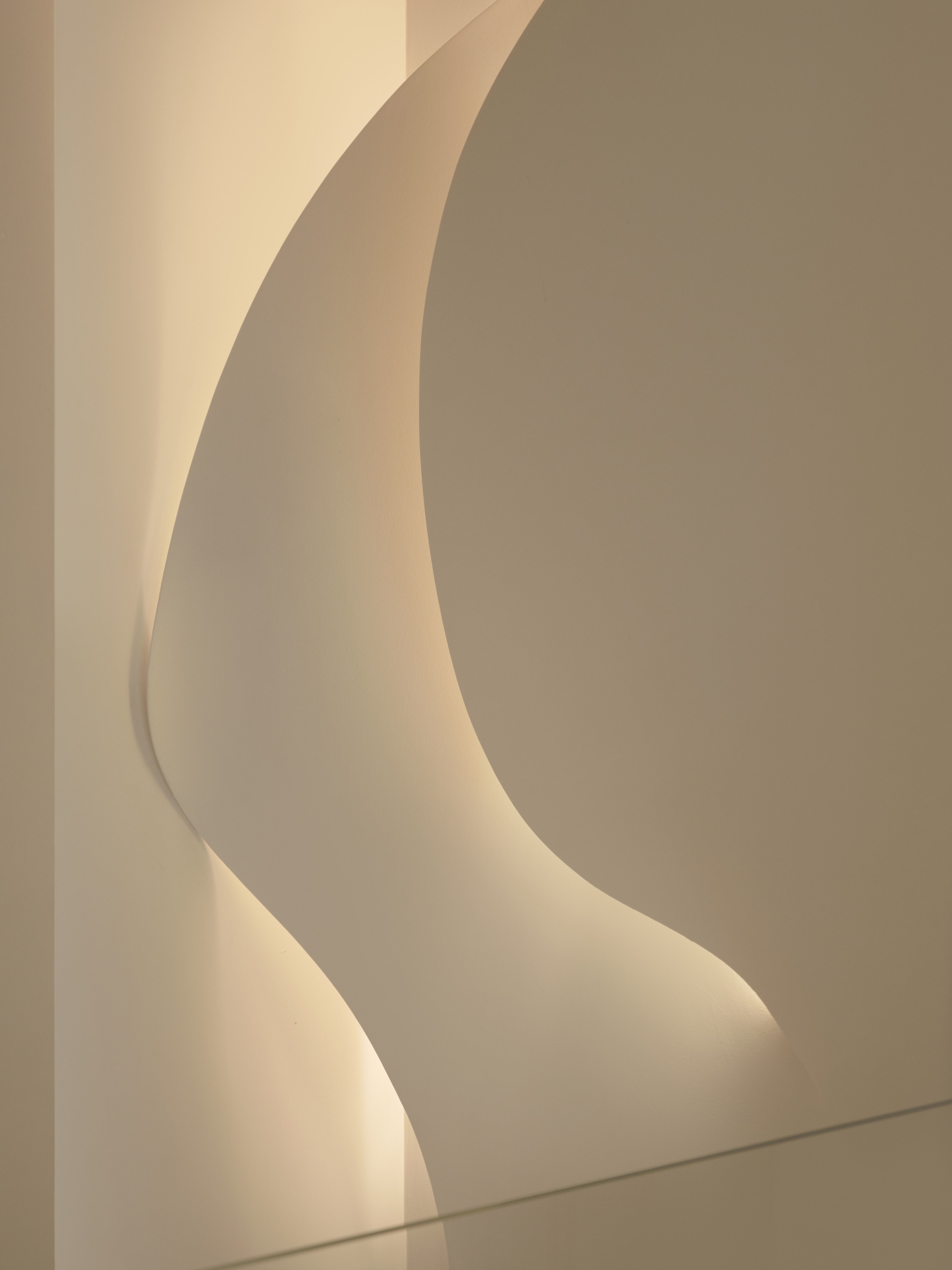
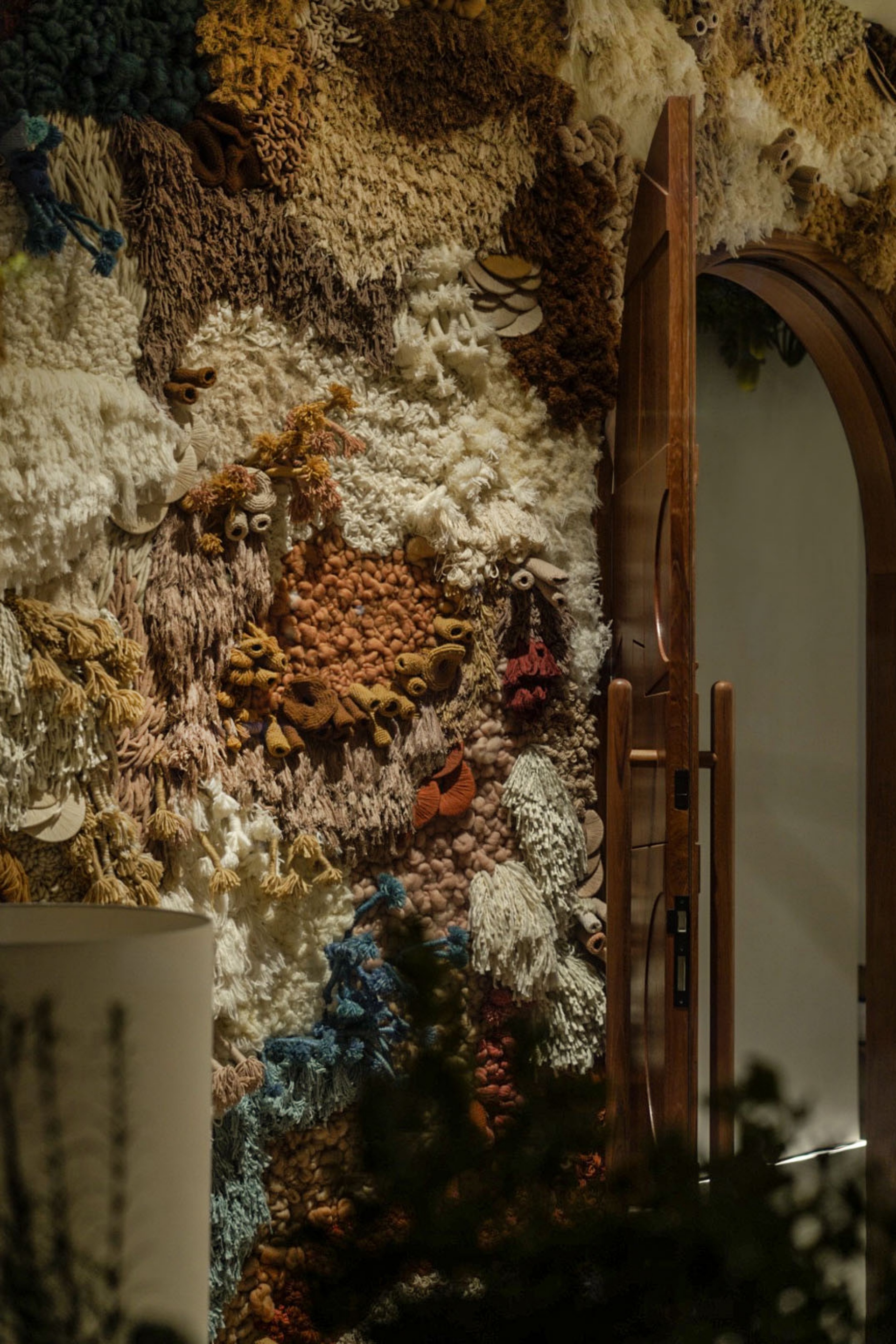
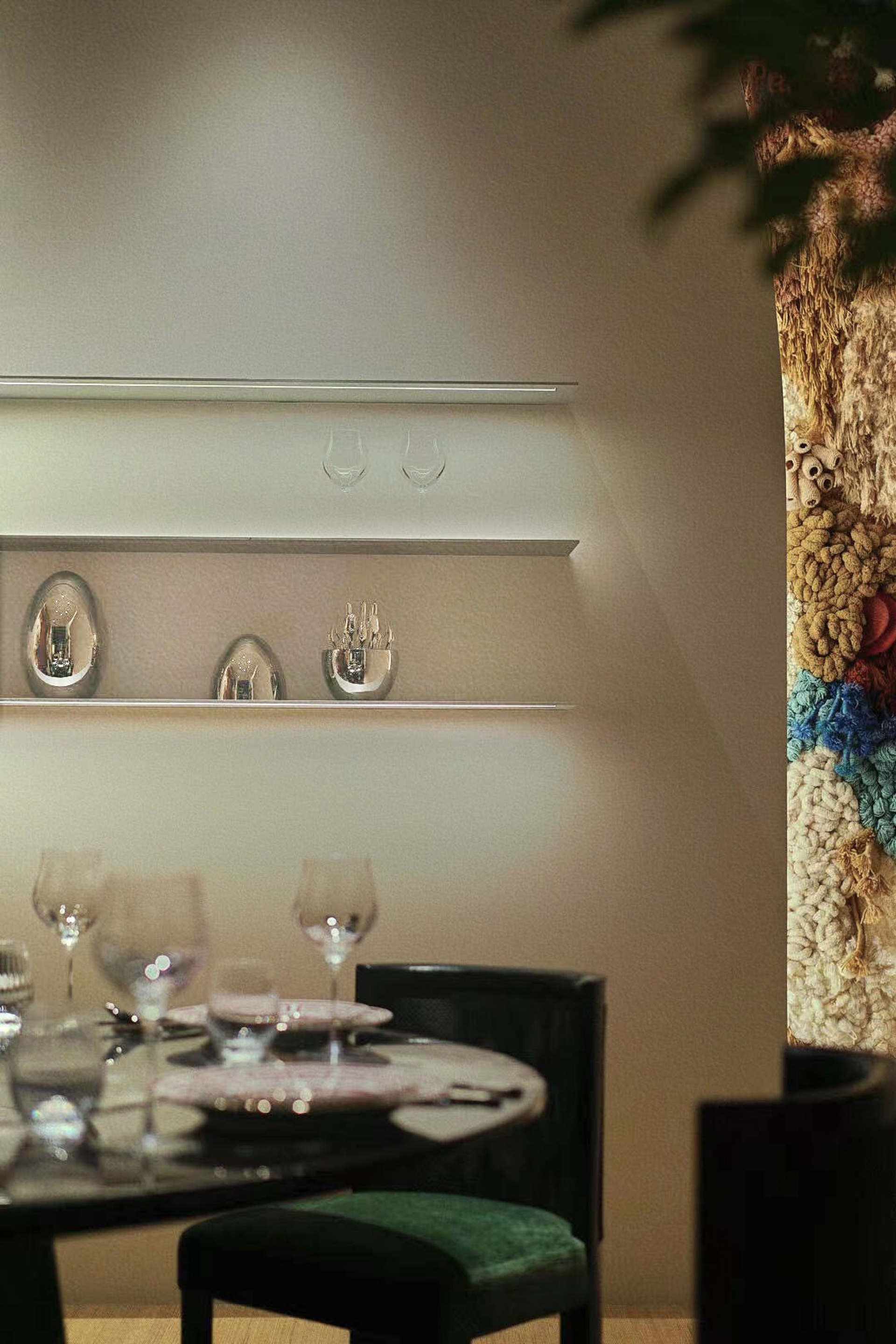
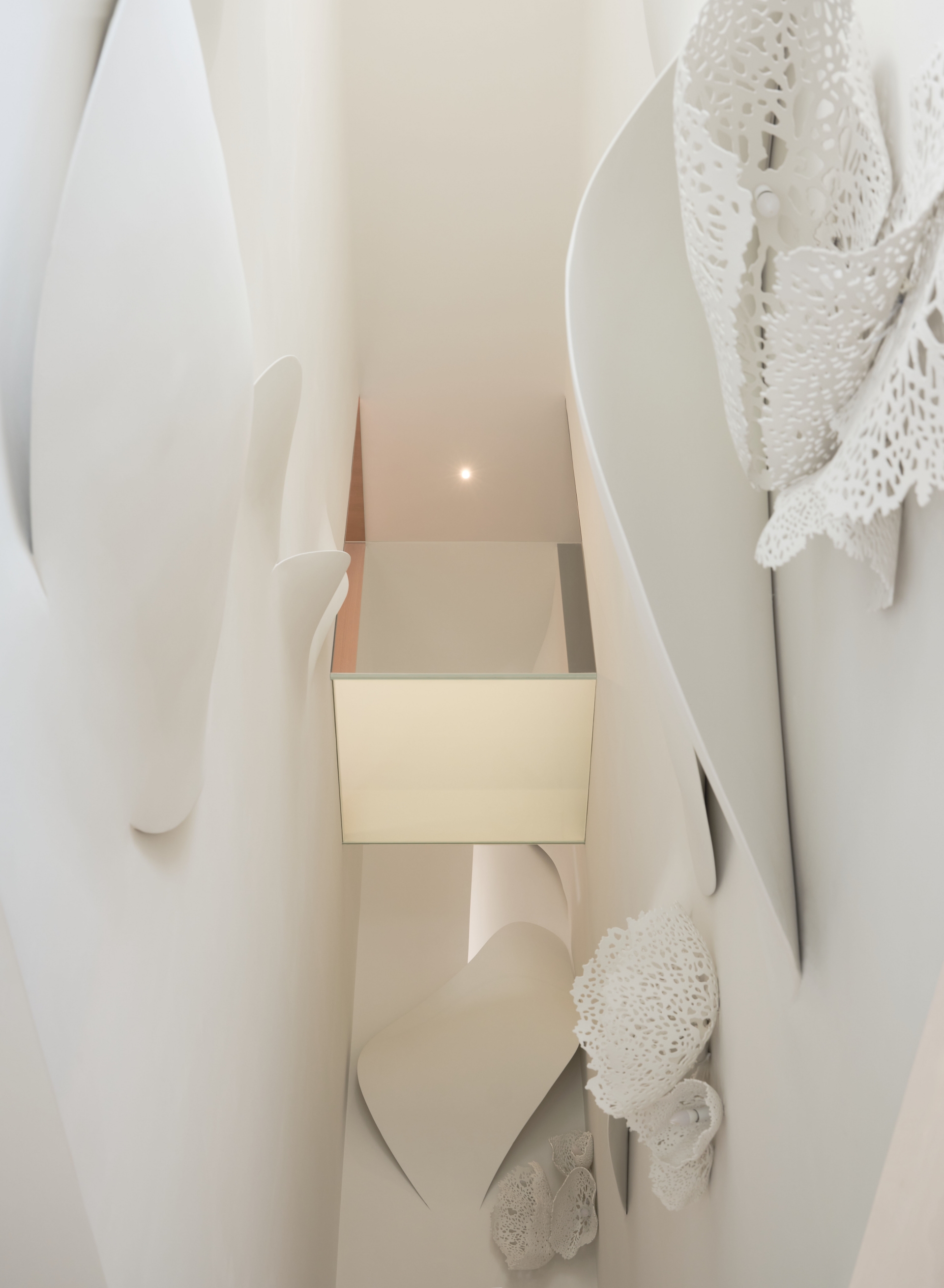
The transition to the private rooms evokes an underwater odyssey. Layered textures - beige long-pile plush representing seaweed and deep-blue short-pile coral - drift across the walls. This tactile landscape provides a soft, hushed ease that contrasts beautifully with the soaring central atrium. Rising five stories, this "breathing axis" guides daylight along curved GRG walls adorned with cascading petal sculptures, creating a sense of weightless, rising energy.
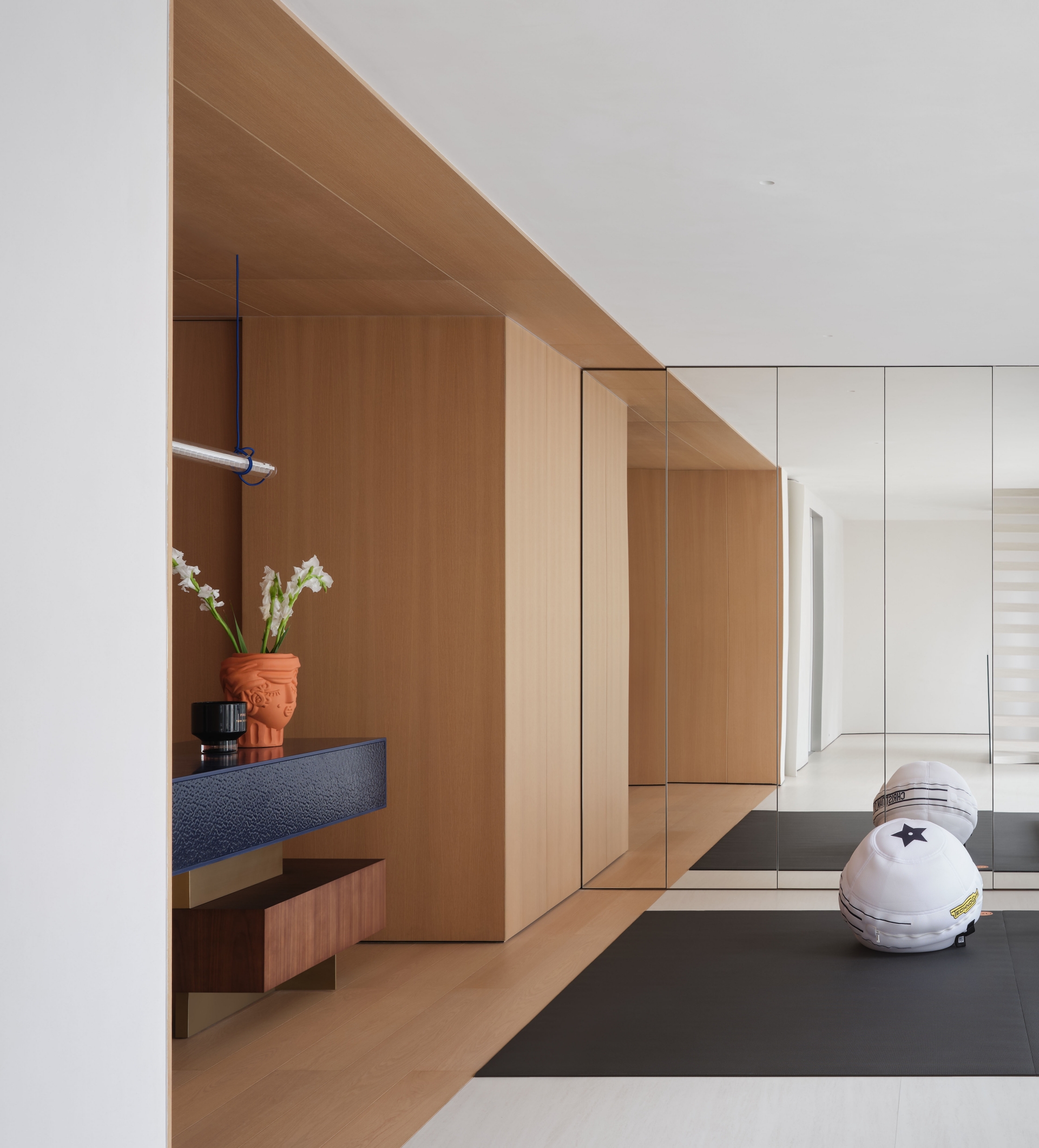
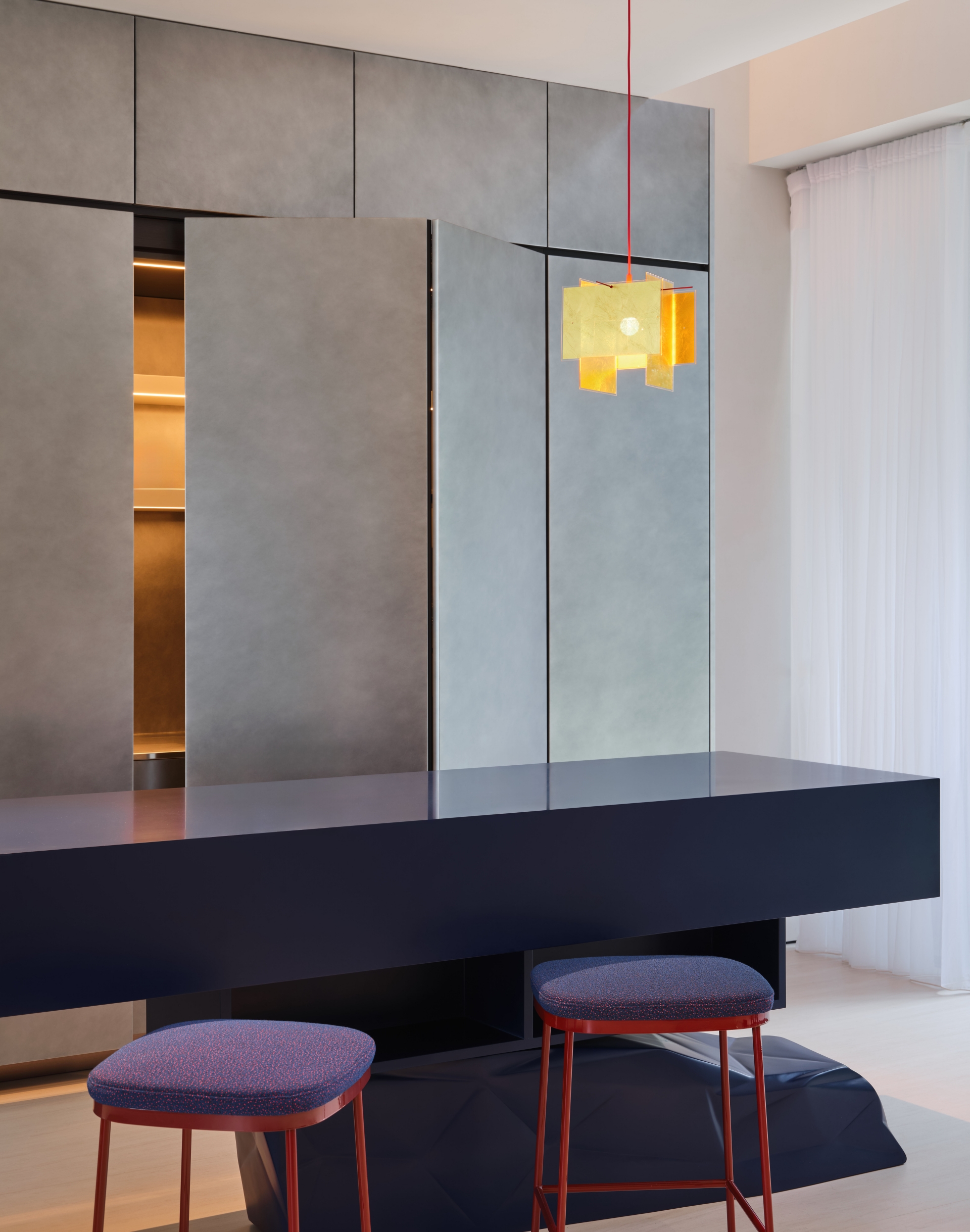
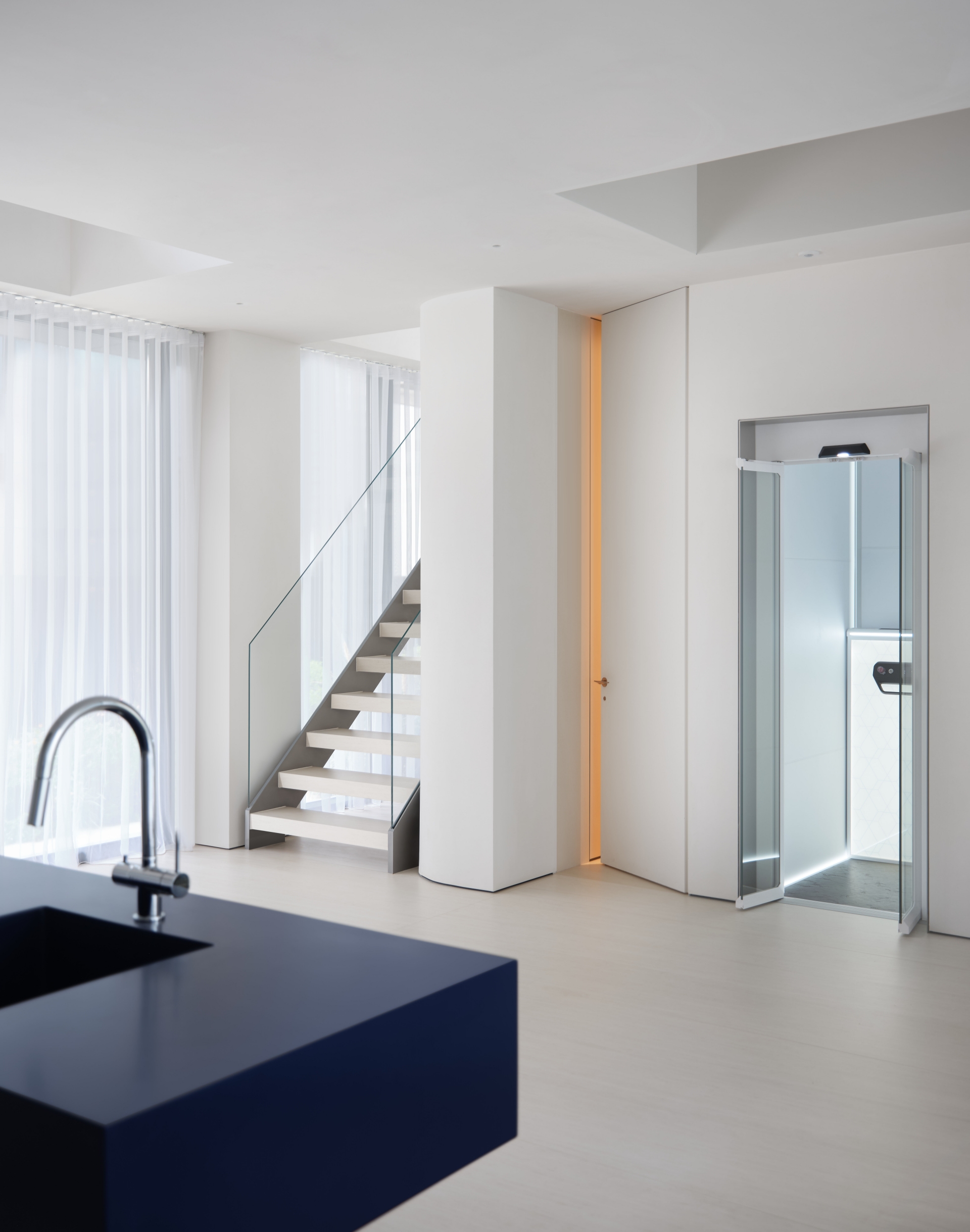
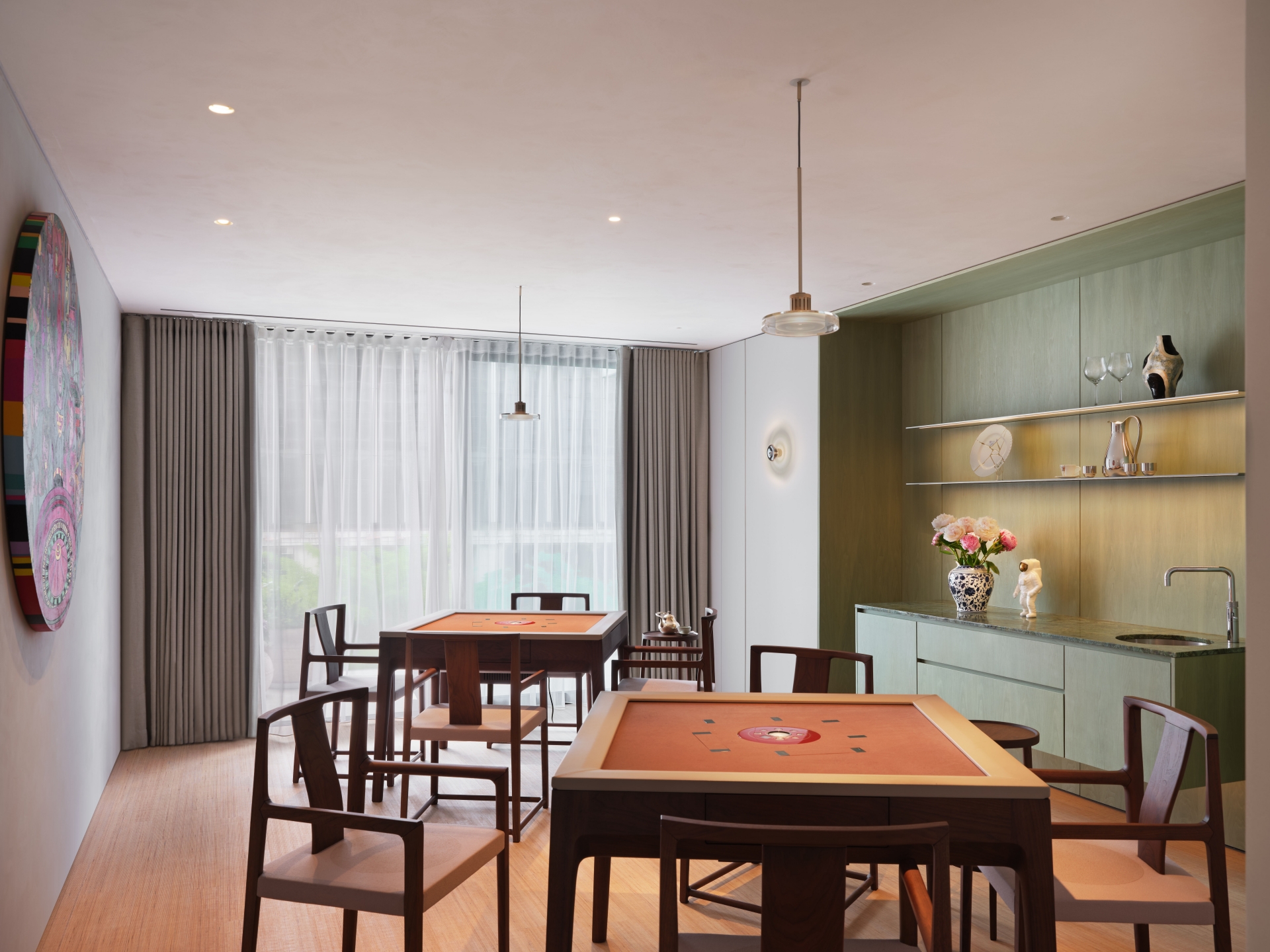
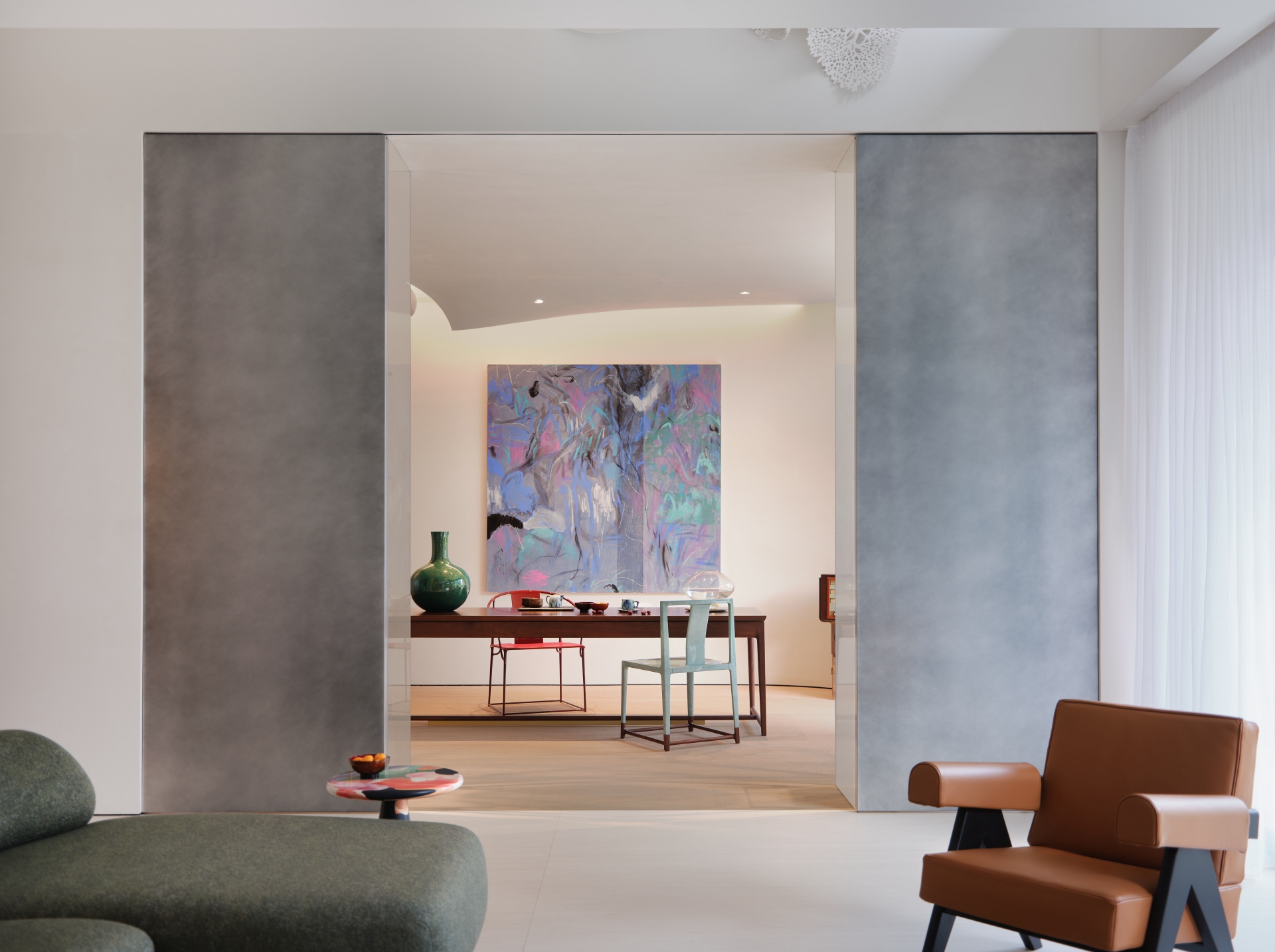
The club’s amenities balance social vibrancy with meditative calm. An indigo bar counter, set against soft gray walls, serves as a cool visual anchor, while the tea room introduces a more contemplative tempo. Here, the abstract brushwork of artist Zhou Li meets gold-framed glass cabinets and contemporary furnishings, fostering a harmony between Eastern ritual and Western minimalism.
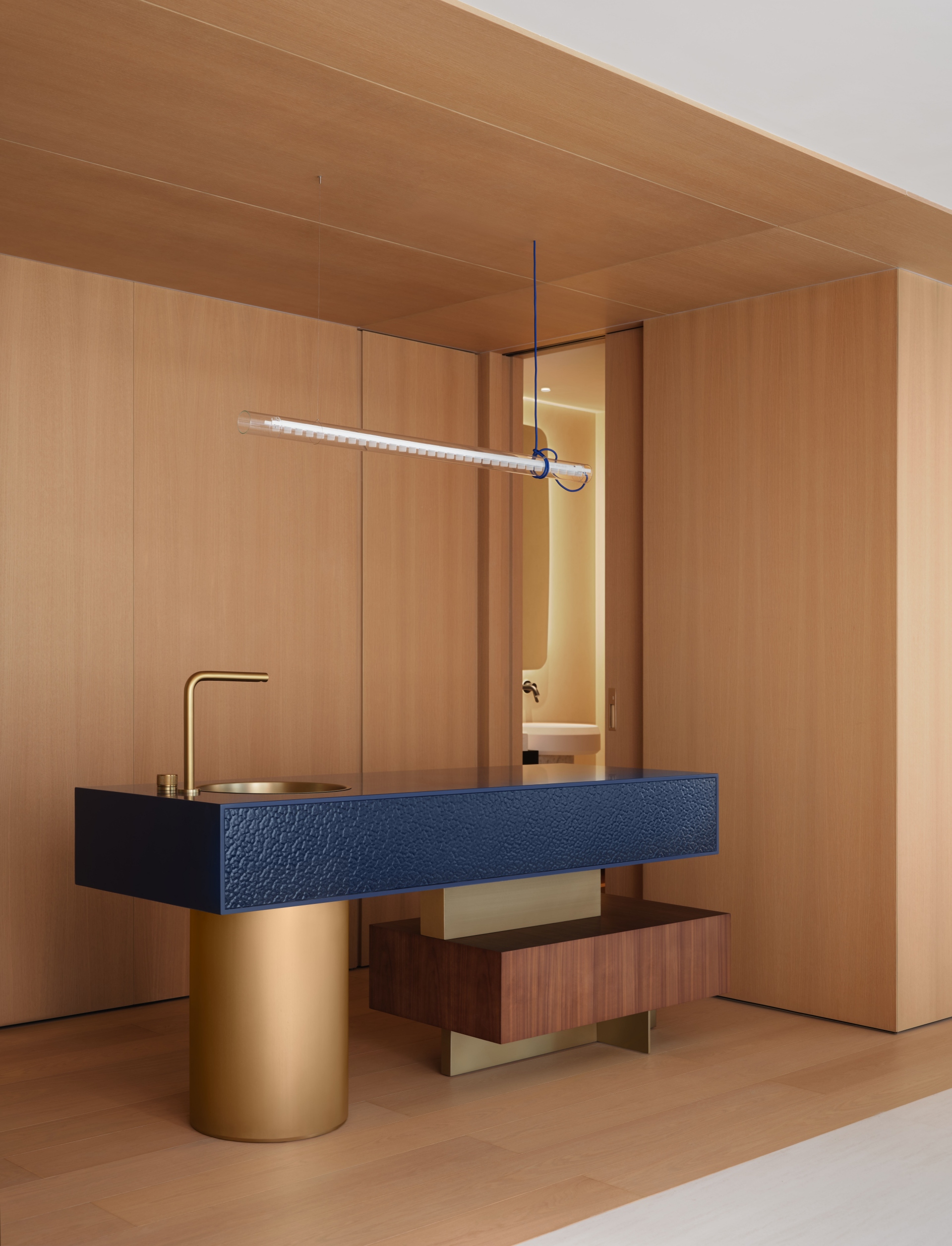
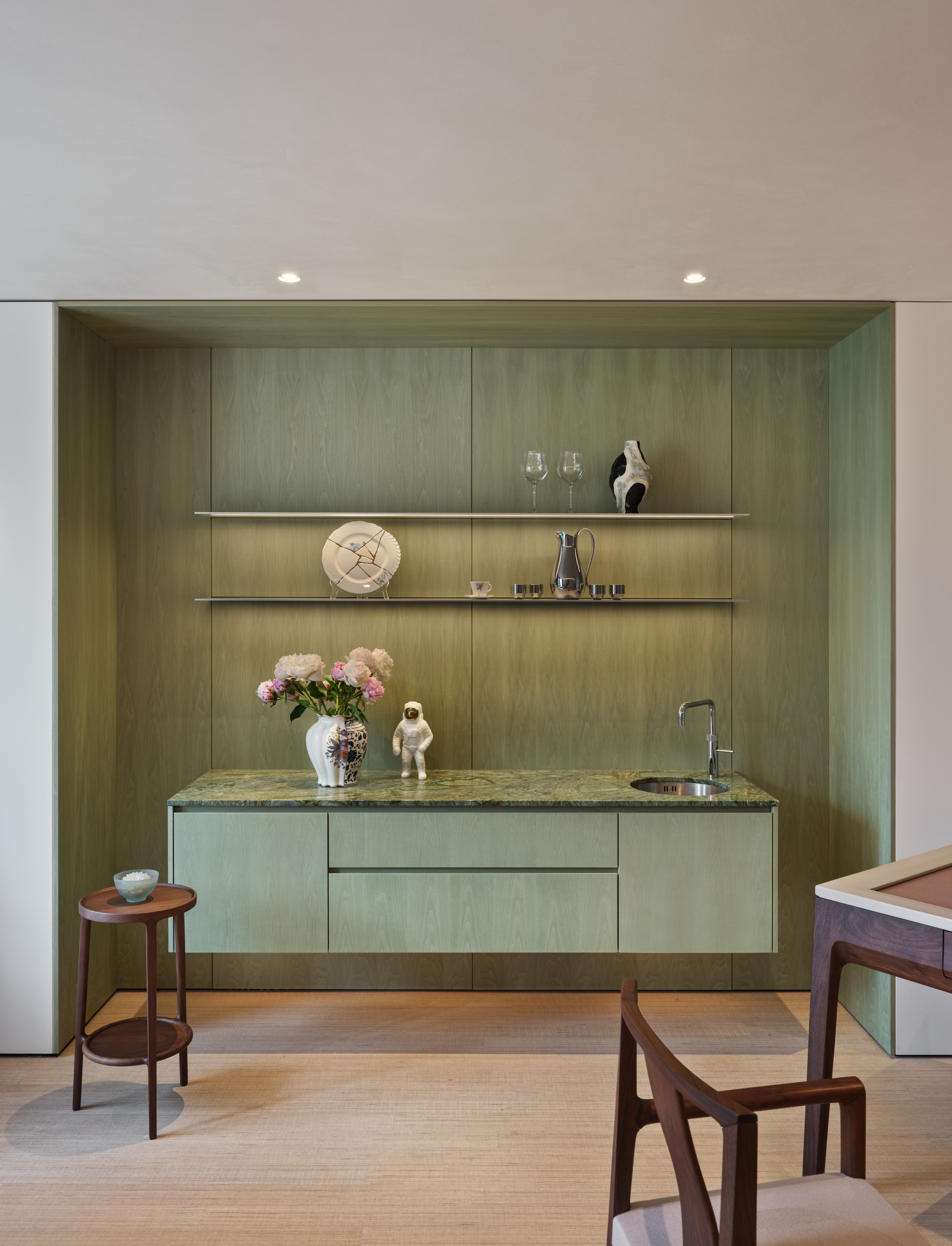
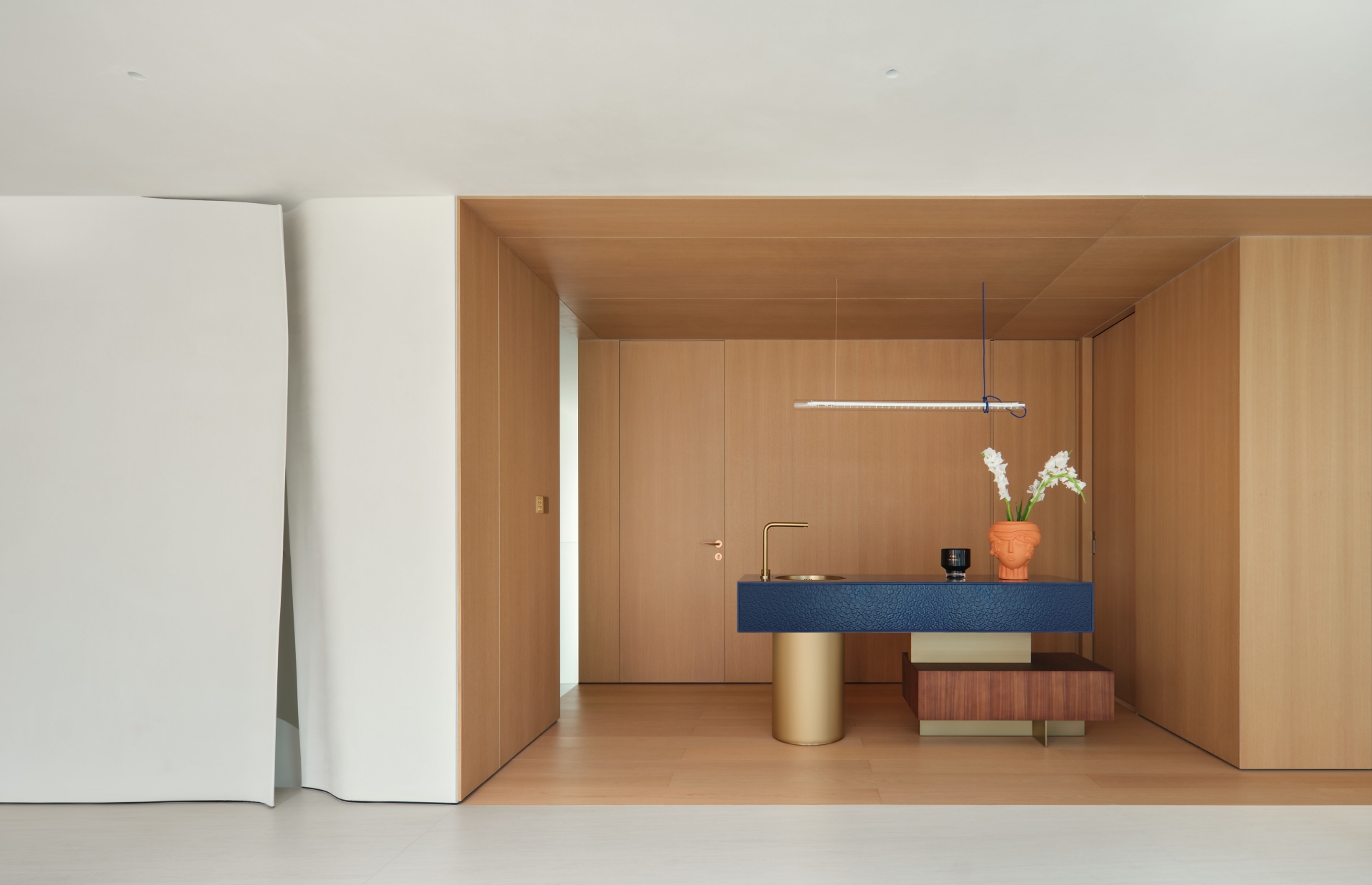
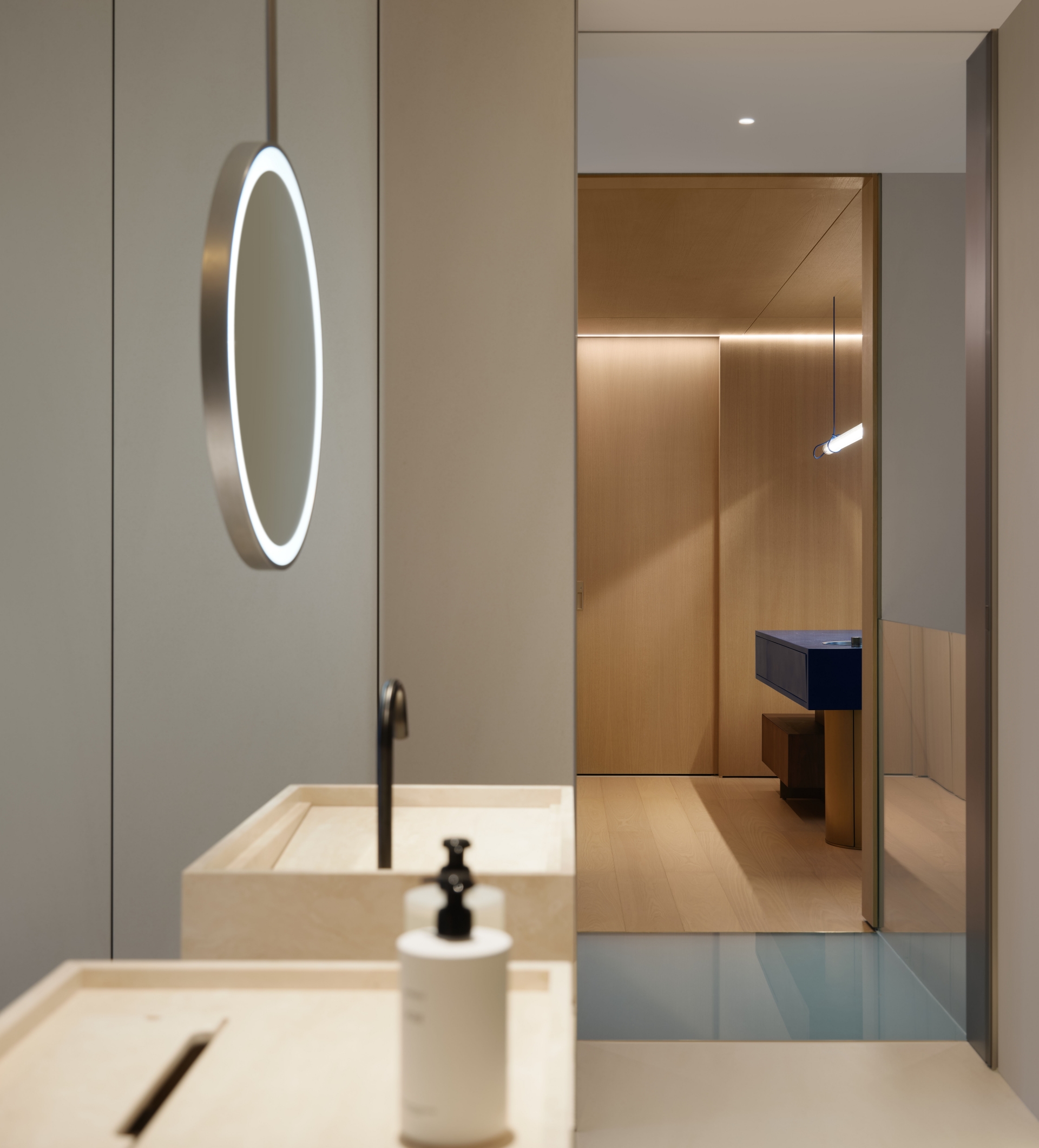
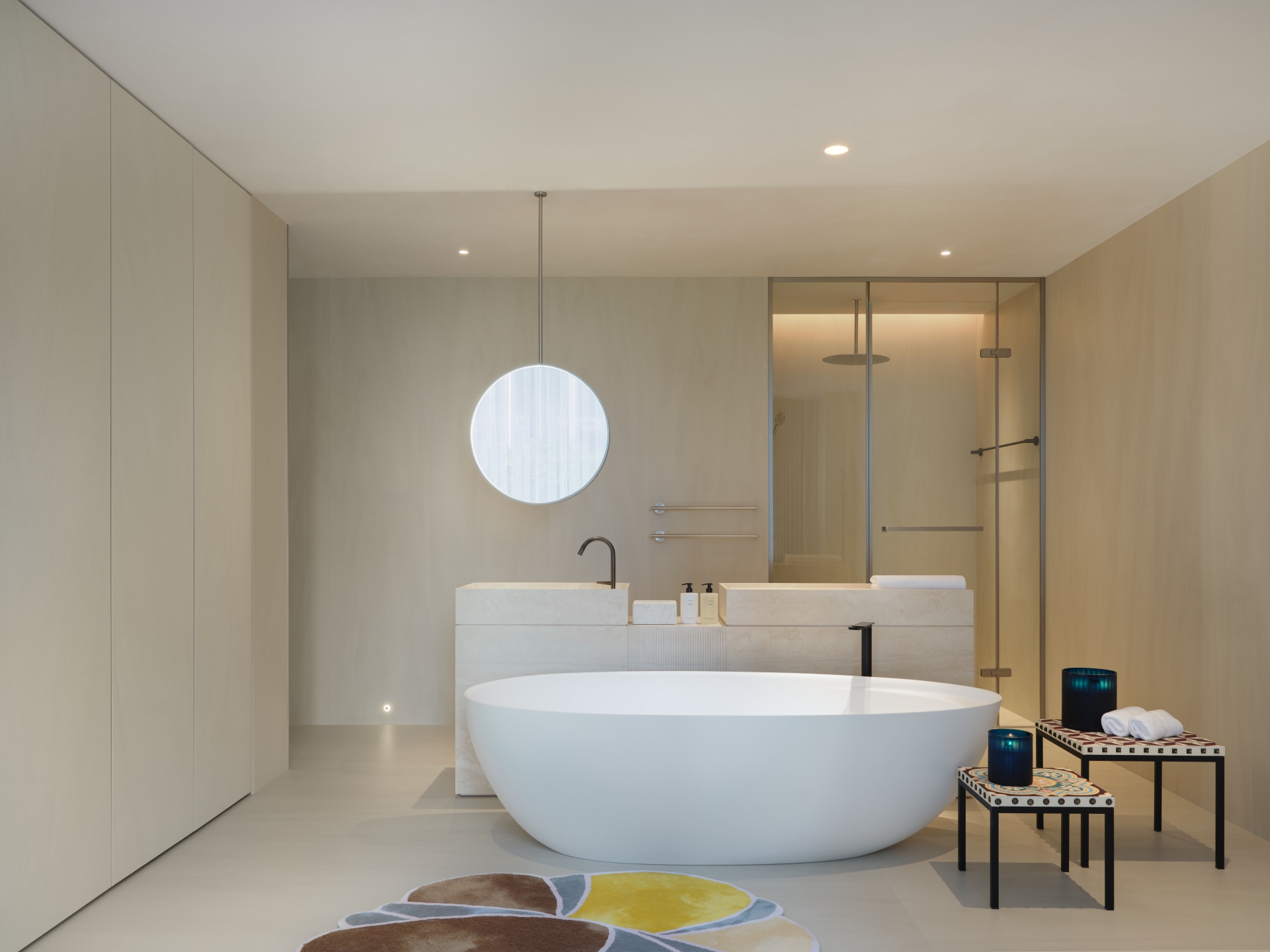
On the top floor, the project pivots toward personal restoration. The water bar and fitness area utilize pale wood panels to conceal functionality, maintaining an uncluttered, breathable aesthetic. In the spa, a stone basin and circular mirror frame a tranquil white bathtub, separated only by transparent glass to maintain the floor’s expansive feel. The journey concludes in the bedroom, where muted palettes and organic, curved walls create a sanctuary that feels less like a room and more like a cocoon.
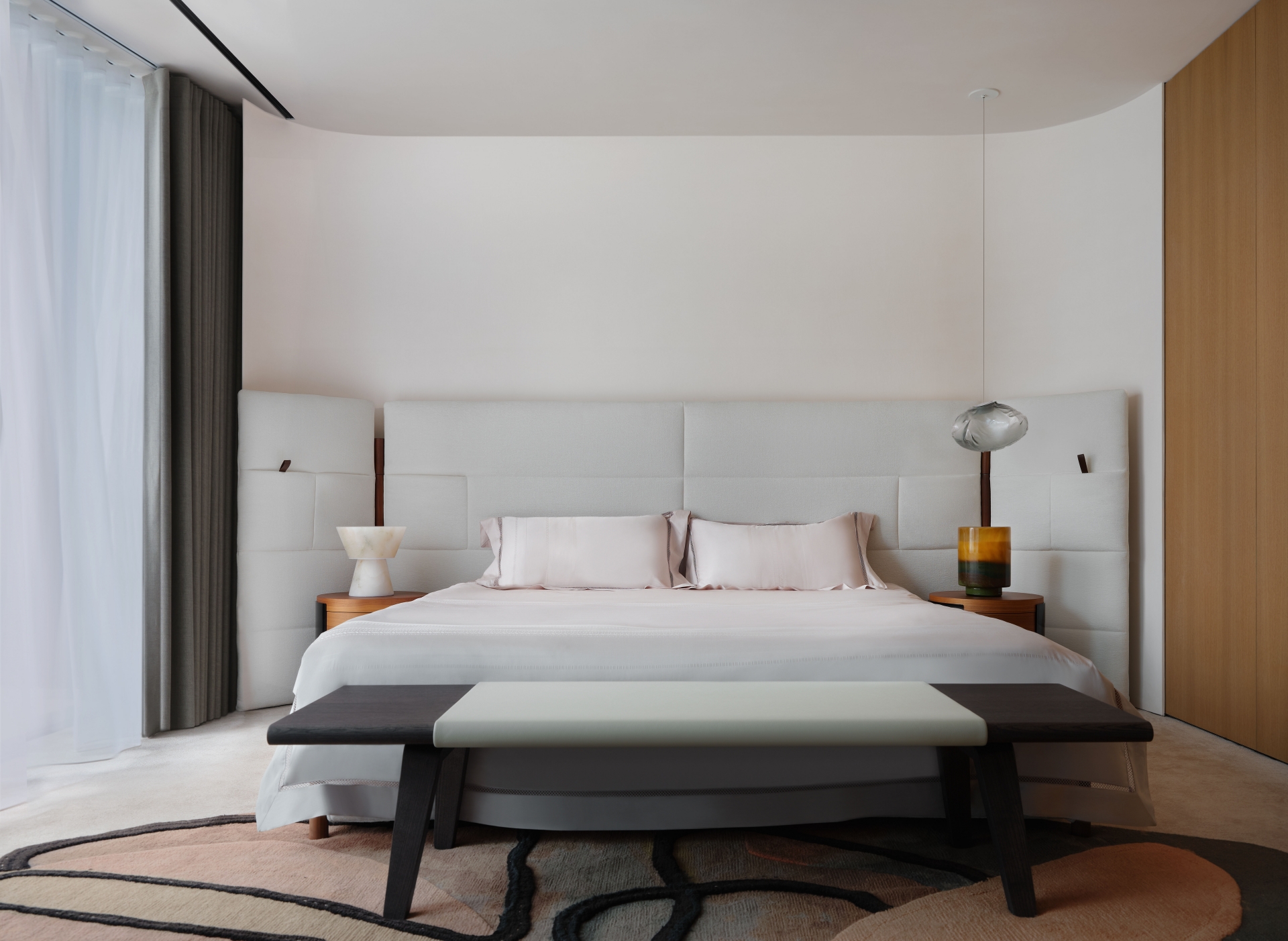
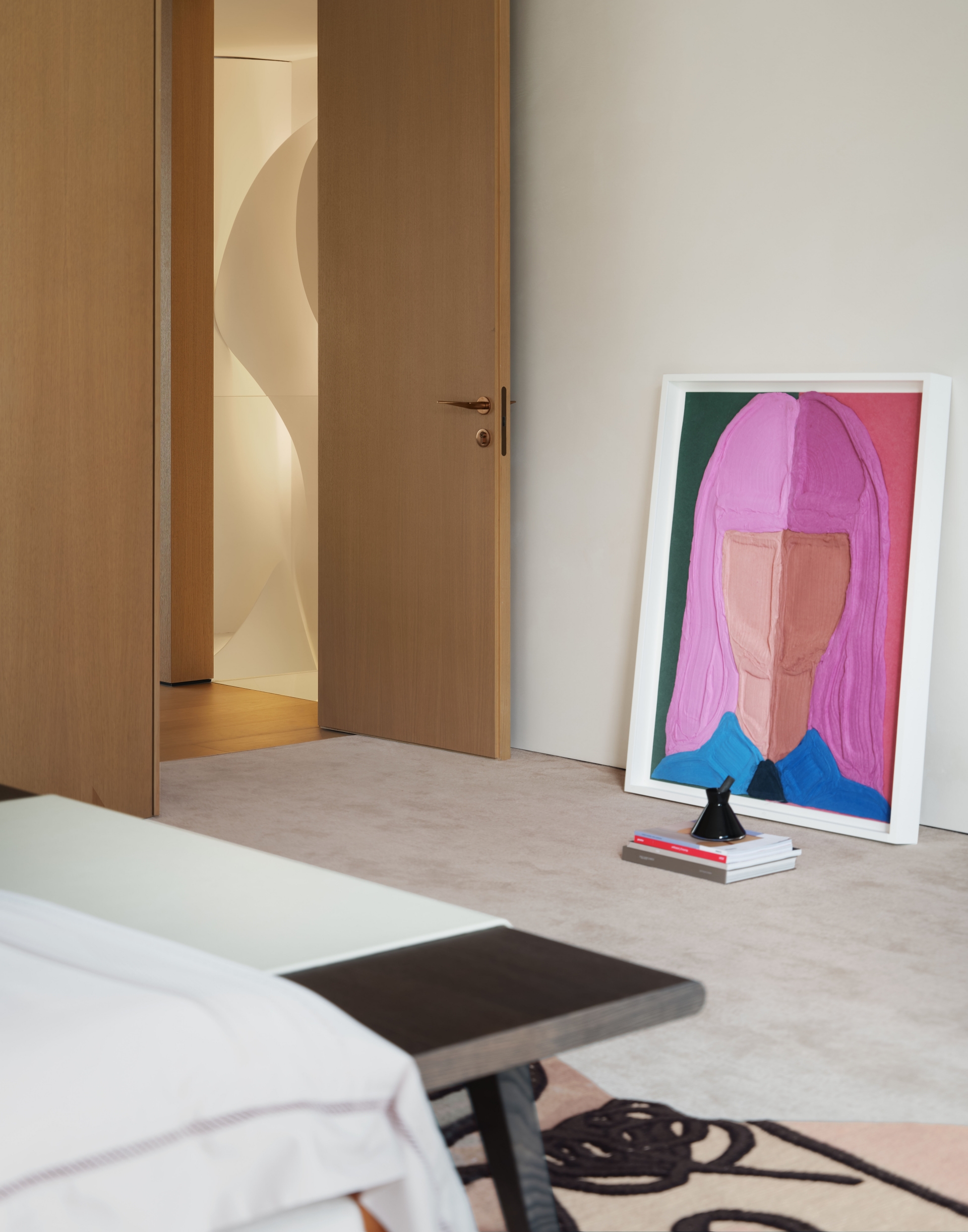
Ultimately, the Bay Park Center Private Club is not a space to be merely viewed, but to be inhabited. It defines a pace of living that invites the observer to slow down and reconnect. As art, nature, and architecture converge, the result is a fertile ground where it is not only the plants that thrive, but the very possibilities of life itself.