PODCAST
CHI WING LO: THE ARTIST WHO TEACHES US HOW TO LIVE AND ALLOWS US TO SELF REFLECT
LISTEN NOW


The first thing you notice isn’t the train. It’s the people.
Everyone is smiling. Not politely, nor for the cameras, but with genuine ease. Couples dressed as though attending an intimate wedding; friends sharing quiet laughter before stepping aboard. A gentleman in a Panama hat adjusts his wife’s jacket; nearby, a woman quietly wipes away a tear.
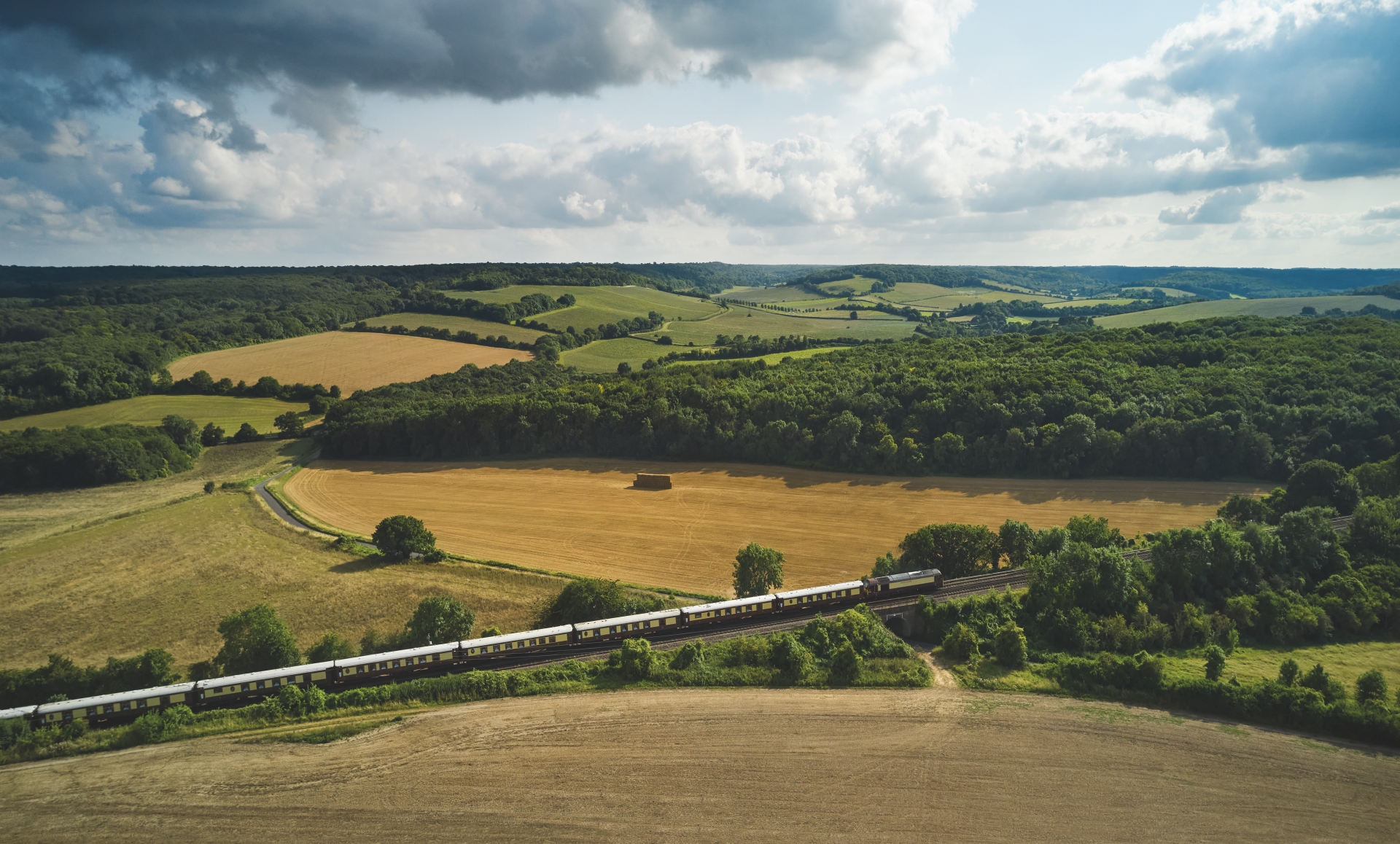
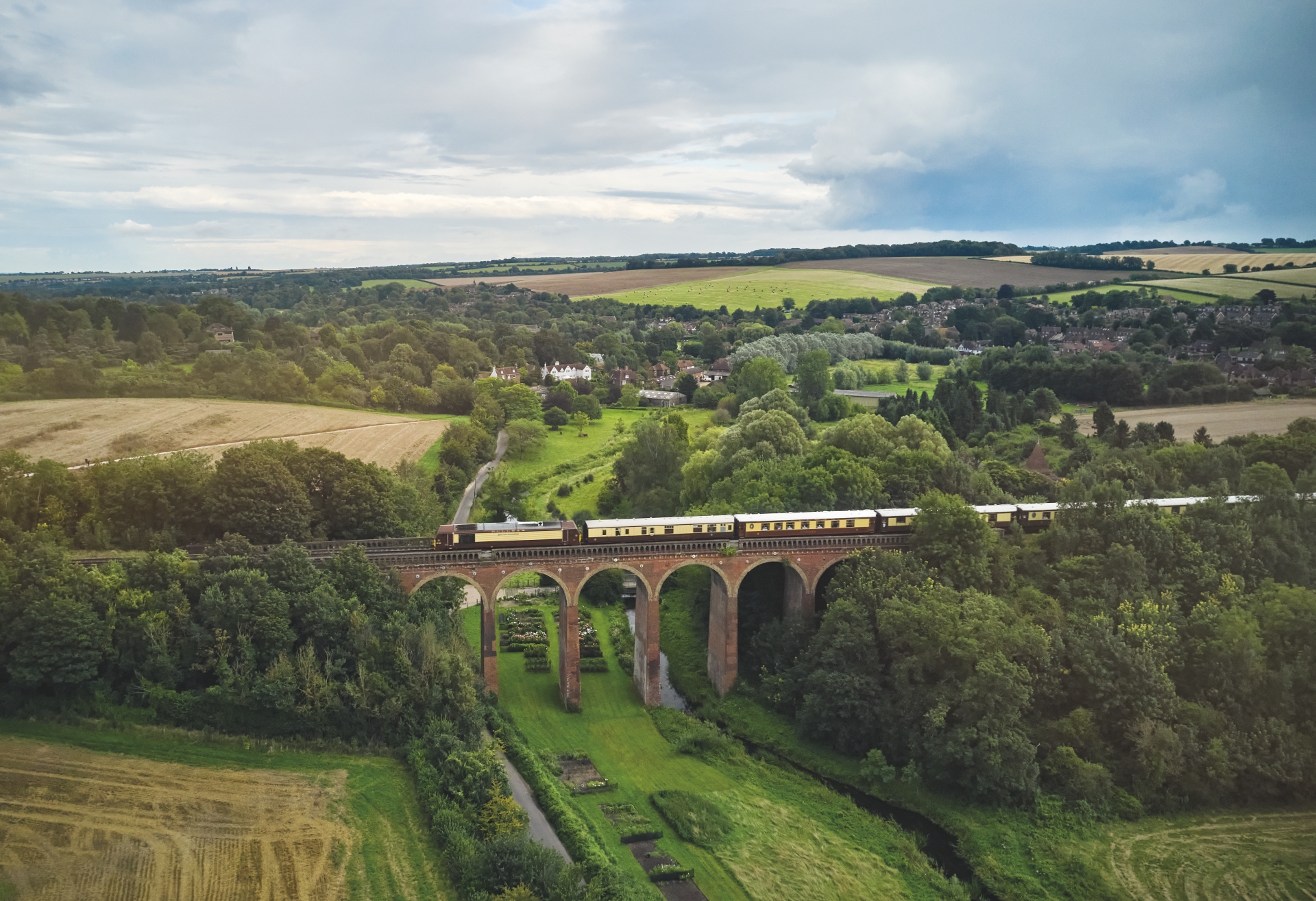
Our destination, after all, is nowhere in particular. We depart London Victoria, spend several gloriously unhurried hours traversing the English countryside over Sunday lunch, and return precisely where we began. No city to conquer, no monument to tick off. The journey is the entire point.
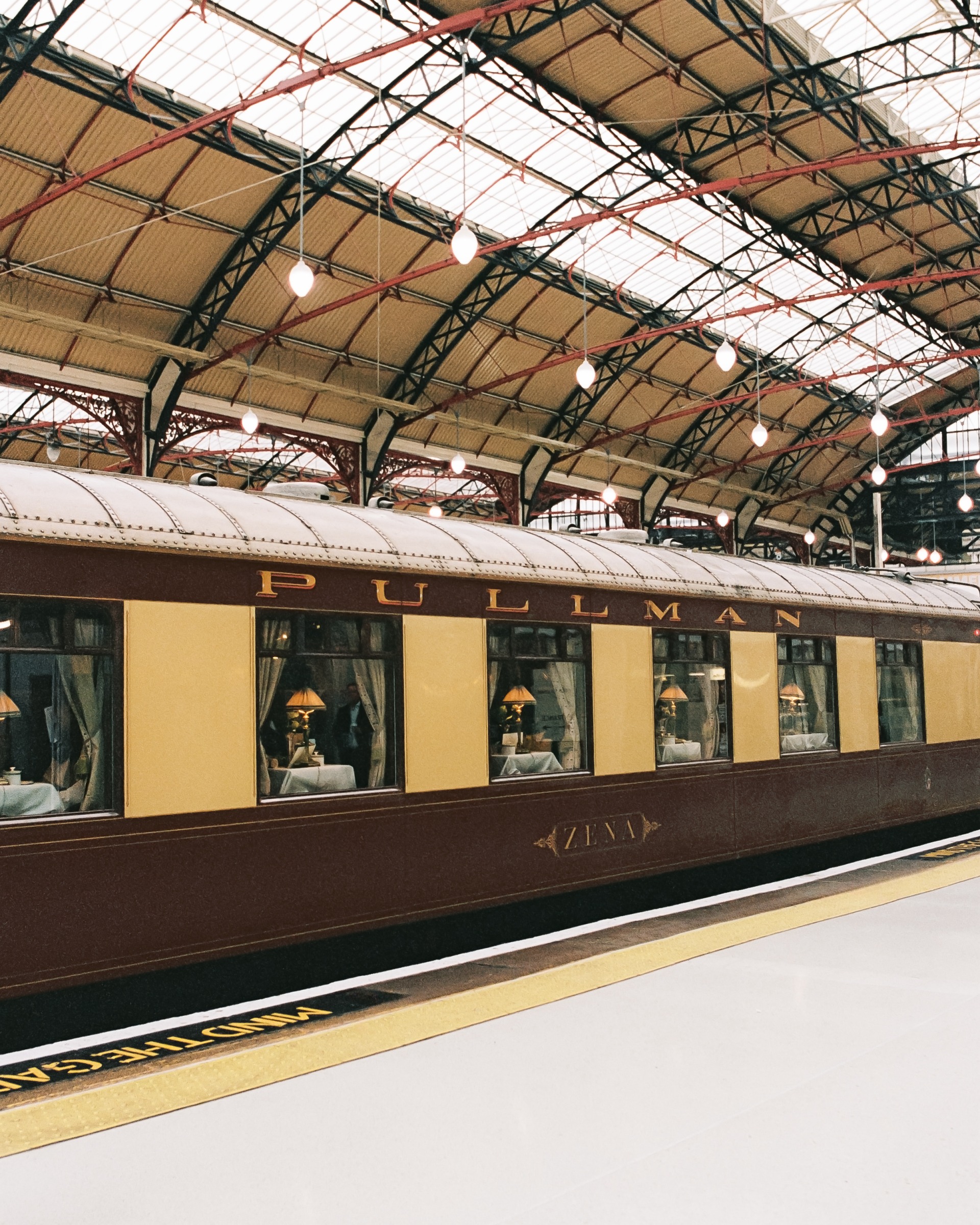
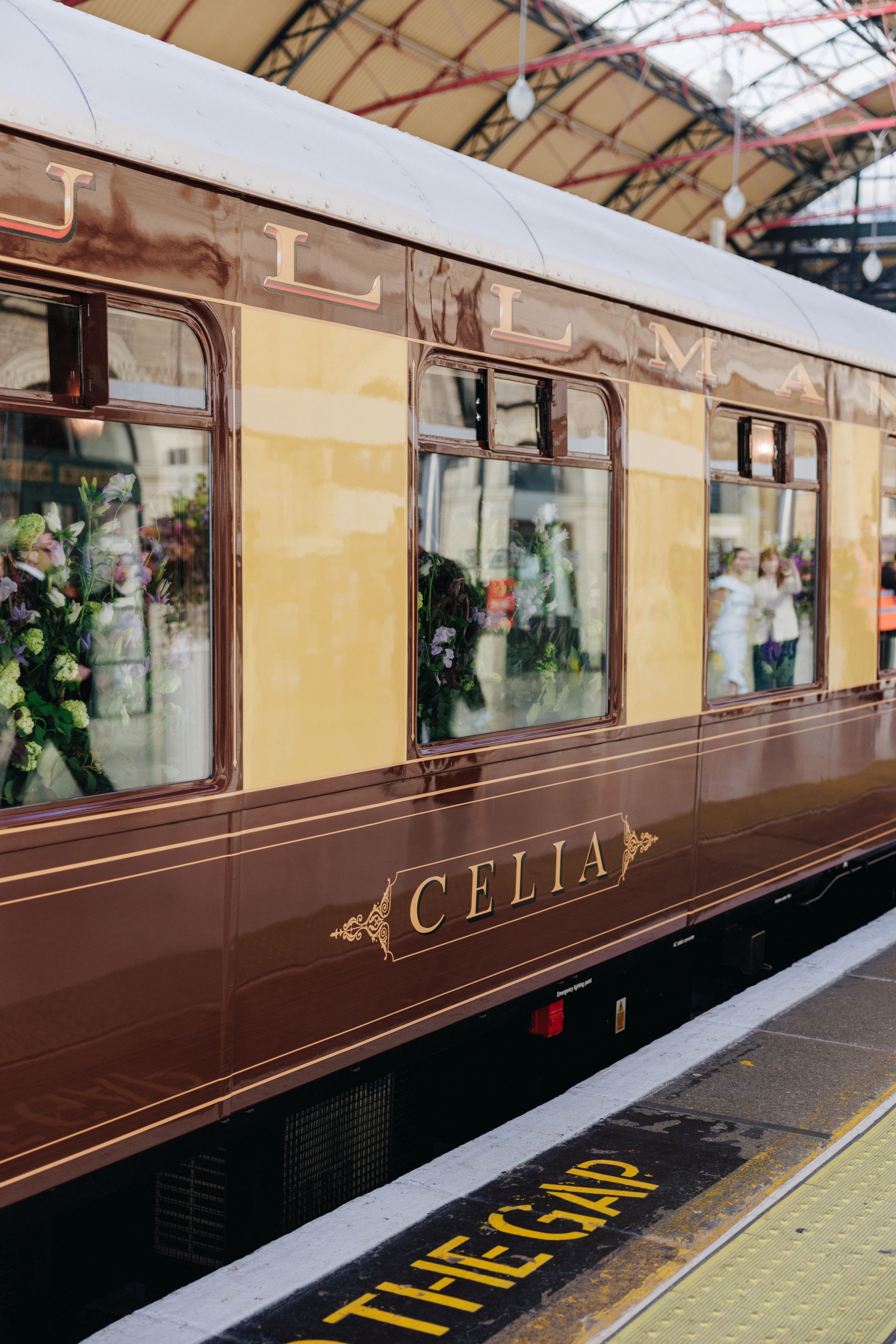
Aboard British Pullman, A Belmond Train, England, that journey began nearly a century ago. These are authentic, historic Pullman carriages—each carrying its own nomenclature, distinct interior, and layered archive of lives and stories.
Audrey | The Heritage Car
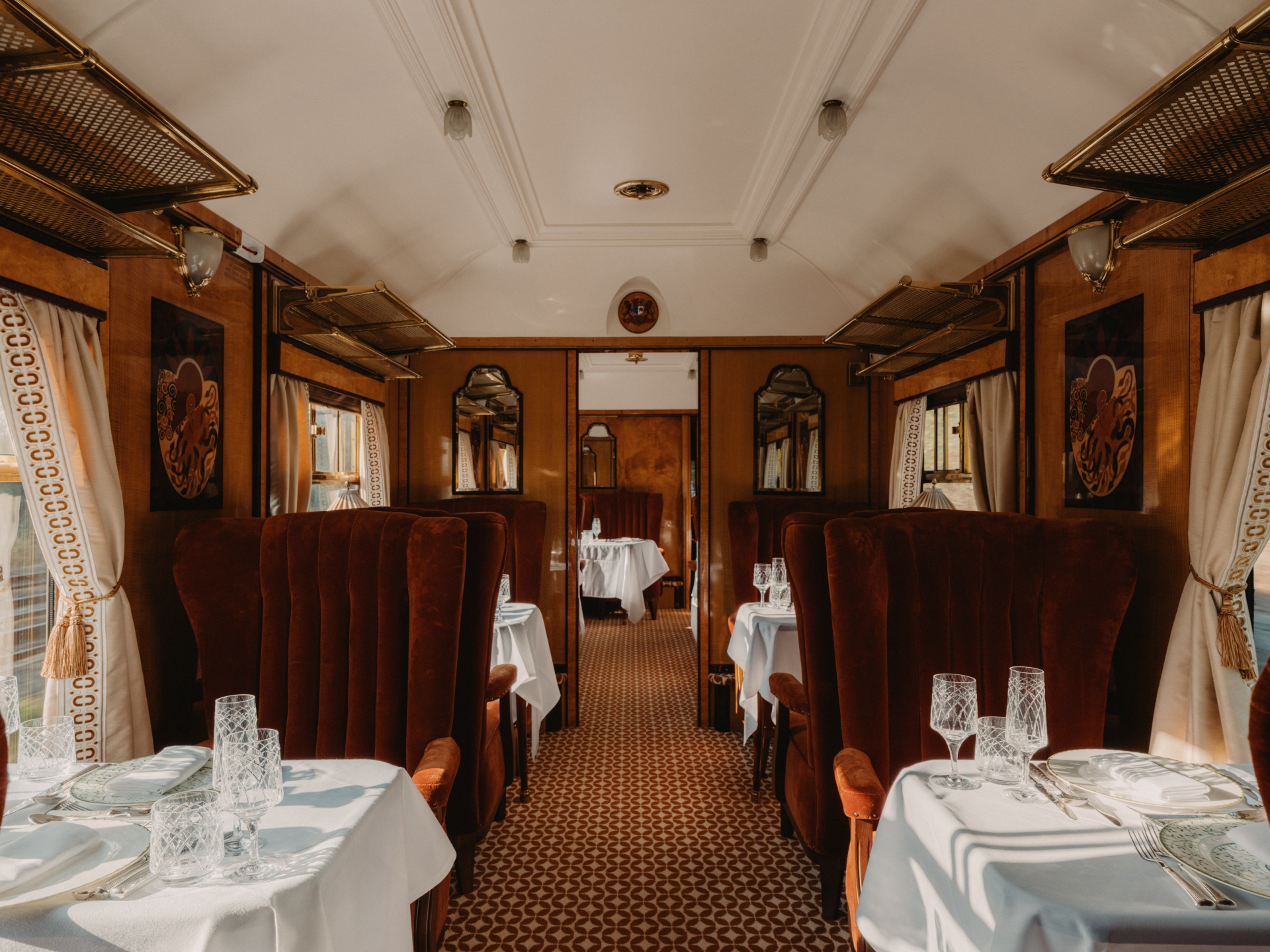
Ours is Audrey. Built in 1932 by Metropolitan-Cammell for the legendary Brighton Belle, she has carried the Queen, the Queen Mother, and the Duke of Edinburgh.
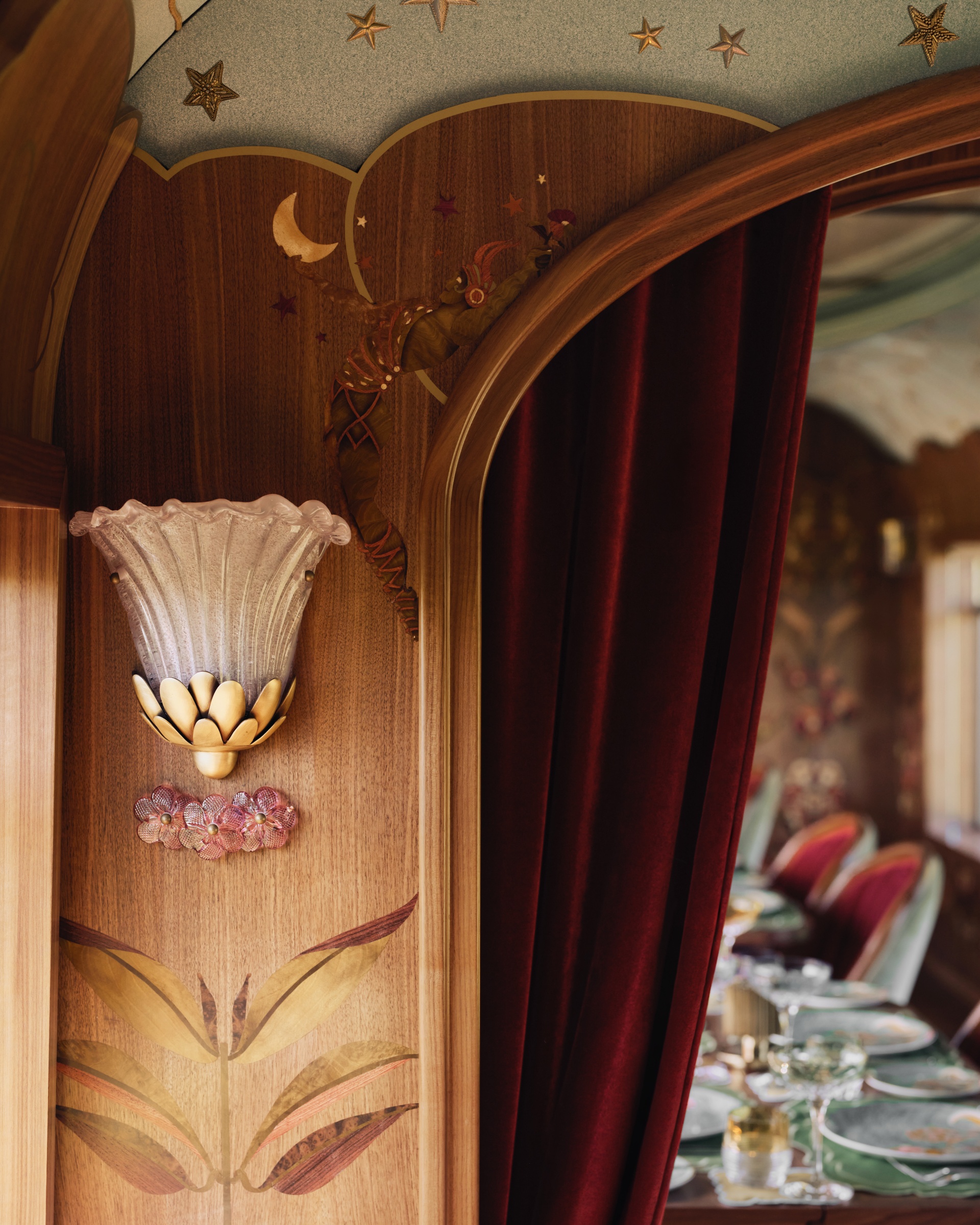
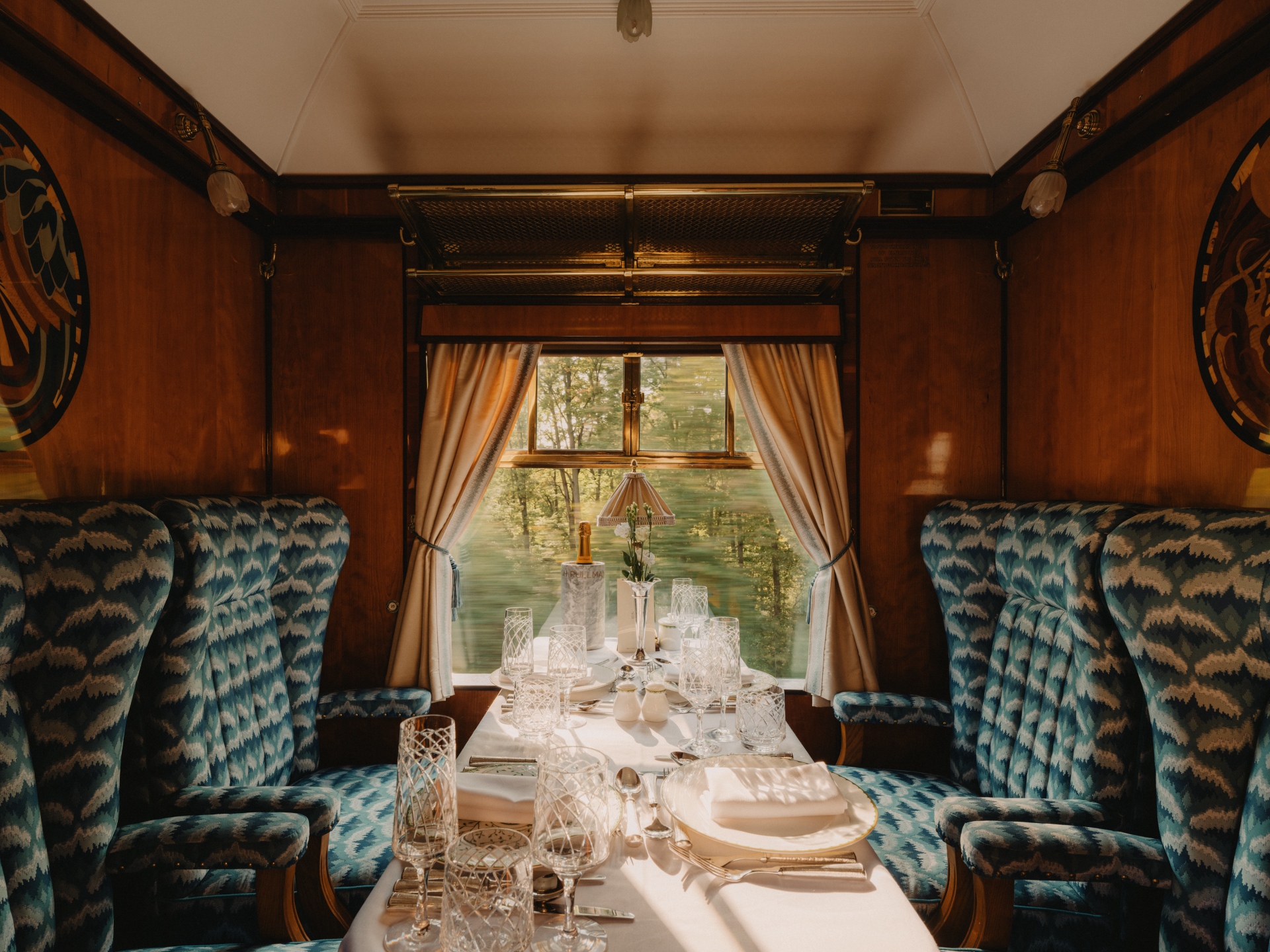
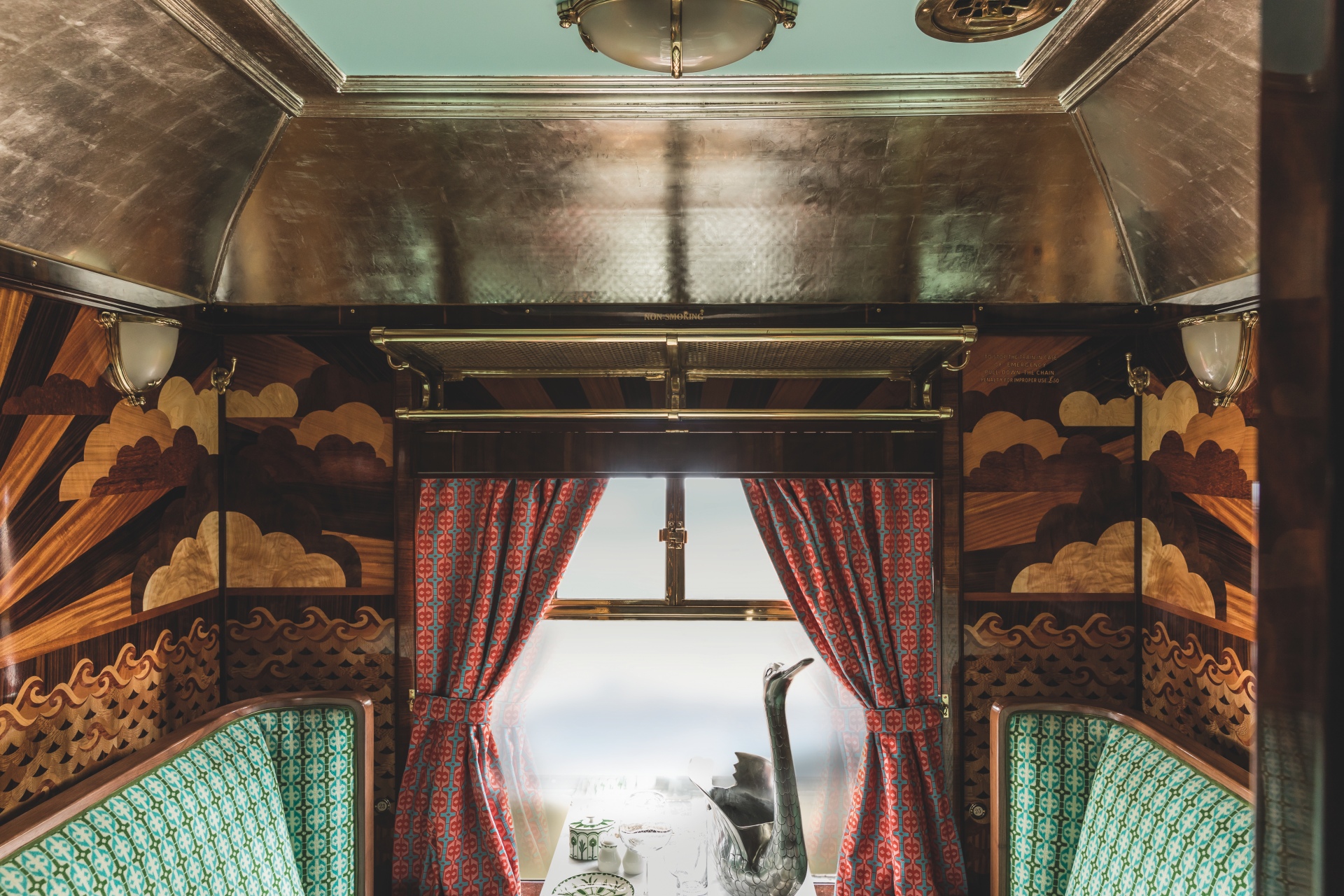
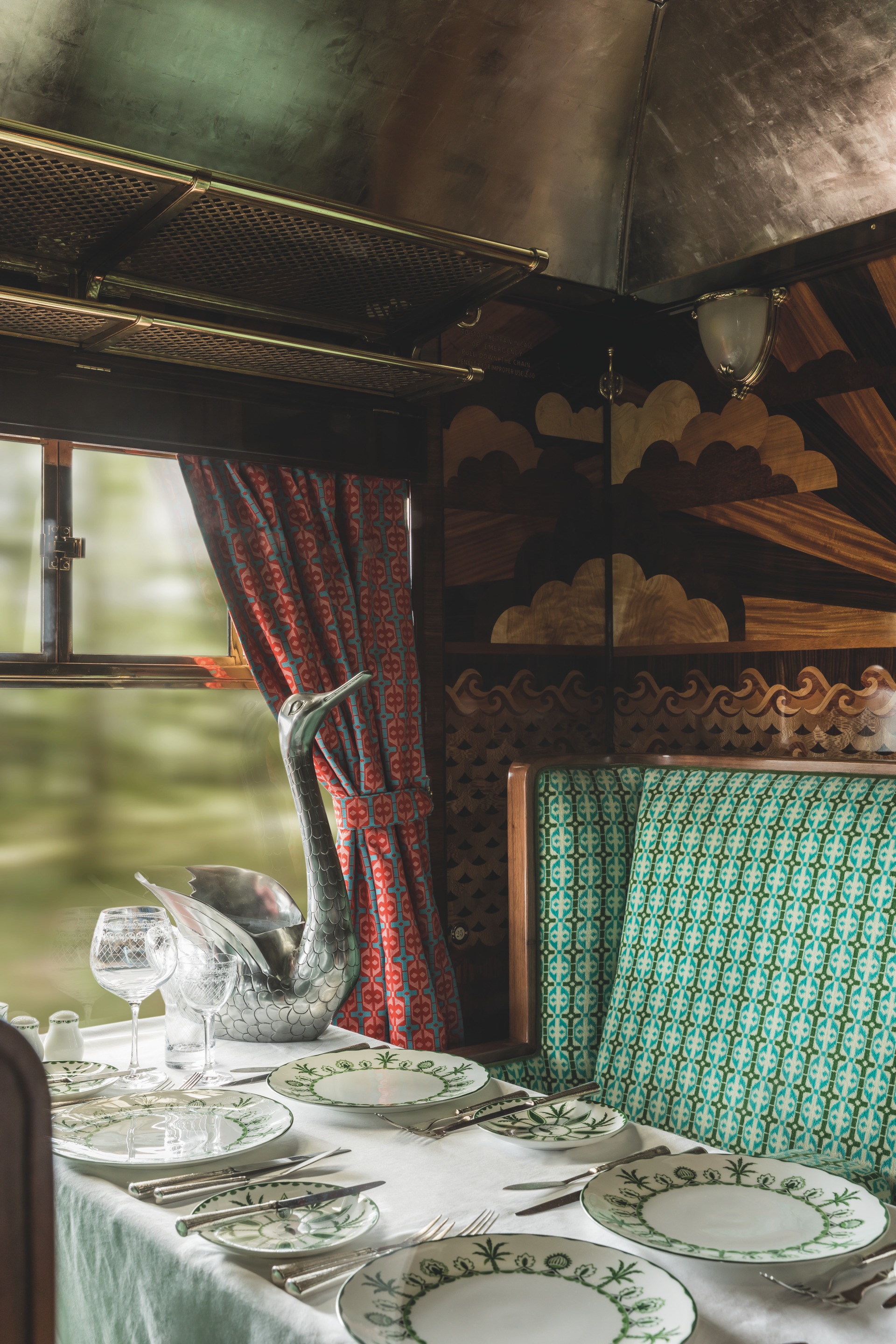
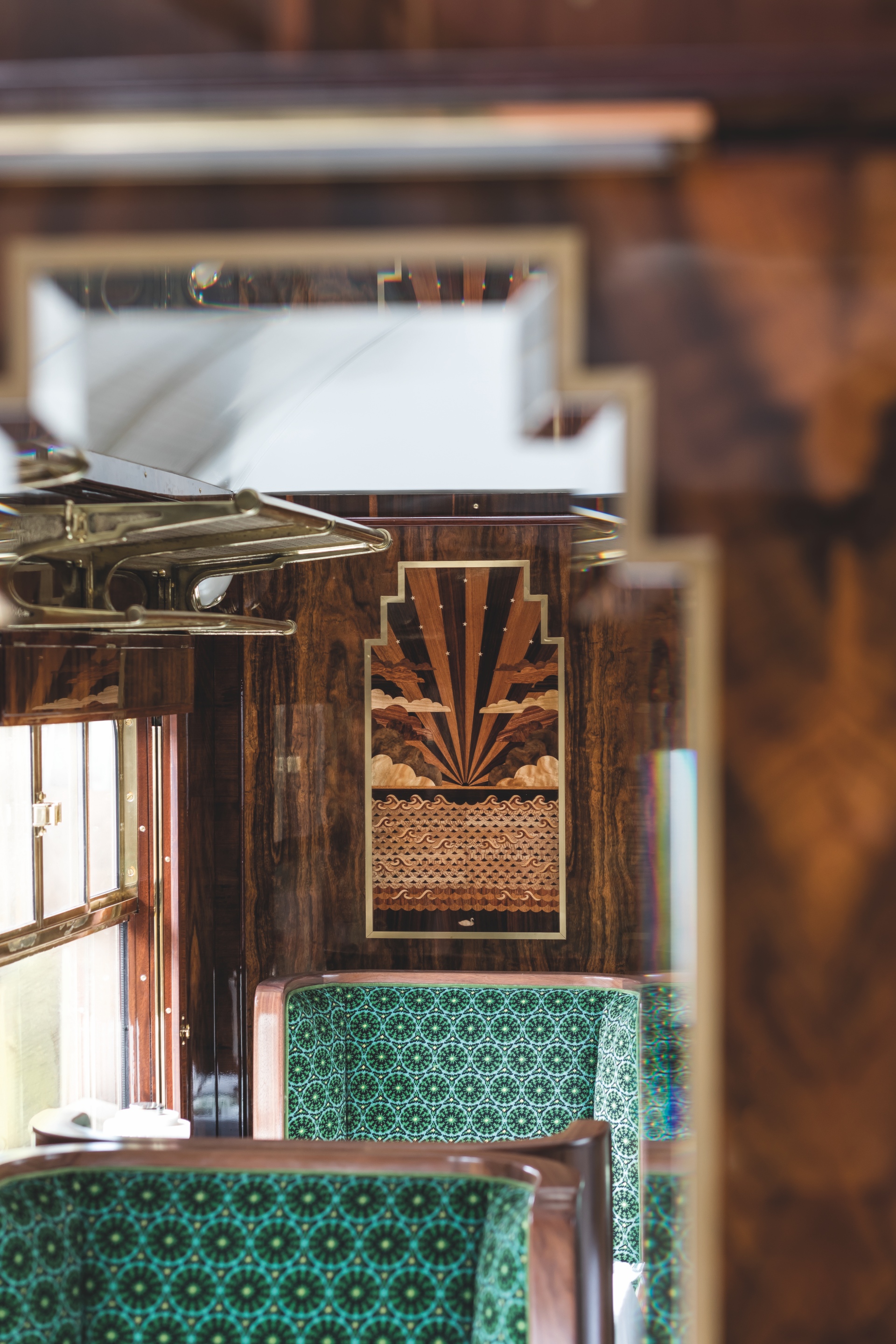
Inside, vintage lighting glows against polished timber and intricate marquetry embedded into wall panels. Everything is tactile: brass, veneer, upholstery, glass. A railway carriage imposes its own intimate architecture; craftsmanship has nowhere to hide.
Then, almost imperceptibly, we move. London slides away.
Lunch arrives with effortless precision while a parallel world unfolds beyond the glass: suburban stations, back gardens, allotments, and fields. Commuters wait on ordinary platforms as this extraordinary procession of polished Pullman carriages slips past. Sunlight catches the rim of a glass, travels across polished timber, and dissolves into shadow. This is design in motion.
Among these beautifully worked surfaces, the marquetry leads to one of the most enduring stories on board.
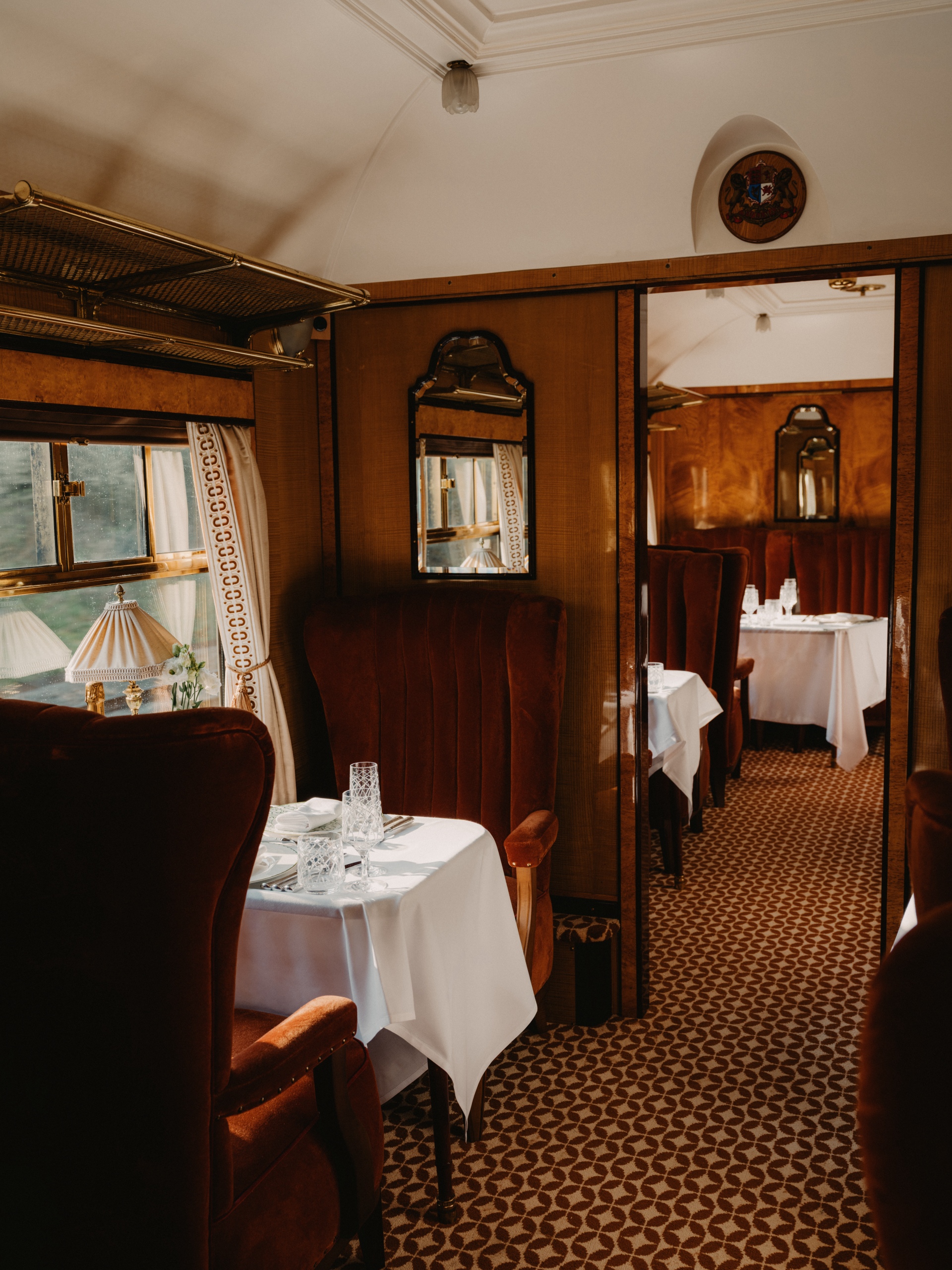
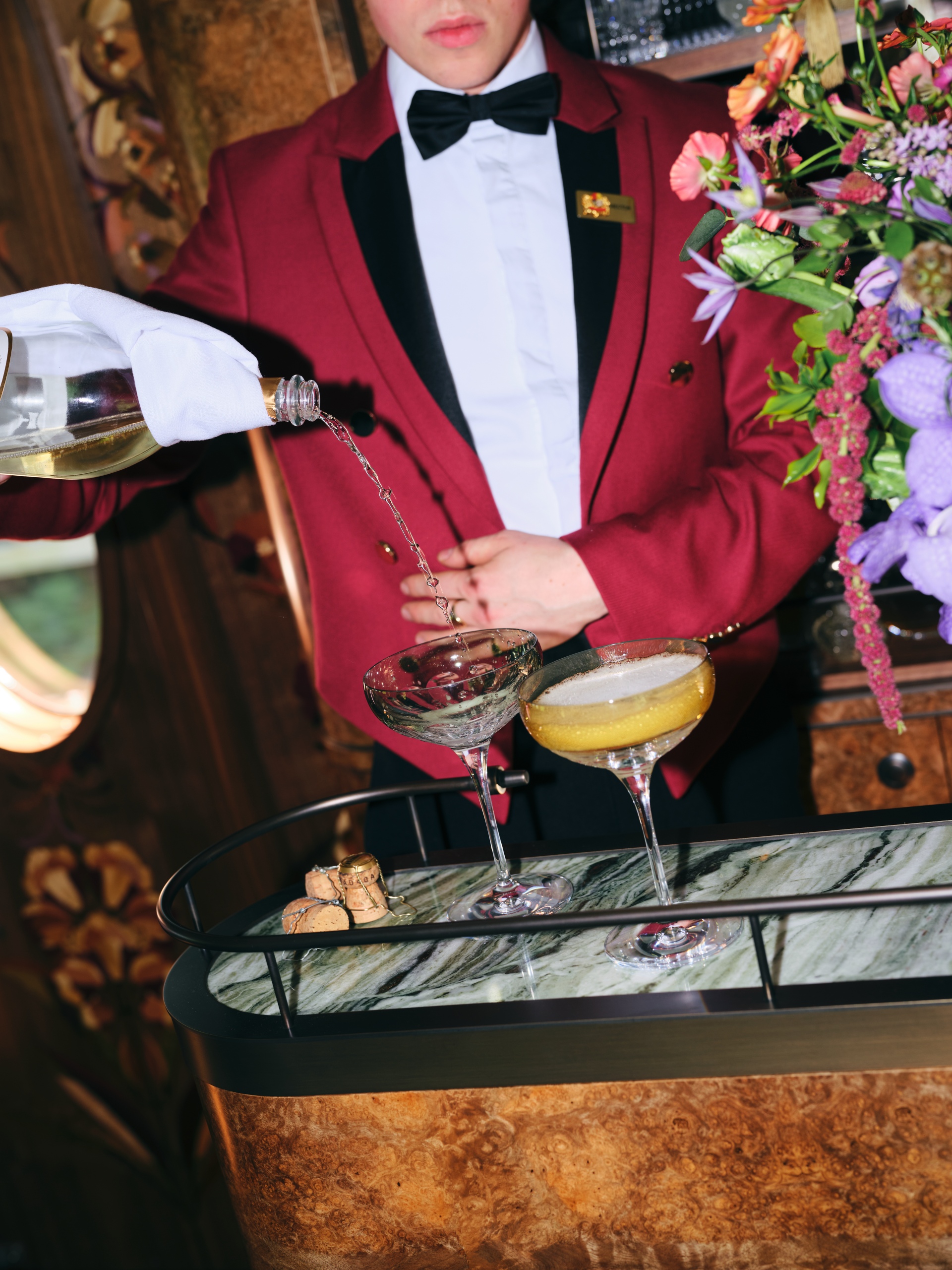
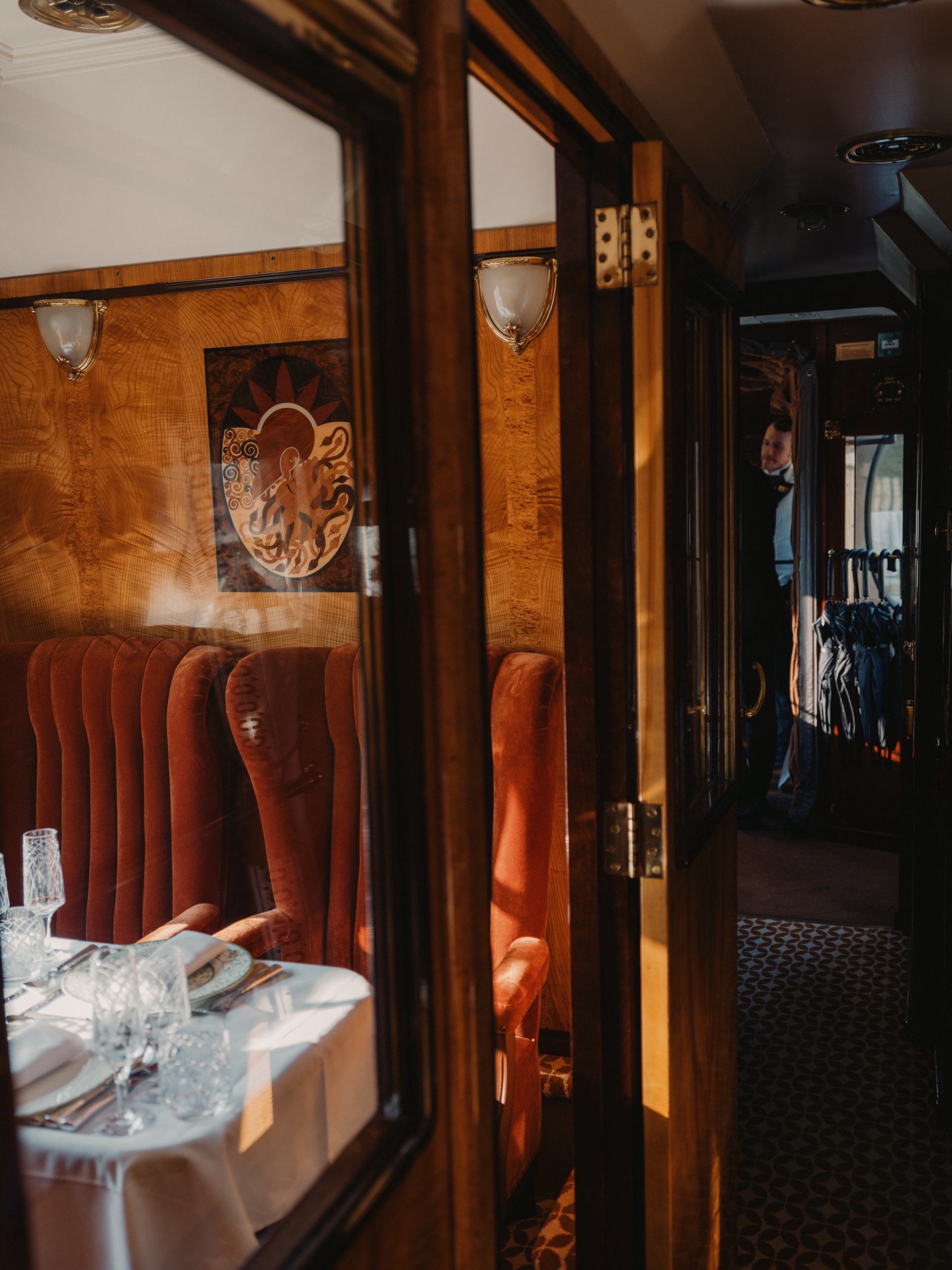
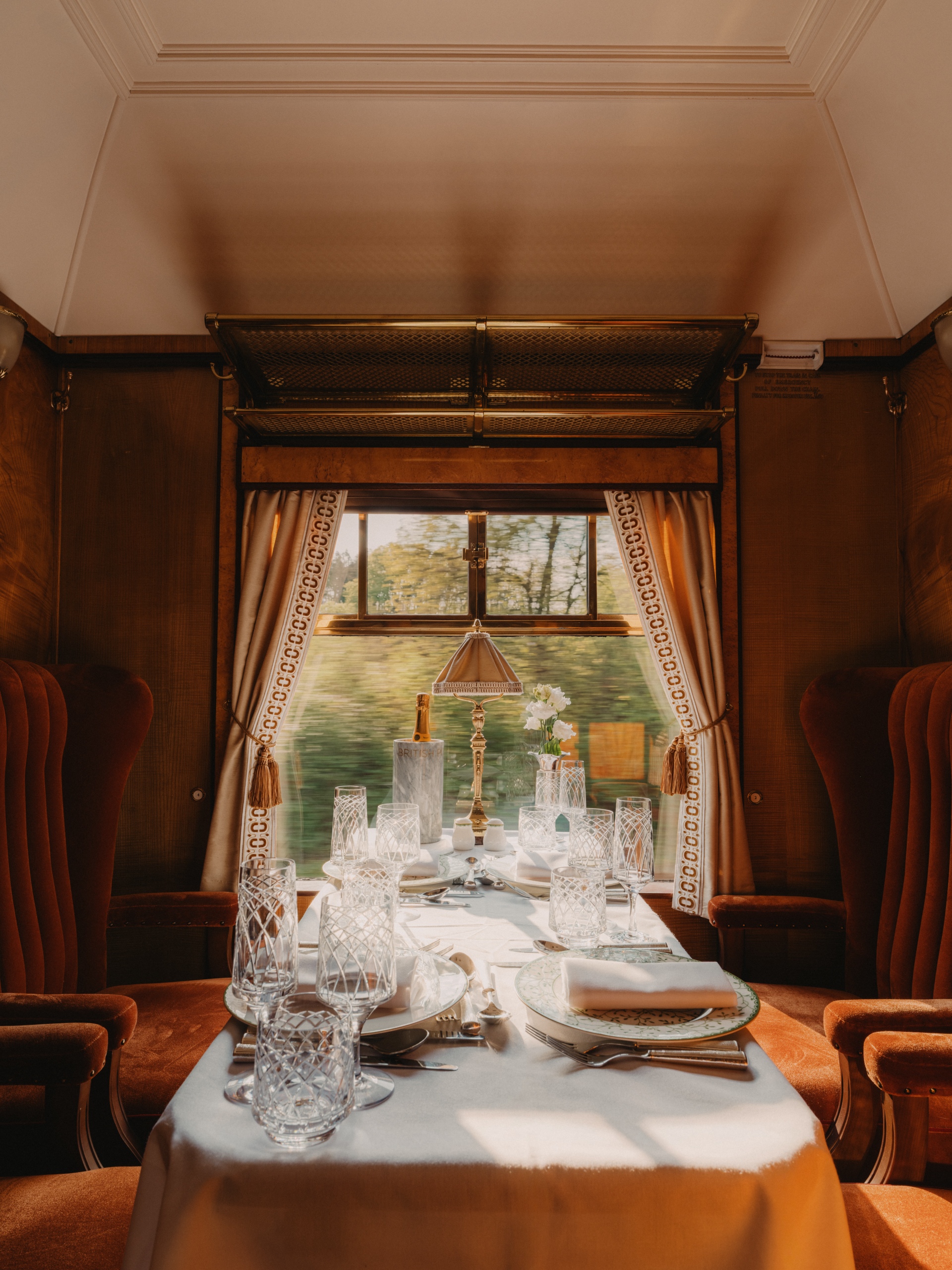
A. Dunn & Son | Four Generations of Marquetry
Albert Dunn founded A. Dunn & Son in London in 1895, creating original marquetry for Pullman cars through the 1920s and 1930s. When the historic carriages were restored in the late 1970s, an old A. Dunn & Son invoice was discovered at the depot. The company was still there.
Albert’s son, Robert, and grandson, Bob, became involved in the restoration. Today, his great-granddaughter, Cheryl Dunn, leads the fourth generation, working with machinery over 125 years old. Techniques remain uncompromising: selecting veneers for grain and texture, and shading individual pieces in hot sand to create depth. “With our marquetry, you are able to see the human touch,” Dunn notes, “unique quirks and flaws that cannot be replicated by machine.”
Keith Bates | The Moving Archive
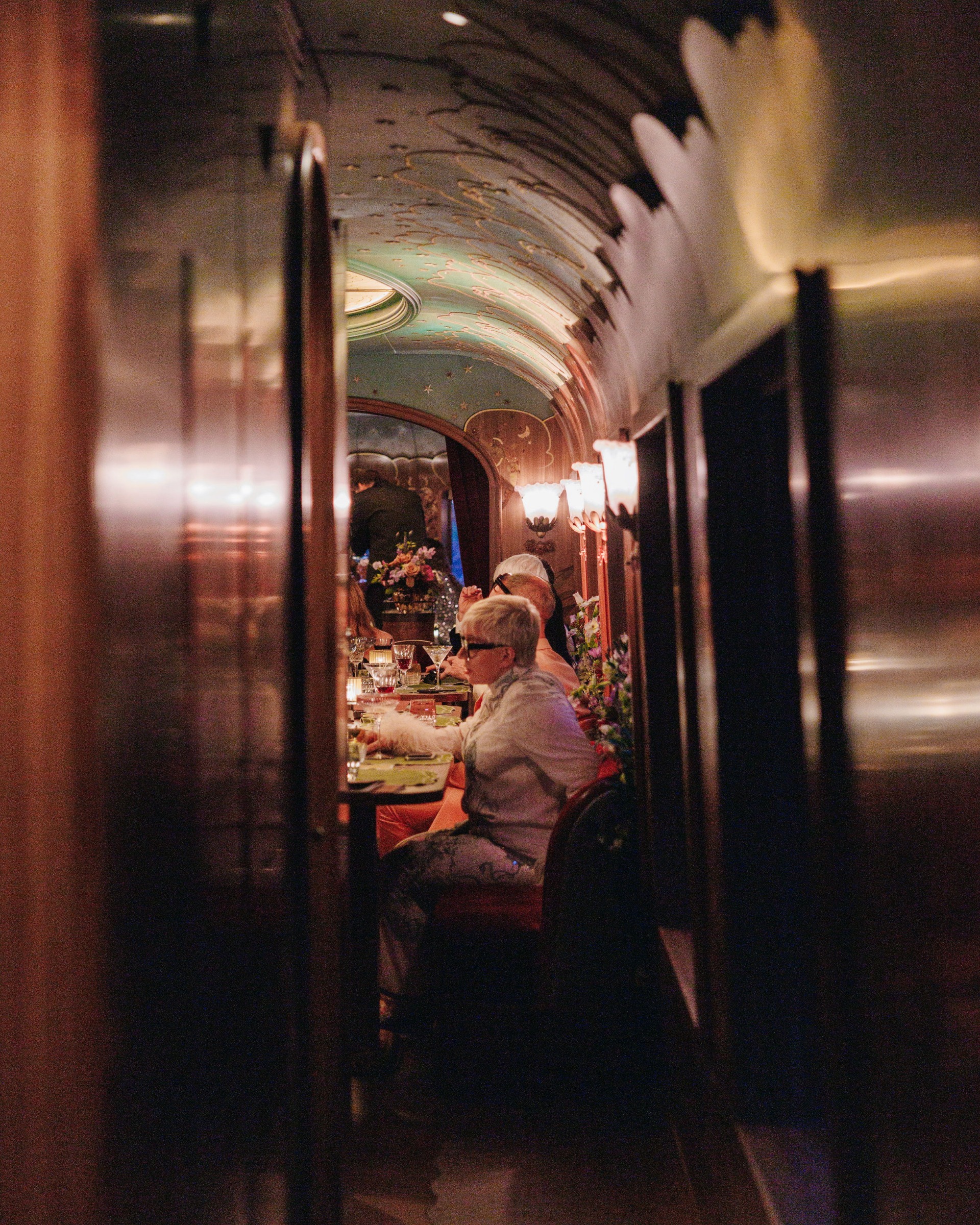
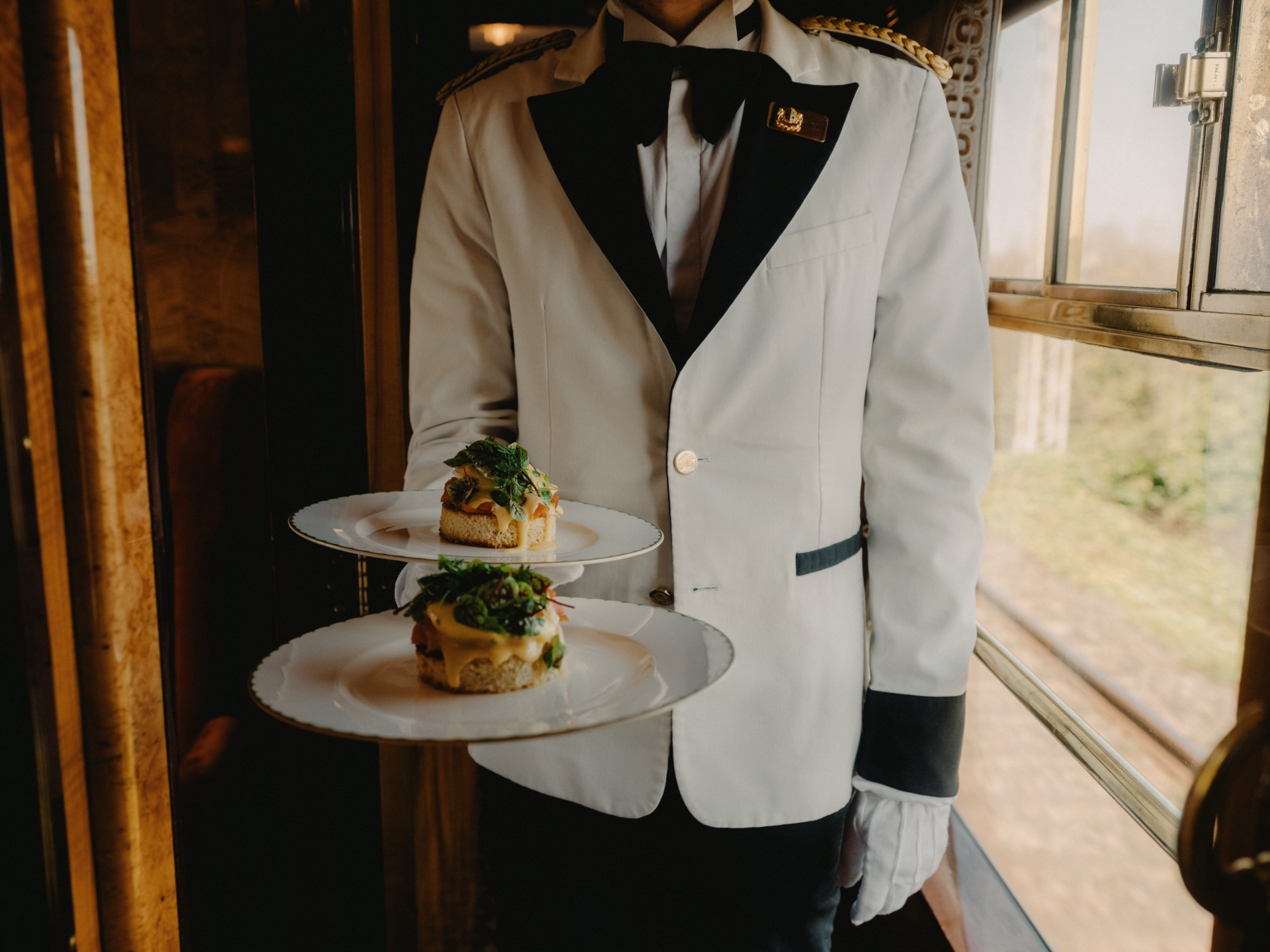
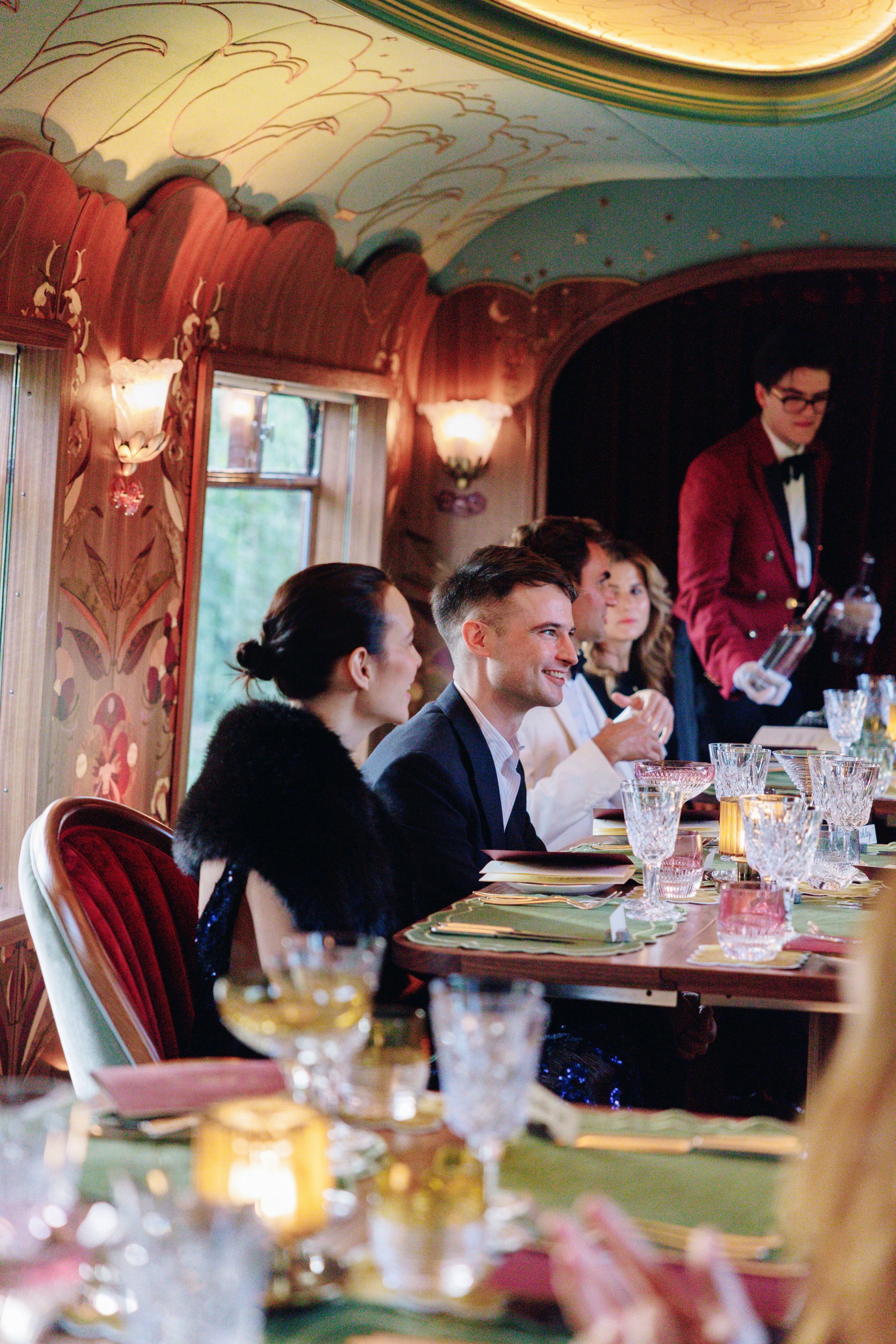
The service is immaculate yet entirely unpretentious - a quiet choreography of silver service and stewards navigating the gentle sway of the train. More striking still is the institutional pride.
Keith Bates, Deputy Train Manager and former Chief Steward, acts as a custodian of this moving archive. Moving between carriages, he narrates the stories behind the marquetry, the notable passengers, and the historical milestones of these cars before they united under the Belmond banner. His knowledge is encyclopedic, delivered with the warmth of someone introducing old friends.
And Bates has two exceptional doors to open.
Cygnus | Wes Anderson’s Symmetry
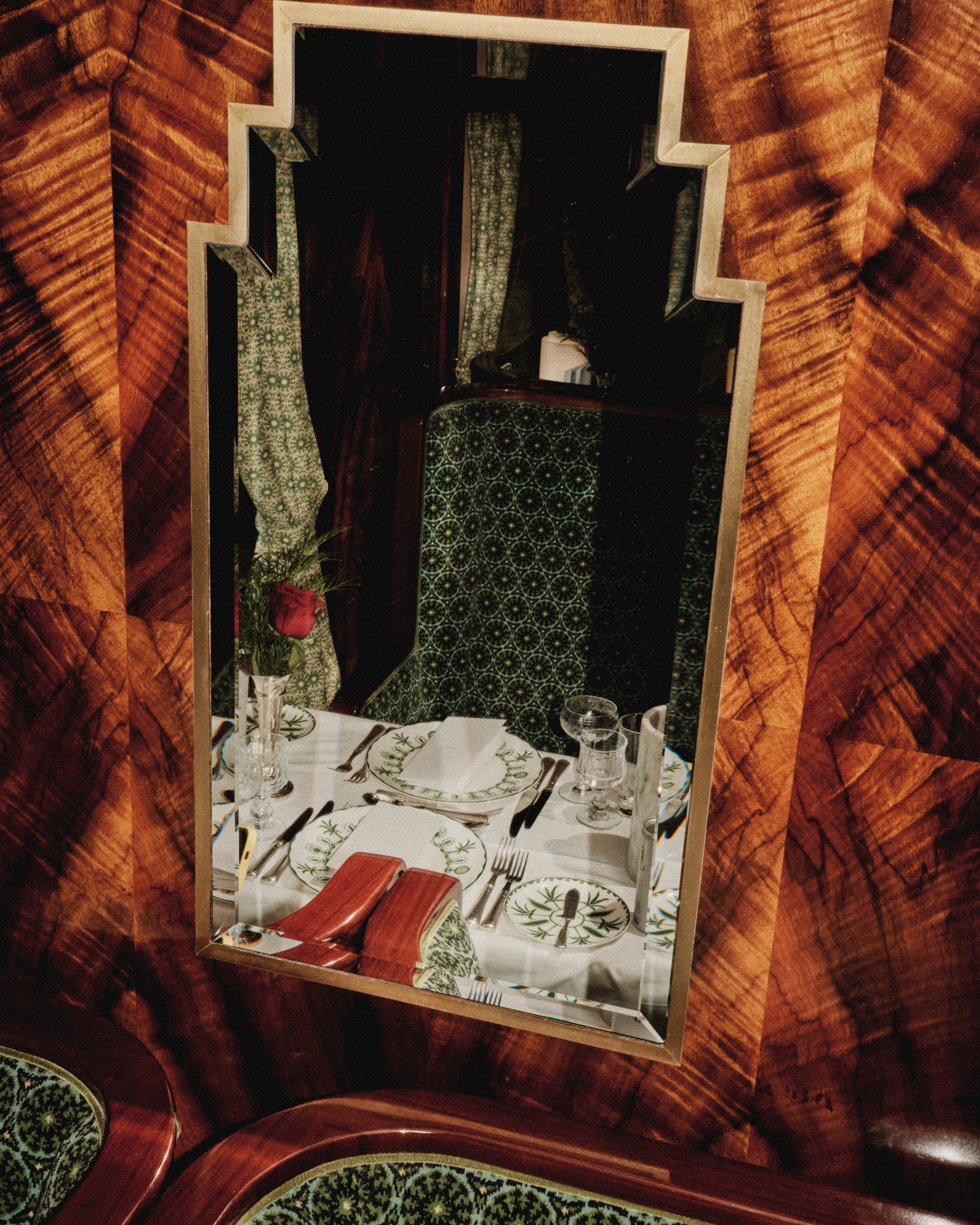
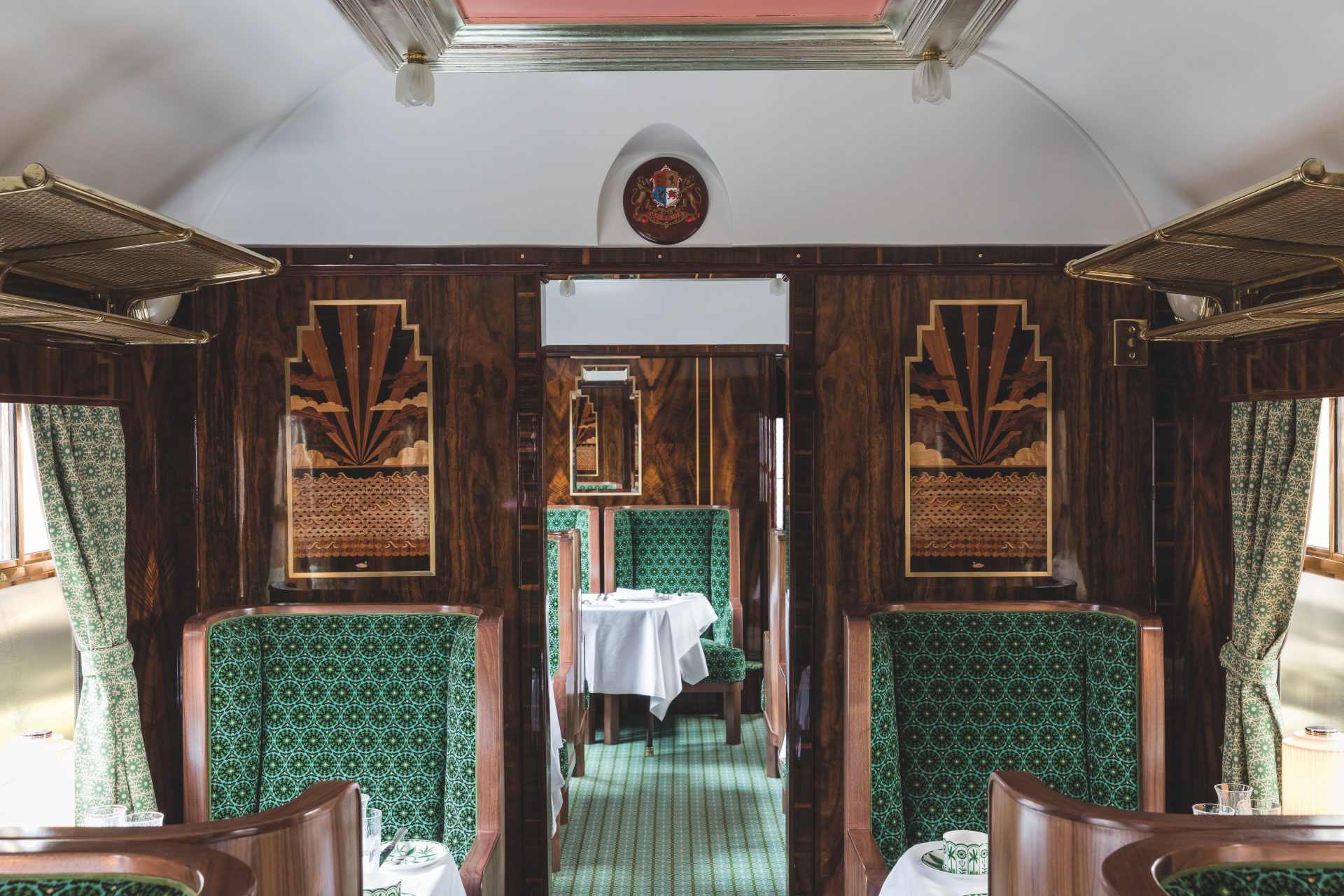
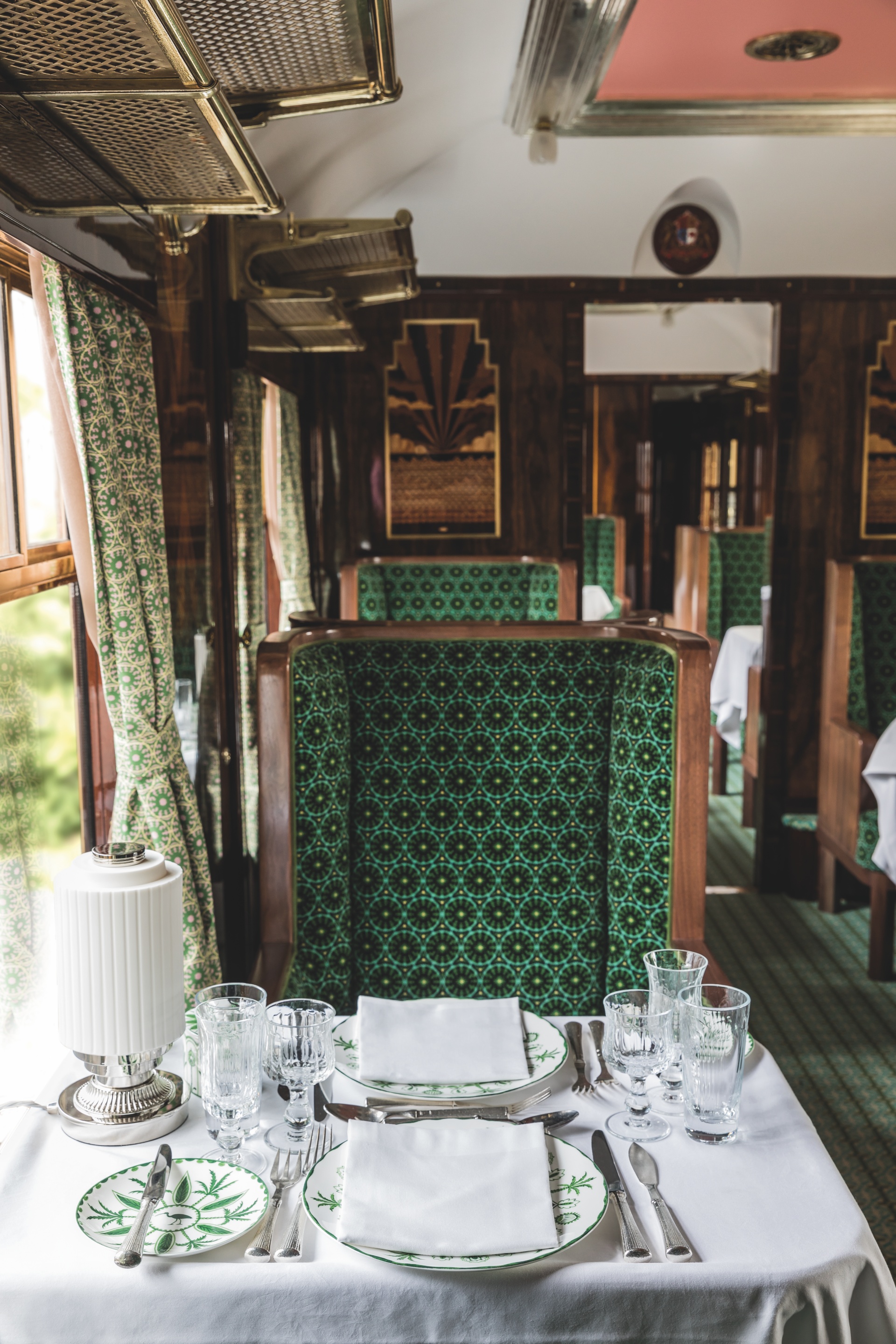
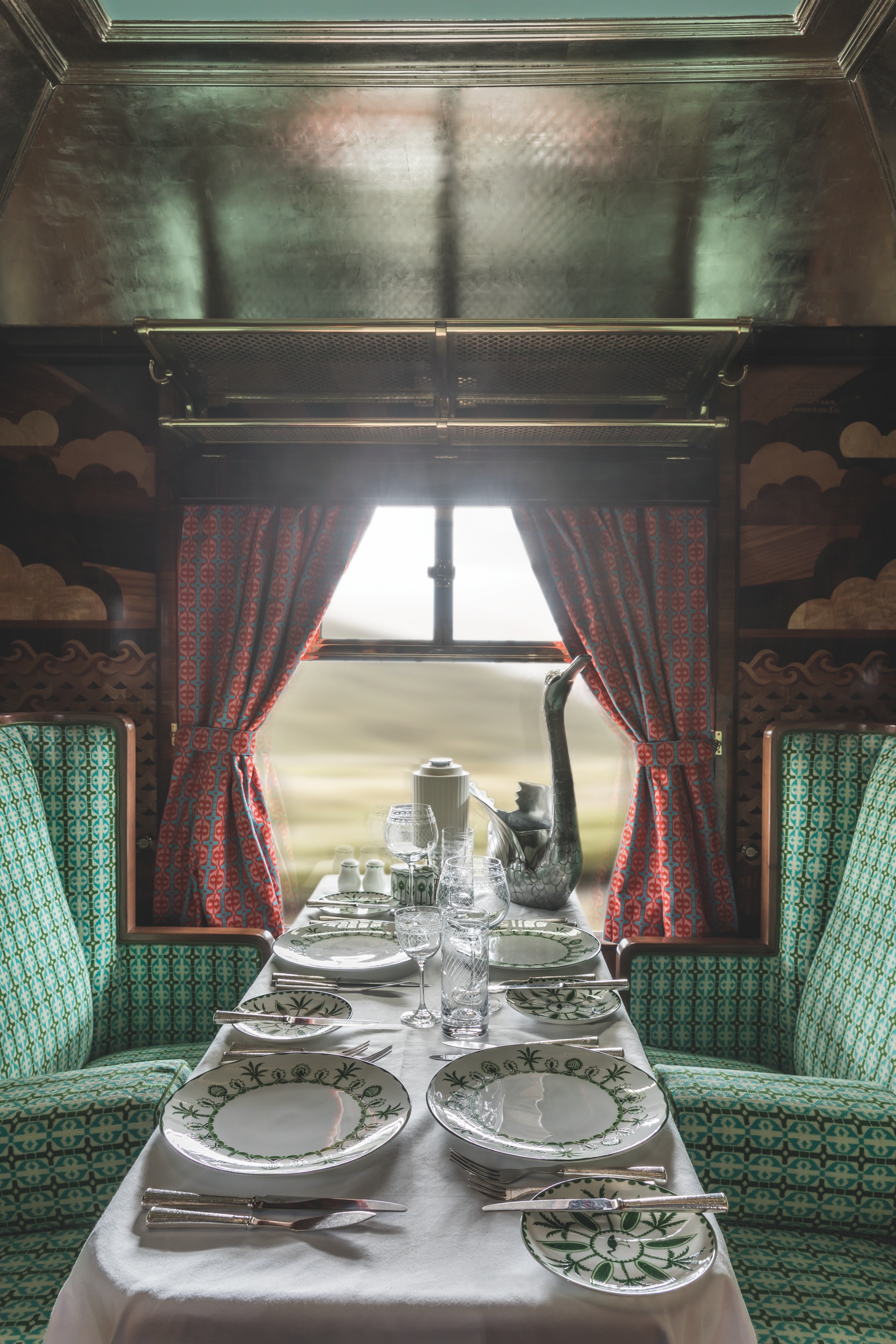
Step inside Cygnus and you enter a universe of strict symmetry, saturated color, and meticulous composition—cinematic and romantic.
Built in the 1950s and featured in the 1972 film Agatha, Cygnus was reimagined by Wes Anderson in 2021. “They are keeping something special alive,” he has observed. “An endangered species of travel which is nevertheless very suited to our time.”
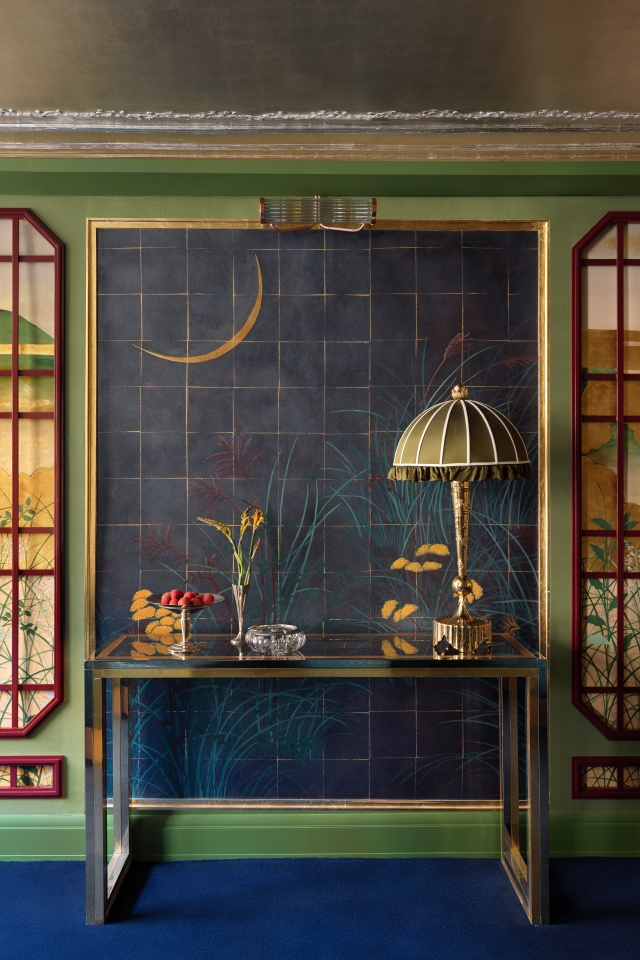
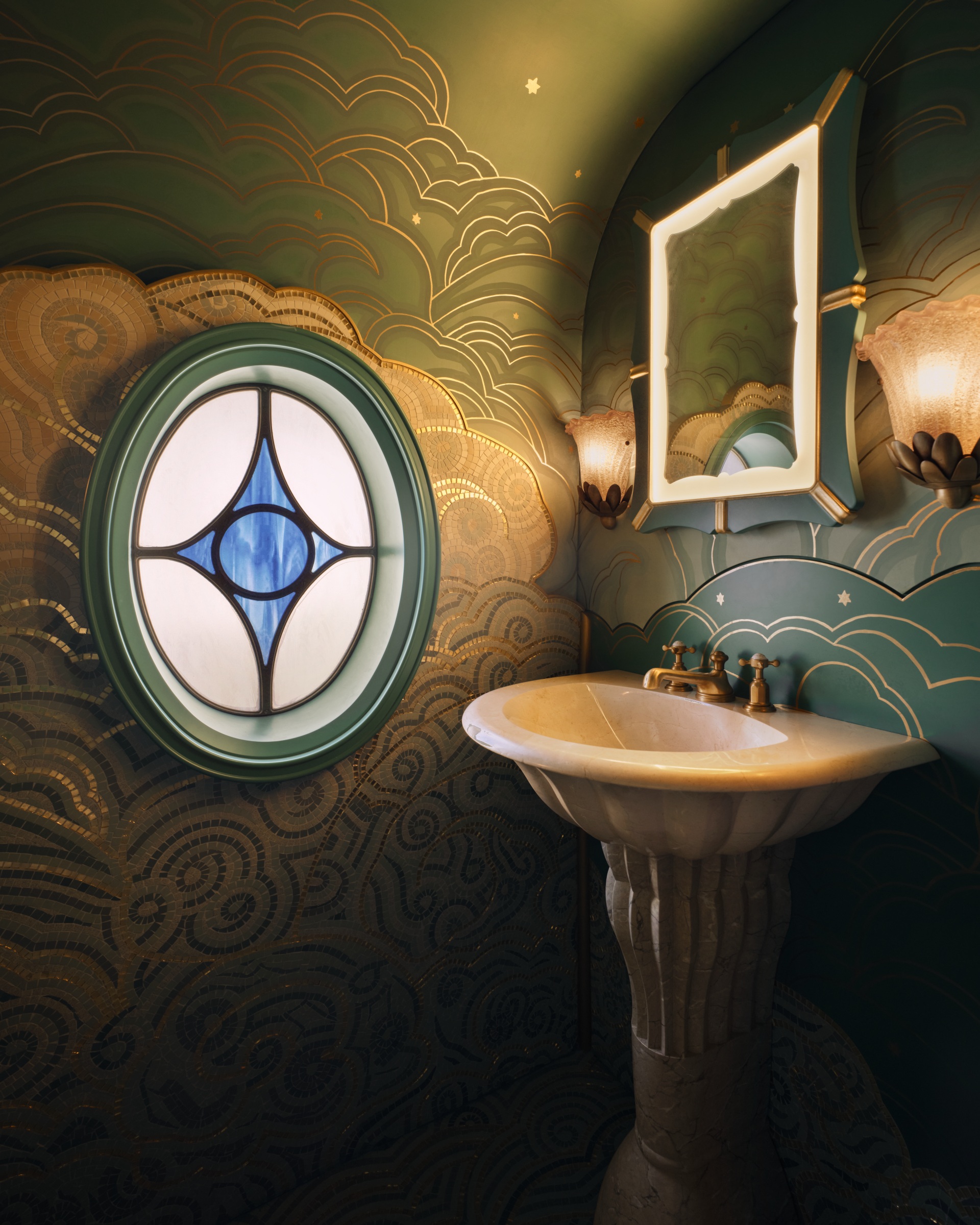
Rich greens meet a pastel-pink ceiling, angular mirrors, and recurring swan motifs. Across the wood panels, symmetrical marquetry depicts sunbeams, clouds, and stars. As sunlight pours through the windows, it flashes across mirrors and illuminates the timber, while the passing English landscape flickers past like frames of film. Anderson controls the interior; the landscape provides the rest.
Celia | Baz Luhrmann & Catherine Martin’s Theatricality
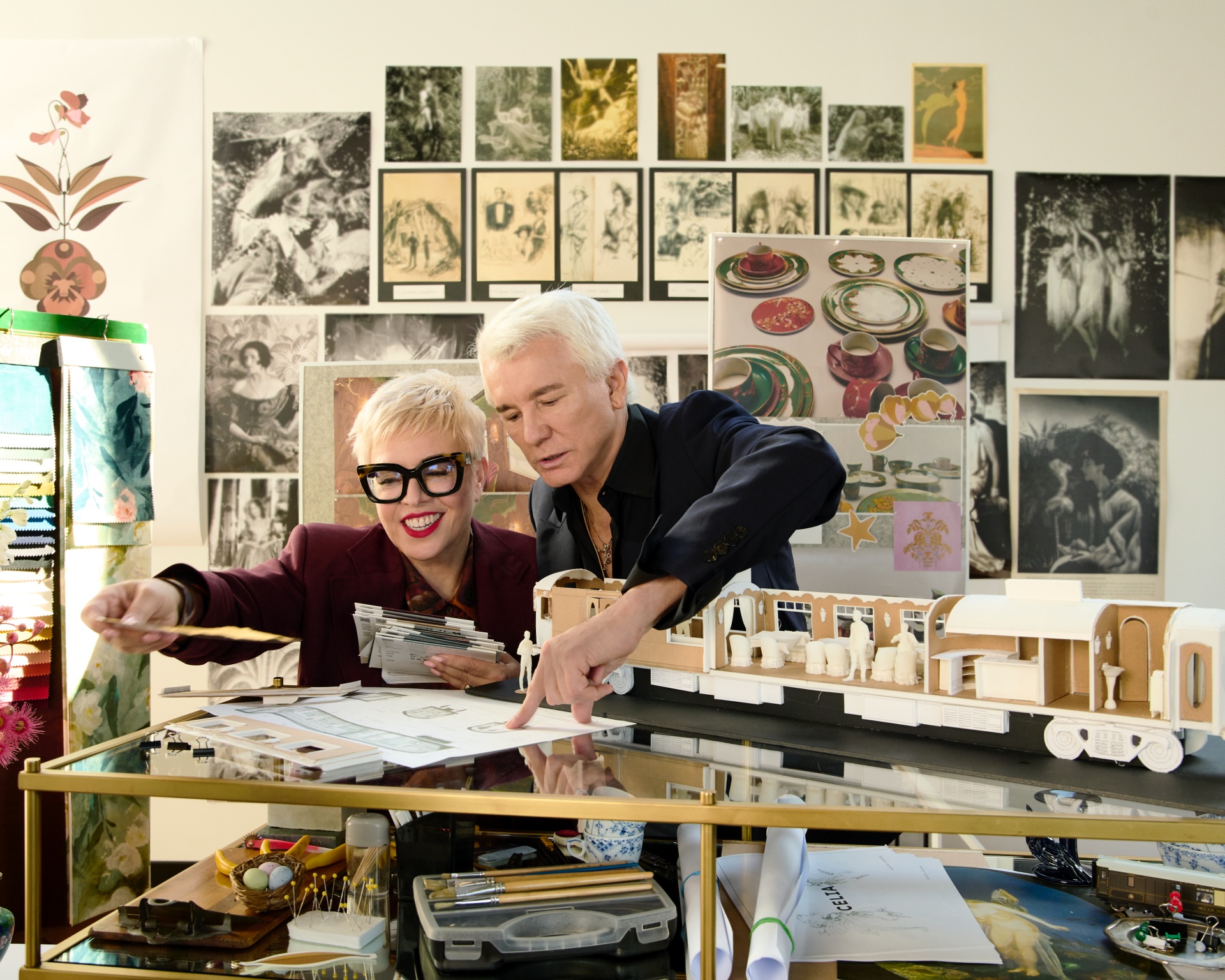
If Cygnus is an exercise in ordered cinematic precision, Celia is a theatrical release.
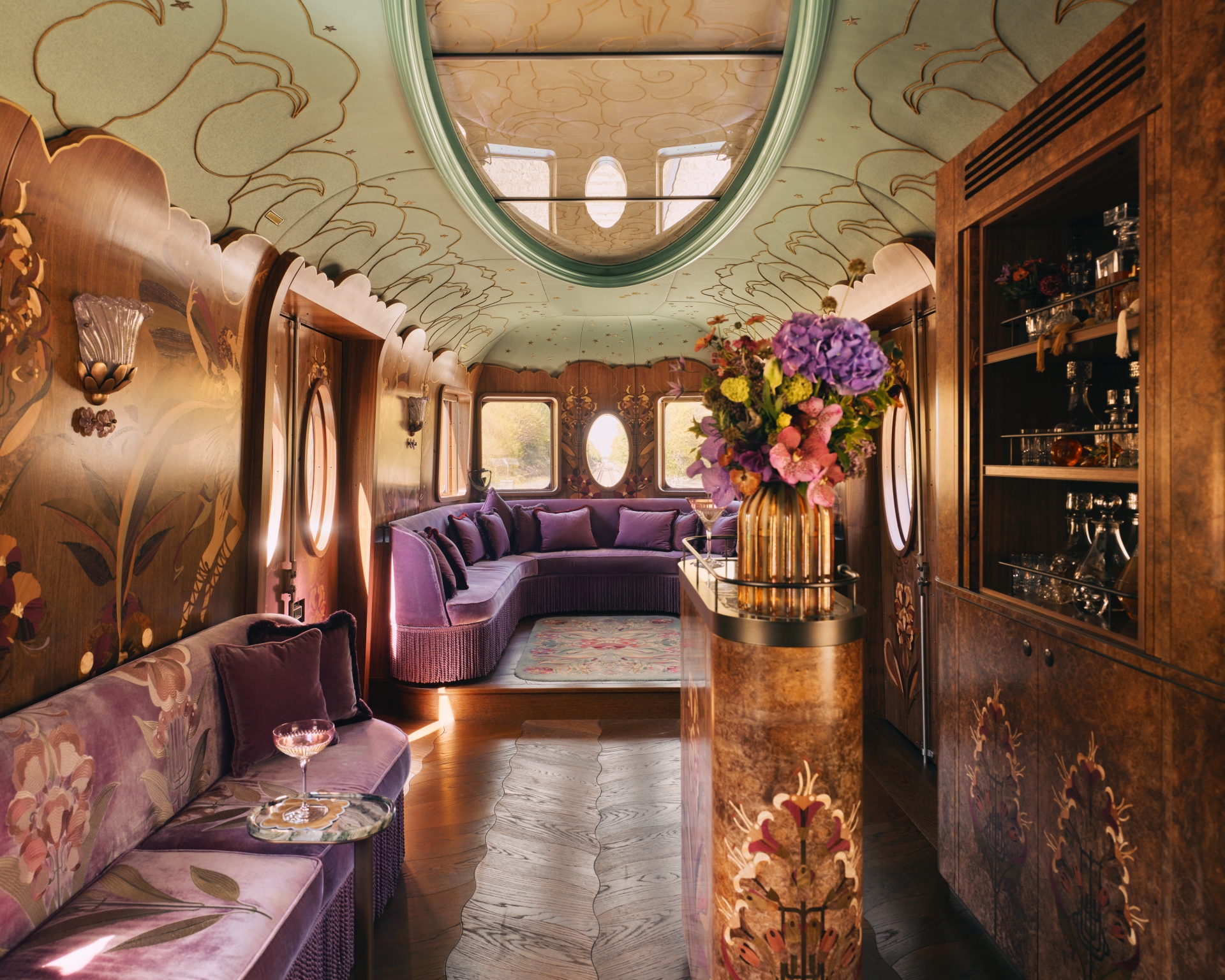
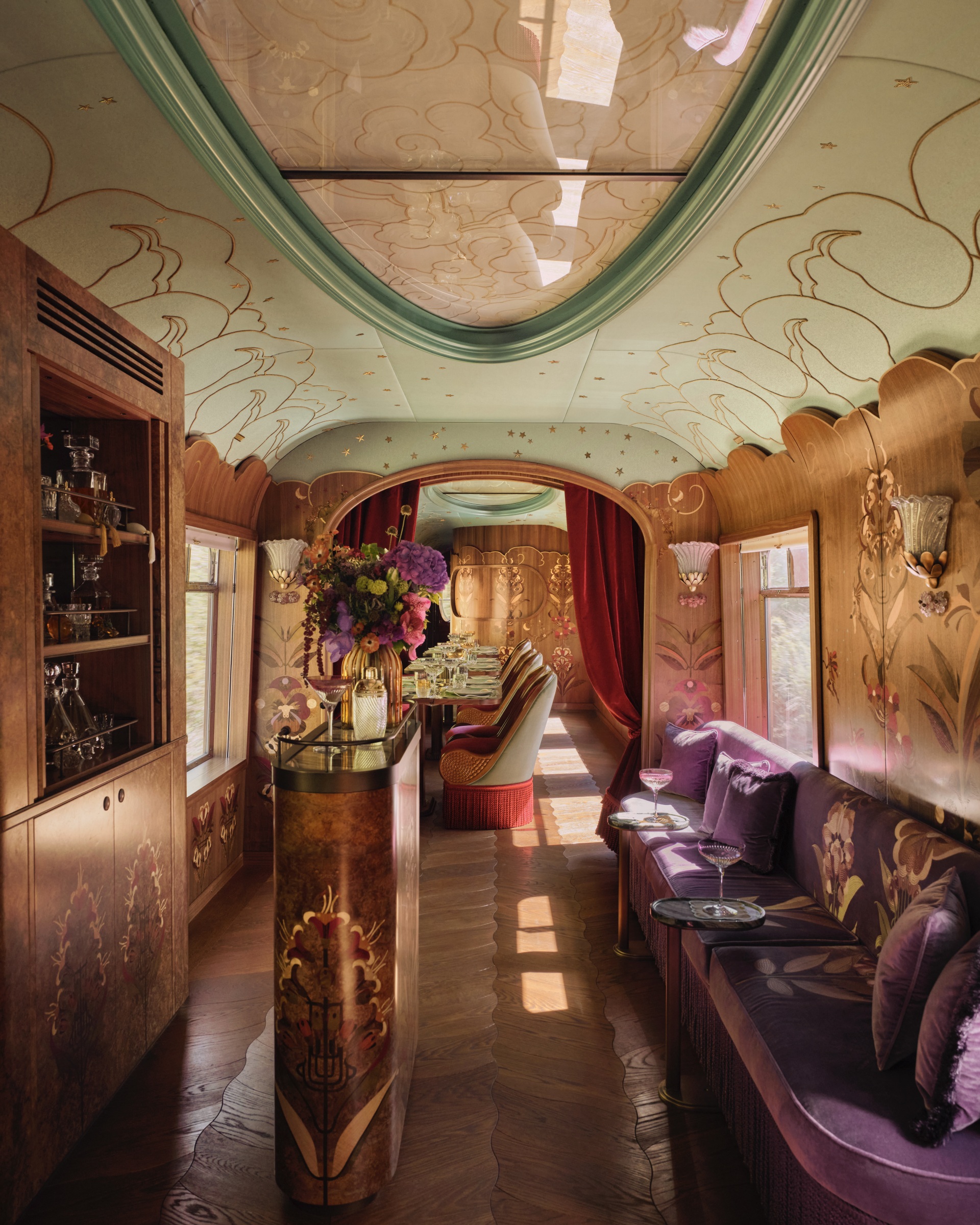
Sumptuous and fantastical, Celia is the newest addition to the Belmond British Pullman fleet - and entirely fictional. Luhrmann and Martin conceived her as a celebrated 1930s West End actress whose performance as Titania in A Midsummer Night’s Dream captivates a future husband who commissions a private Pullman carriage in her honor.
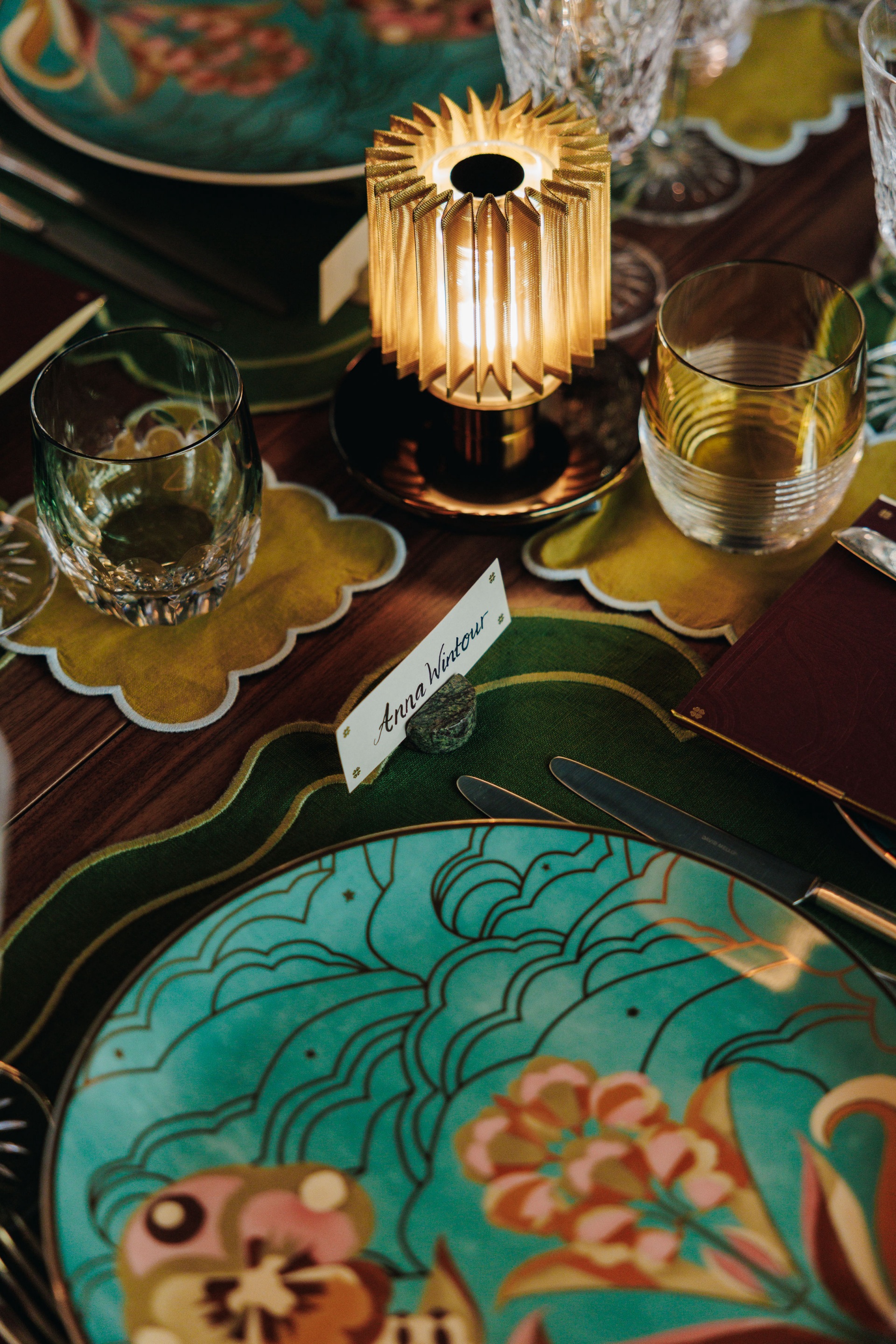
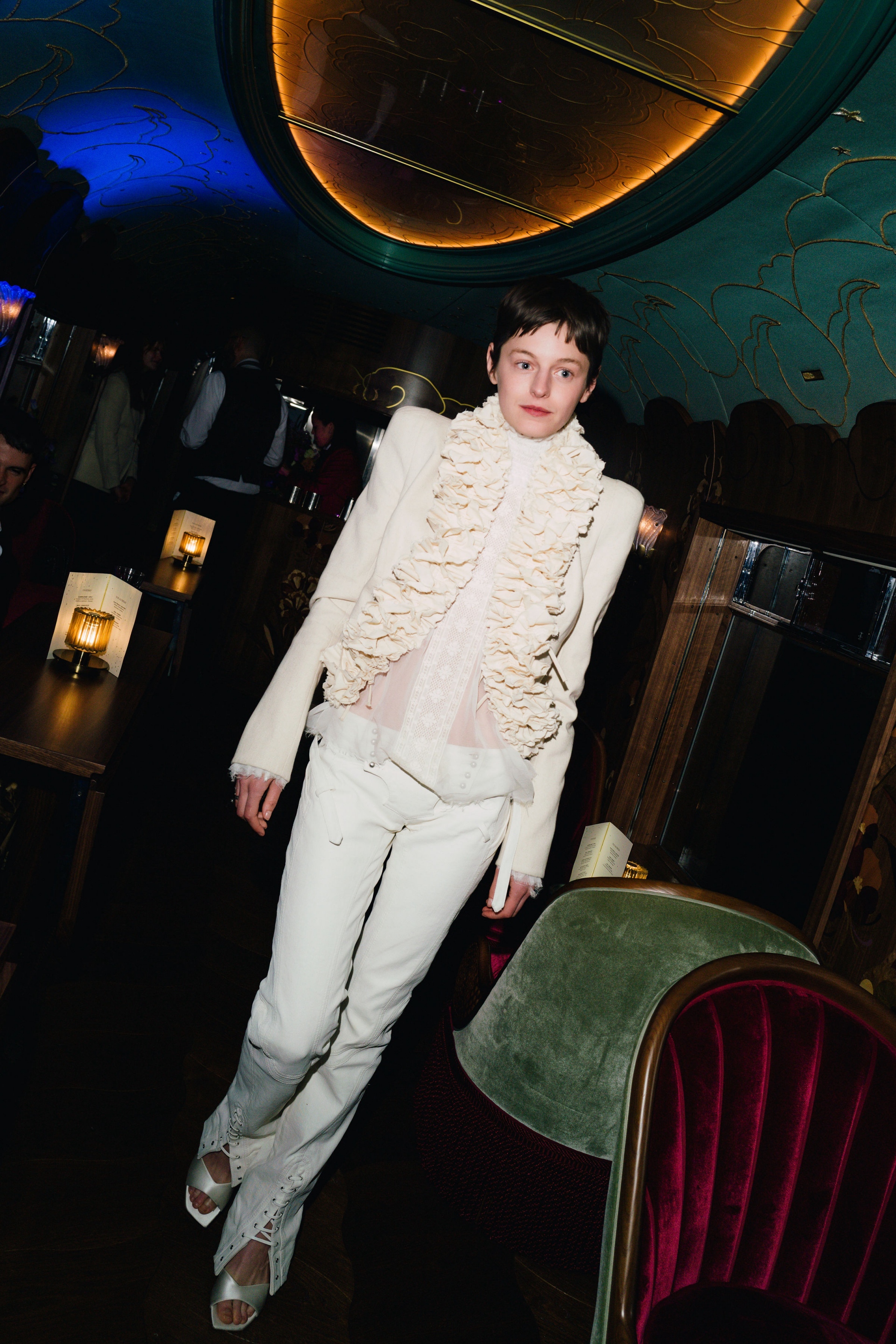
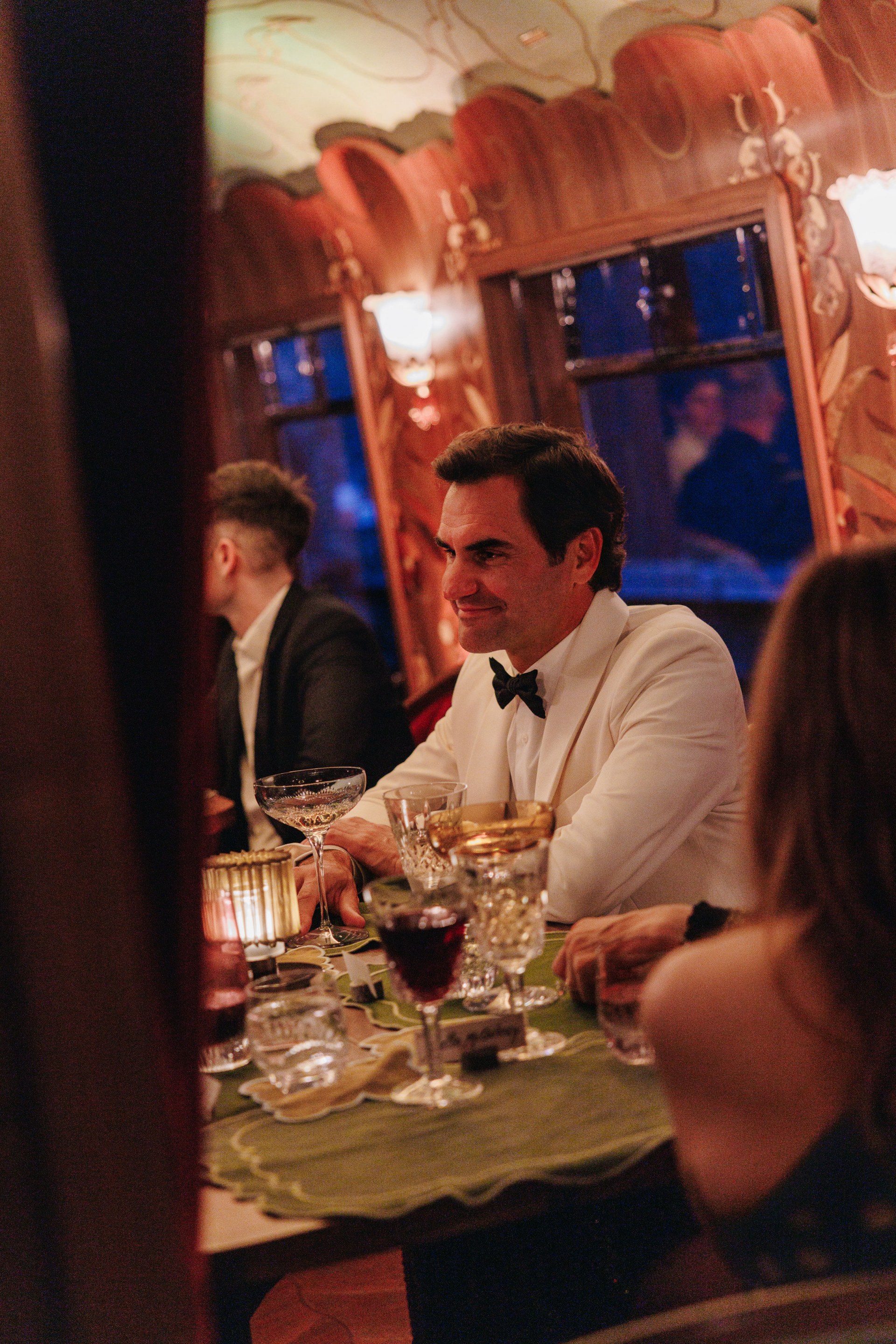
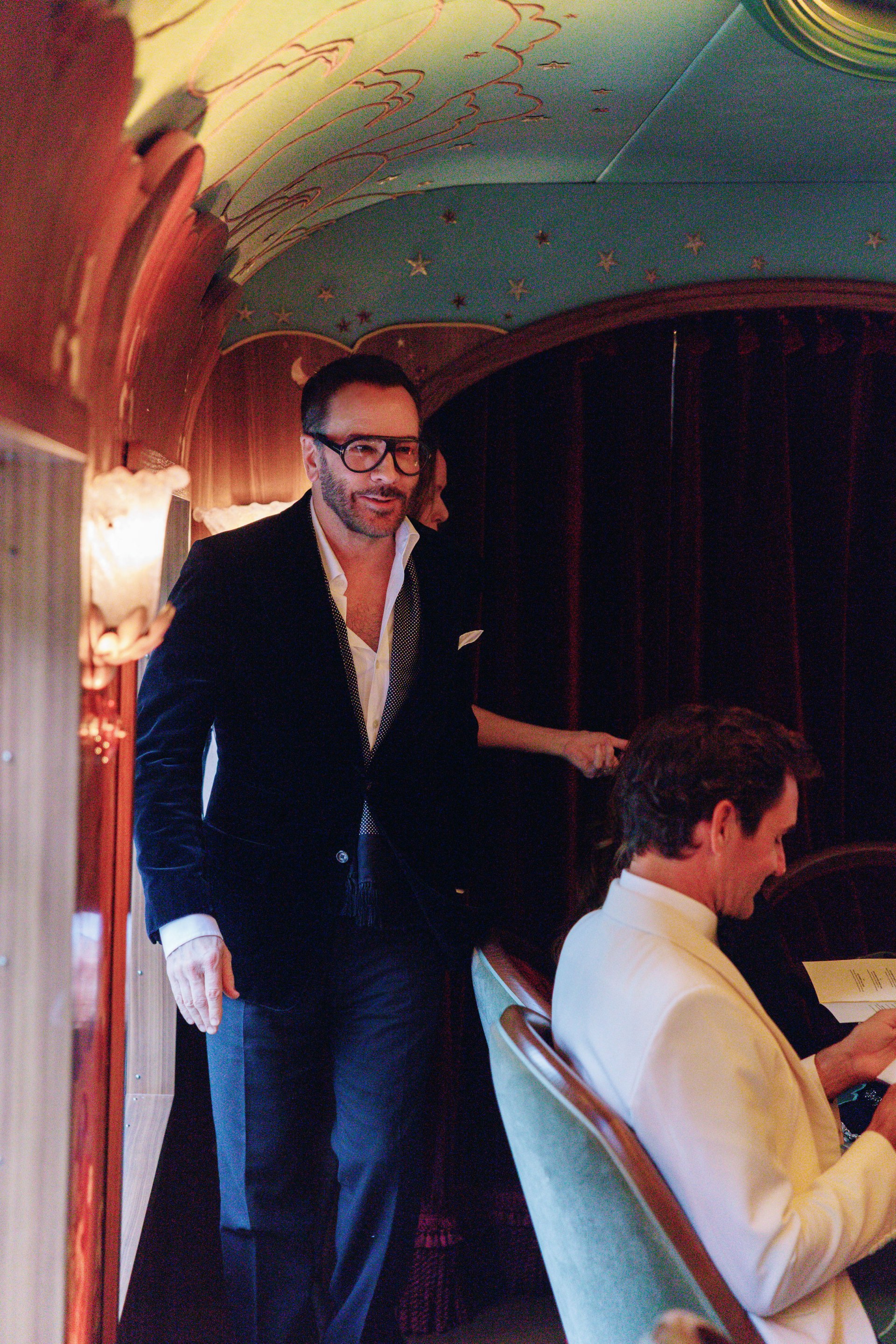
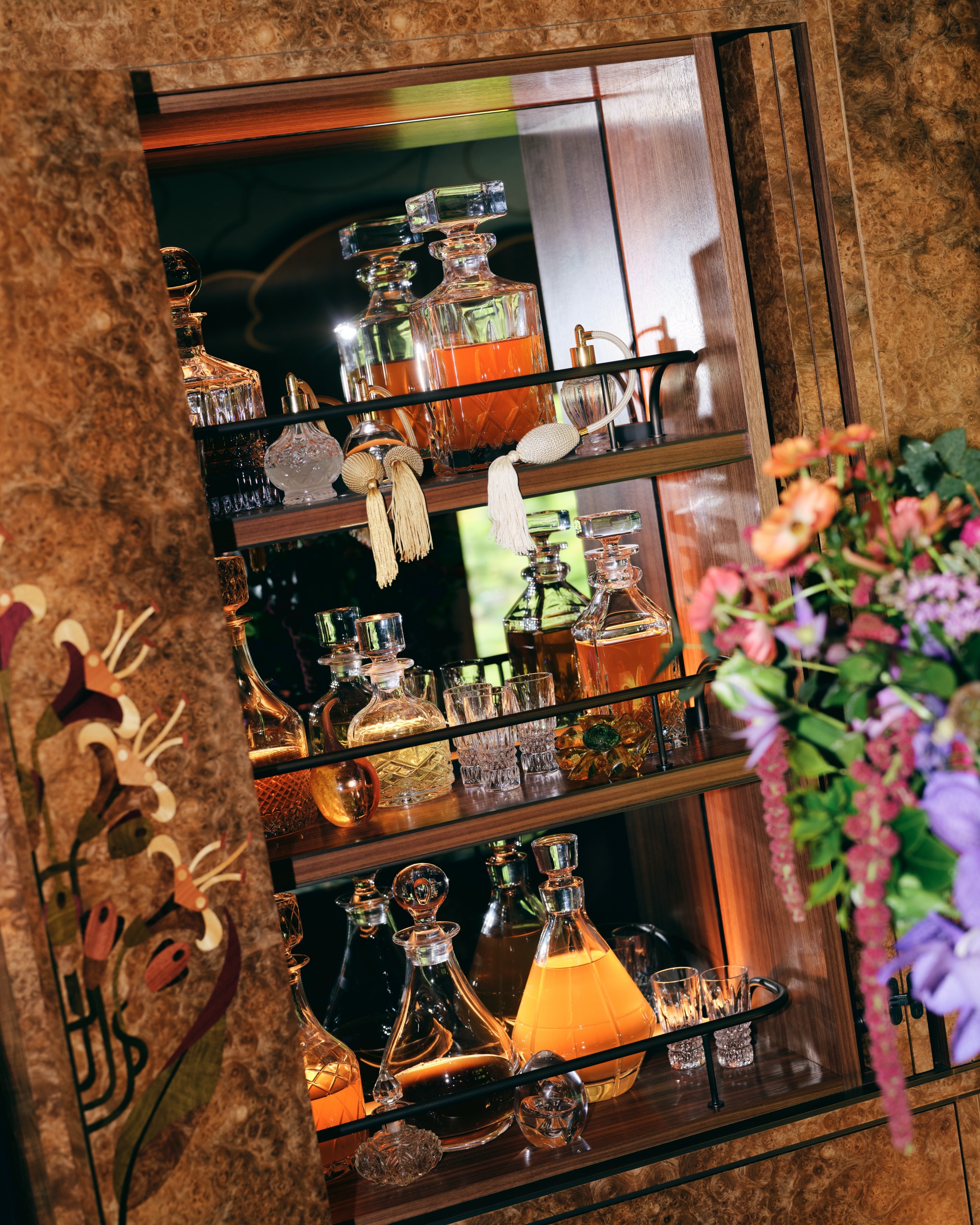
Velvet curtains reveal a bar, lounge, snug, and dining room. Parquet meets intricate marquetry; jewel-like glass glows among deep reds, greens, and earthy browns. Pansies pay homage to Shakespeare, while fantastical English landscapes unfold across the marquetry, featuring Celia herself as Titania. Furniture shifts, lighting changes, and the dining room transforms into a cocktail salon.
“Trains in particular have a way of putting you in a dream-like state where you forget about the realities around you,” Luhrmann reflects. “I have to go with slow travel to get my soul back.”
The Slow Return
Back in Audrey, lunch concludes and time dissolves. The countryside drifts past in long green stretches; shadows lengthen across tables. Nobody is watching the clock.
“We are living in a world of instant gratification and AI,” Dunn reflects. “We are missing out on the fundamental need to create with our hands.”
Perhaps this is what the Belmond British Pullman preserves most successfully: not merely historic rolling stock, but the reminder that truly exceptional things take time - to conceive, craft, restore, and experience.
Eventually, London gathers outside the windows. Brick replaces green, platforms appear, and Victoria approaches. Bags are collected, though nobody is eager to leave. In Audrey, a century of craft rolls gently to a halt.