PODCAST
CHI WING LO: THE ARTIST WHO TEACHES US HOW TO LIVE AND ALLOWS US TO SELF REFLECT
LISTEN NOW


Located in Shenzhen’s Qianhai Kerry Center, RENER is a 250 m² project from Kasawoo Design Studio in collaboration with Yo.Q Design, a meticulously staged, theatrical experience that reinterprets the relationship between memory, gastronomy, and the built environment. As Kasawoo’s first mainland China project, it marks a confident new direction for the studio, bridging architectural storytelling with immersive spatial design.
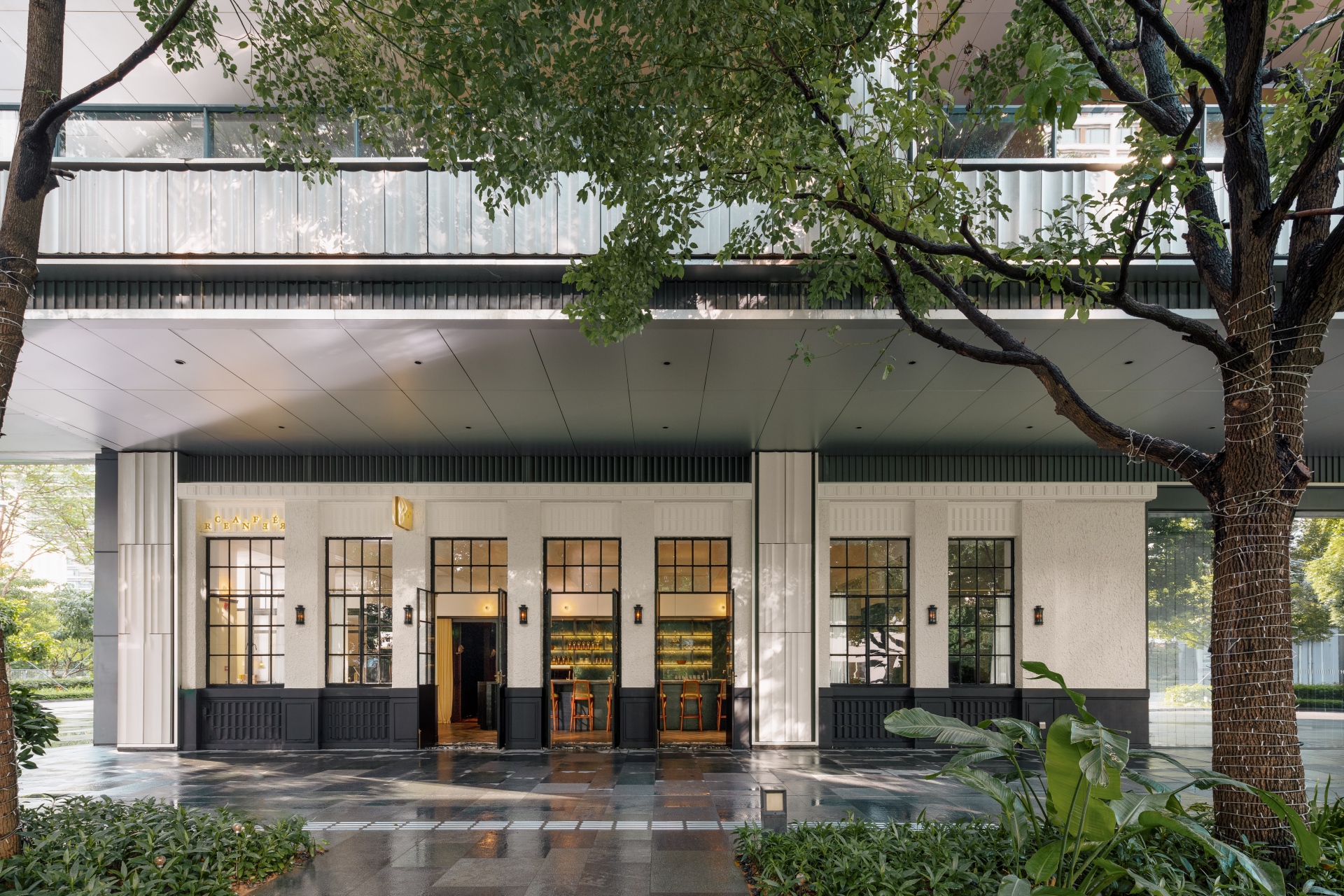
The name RENER, borrowed from Zheng Xie’s poem Bamboo and Rock, encapsulates the venue's dual identity: a commitment to genuine Chinese cultural authenticity, paired with a modern impulse for reinterpretation. Conceived as both a dining room and a stage, the space immerses guests in a world where the lines between past and present are intentionally blurred.
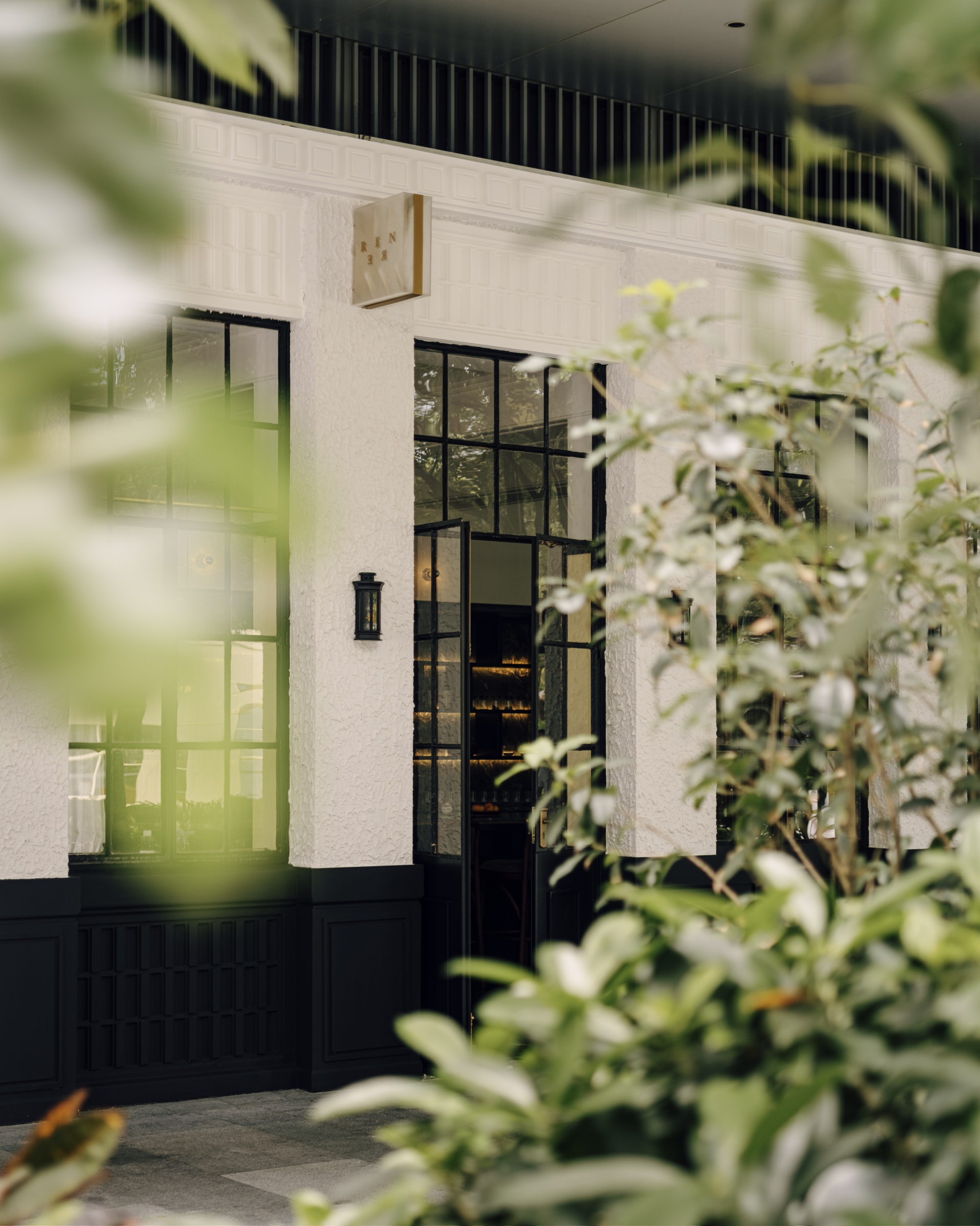
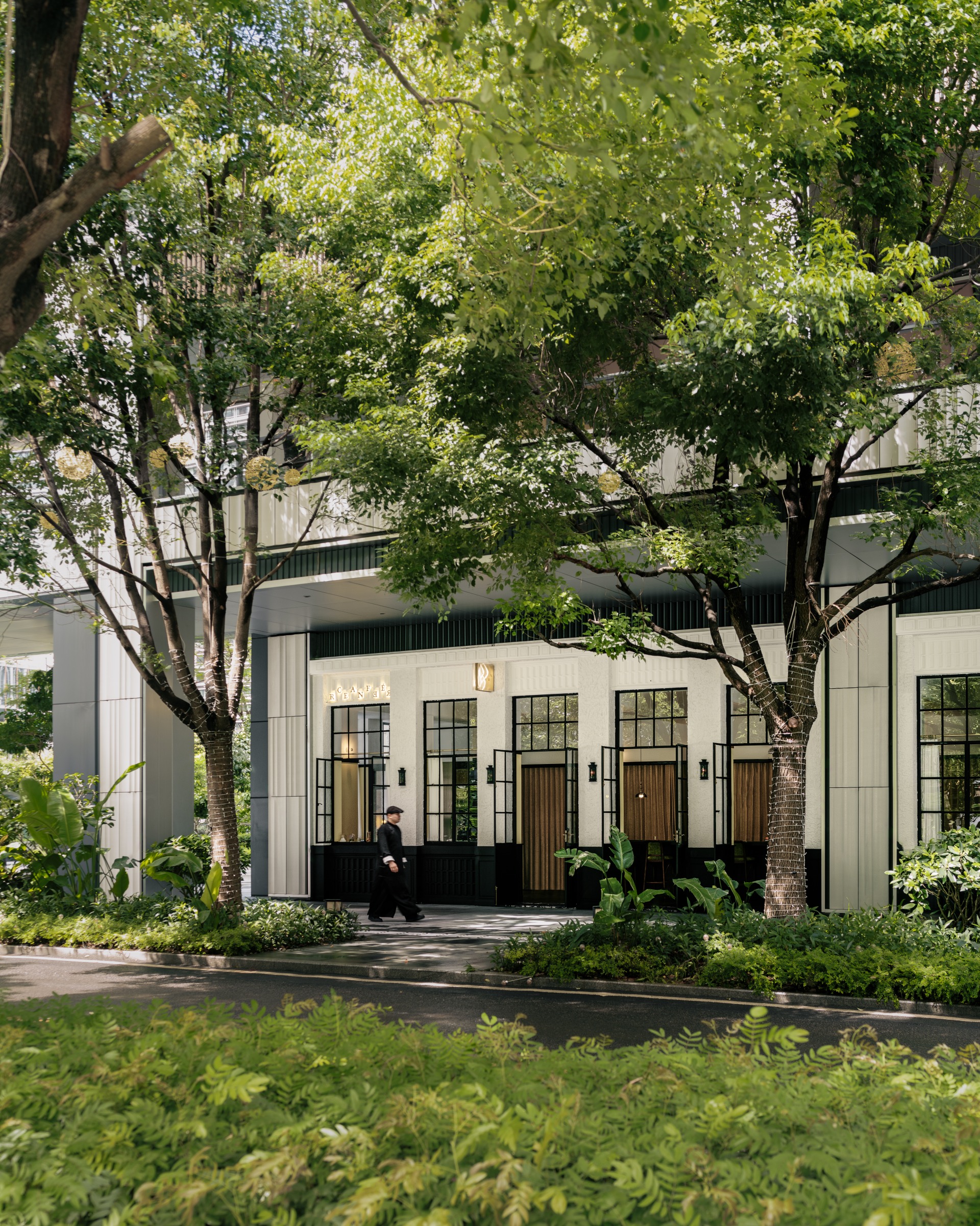
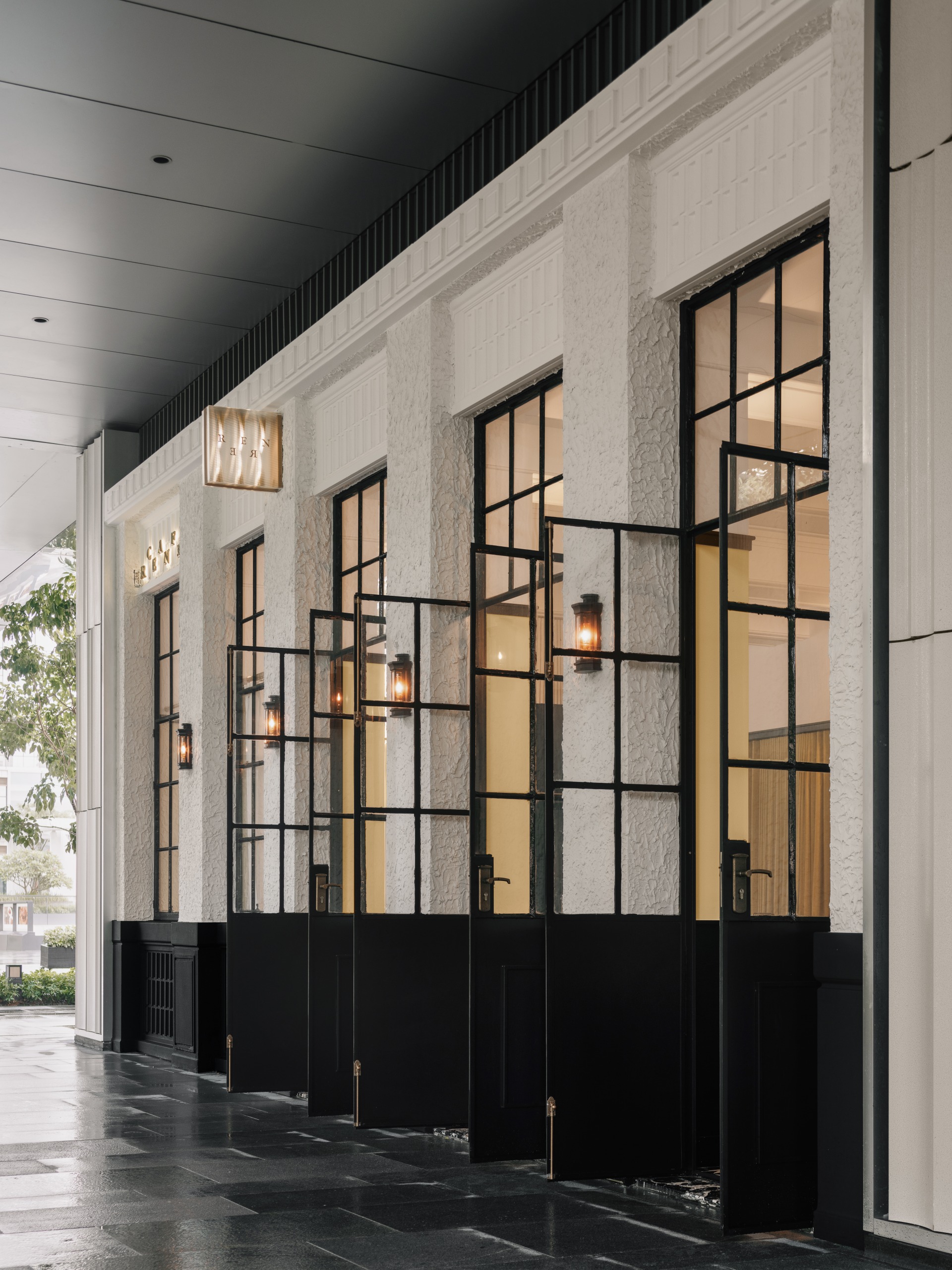
RENER’s aesthetic is a nod to the sophisticated glamour of the Republic of China era, skillfully filtered through a contemporary lens. Familiar visual cues - the geometric precision of Art Deco, the texture of hand-brushed finishes, the dark lustre of hot-rolled steel, and classic façade proportions - are deployed with contemporary detailing. The result is a suspended moment in time, neither a simple retro throwback nor a sterile futuristic concept, but something altogether more evocative and cinematic.
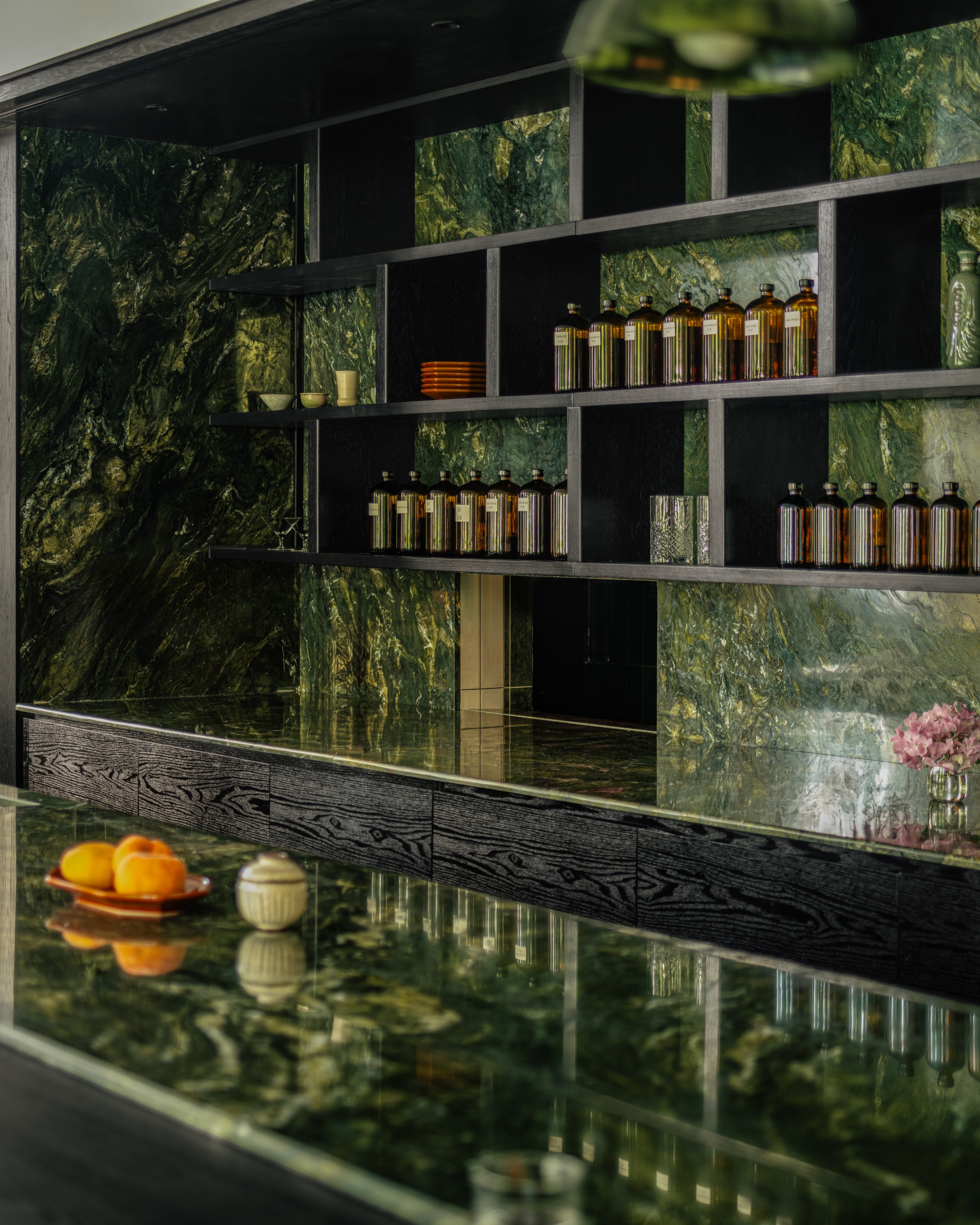
Kasawoo’s process involved rigorous research into early 20th-century Chinese architecture and interiors. Darius Woo, Director at Kasawoo, explains the core ambition: “Central to the concept was exploring how something can feel both old and new at once. We treated memory as a fluid, intangible design material, shaping atmospheres that feel simultaneously familiar and fleeting.”

This commitment to craft is evident throughout. Most furnishings and fixtures are custom-made by local factories, underscoring a dedication to regional production and quality artisanship. The materials themselves act as characters—light, shadow, and reflection are choreographed to create shifting, dramatic vistas between the dining hall and the kitchen. Mirrors and framed openings function like glimpses of recollection, caught from the corner of the eye.

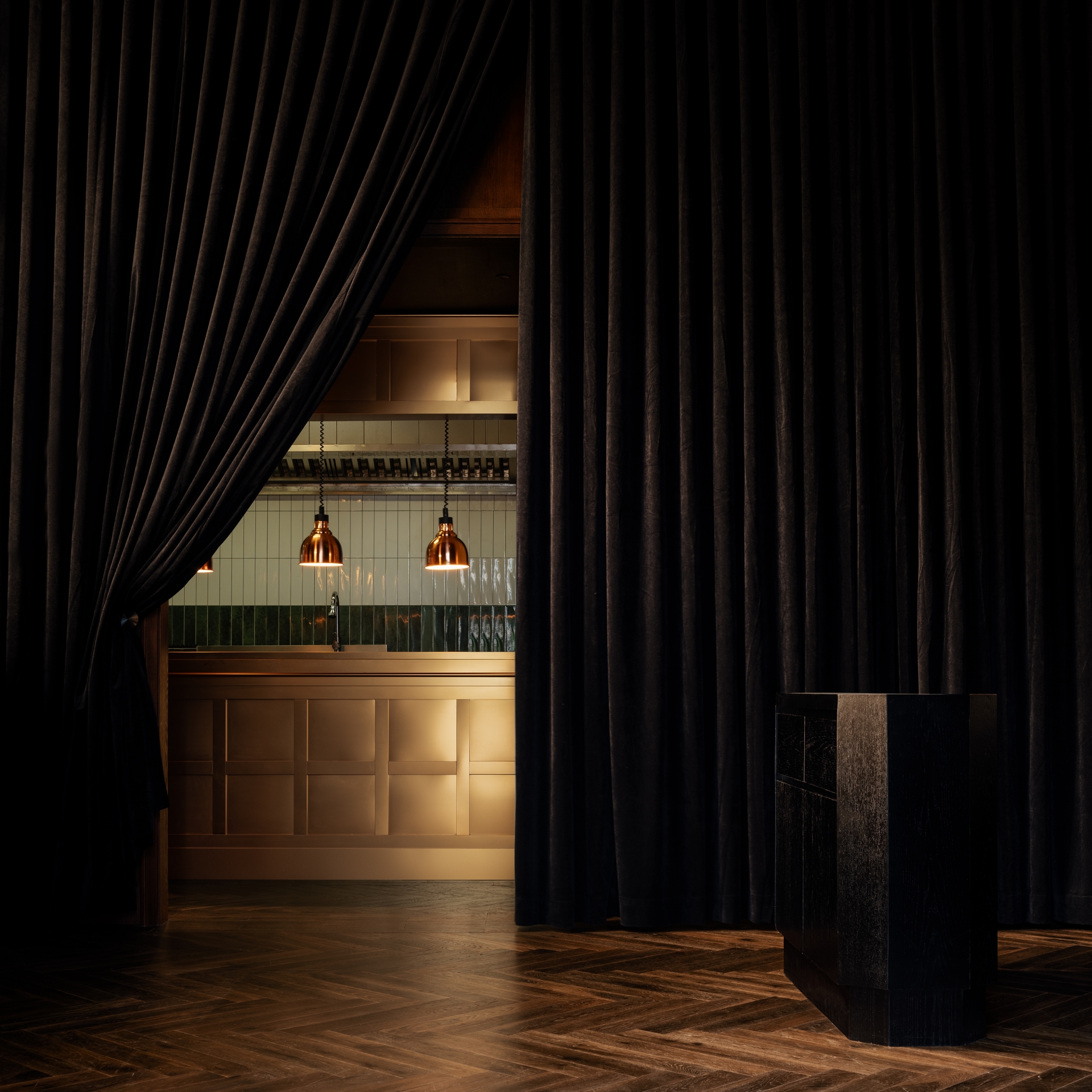
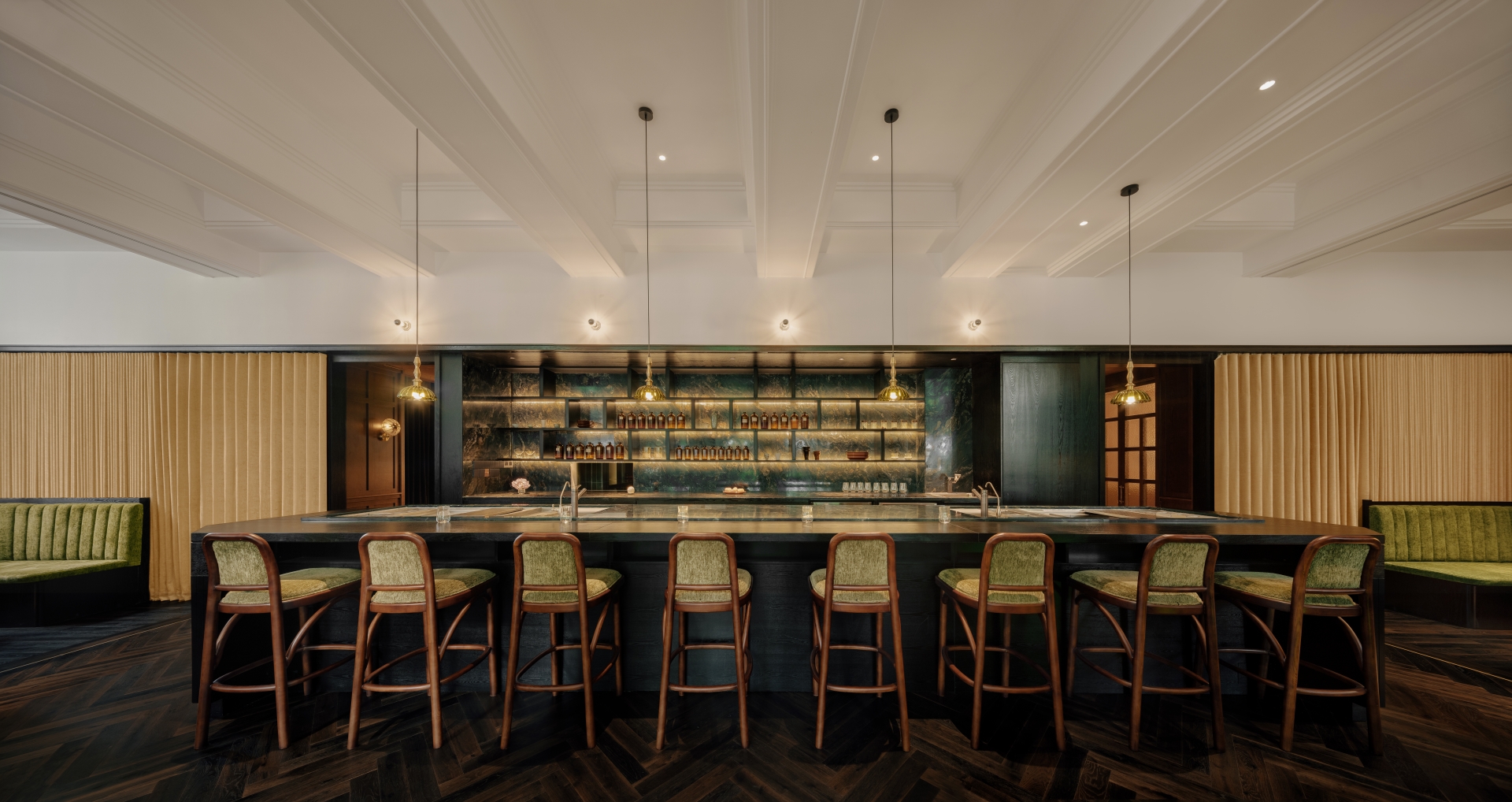
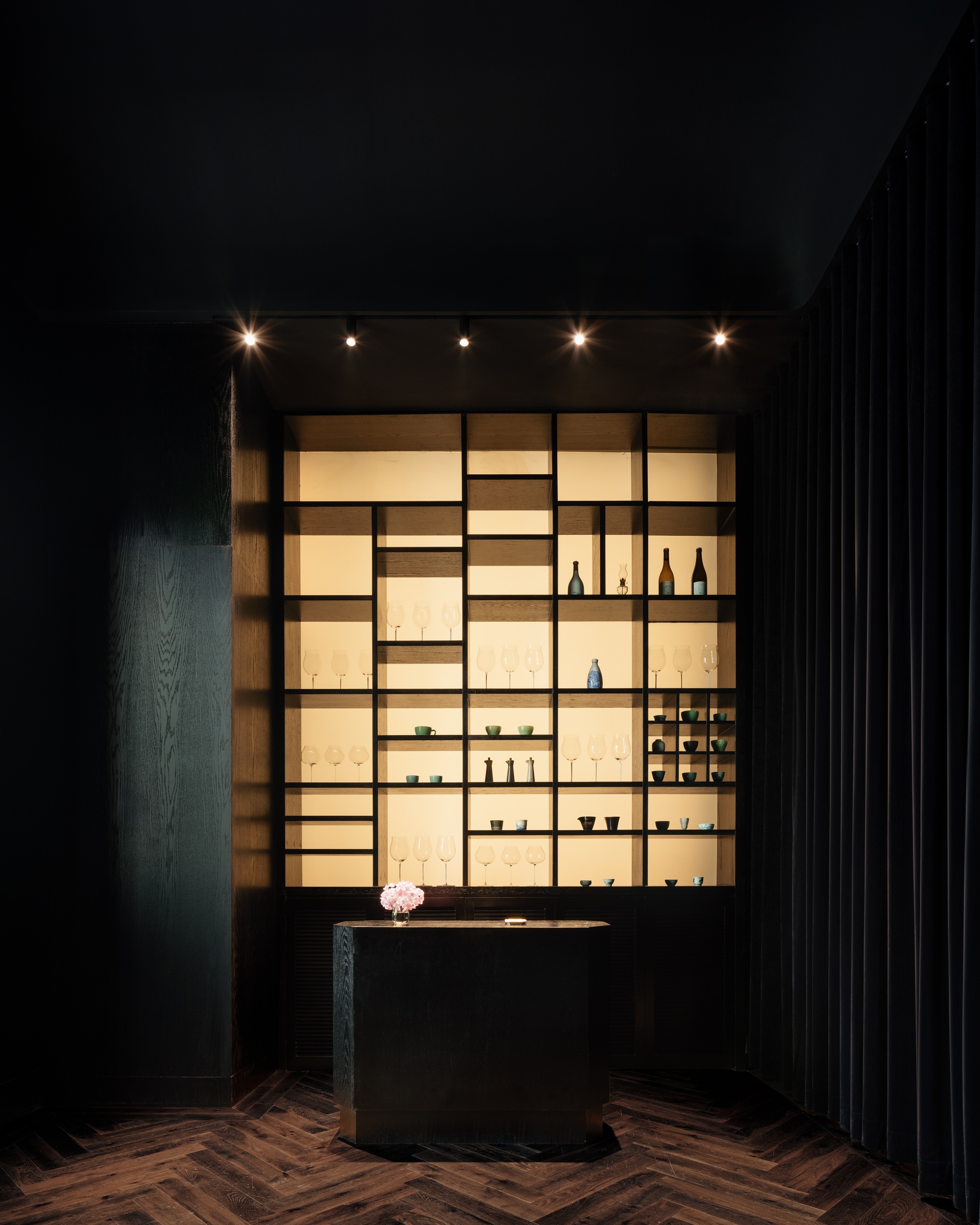
The restaurant's vision is inextricably linked to its owner, Guanghui Zhou, an emerging actor with a background in cinematography. Drawing influence from the cinematic worlds of Wes Anderson and Wong Kar Wai, Zhou sought a dining experience where guests don’t just observe but participate in the scene. As such, the experience evolves across the day. During the day, RENER functions as an intimate café, with a curtain drawn to cover the bar wall and only the east side of the restaurant in use. In the evening, the curtain parts, the lighting dramatically shifts, and the bar is unveiled as the emotional core of the space, evoking the solemn elegance of early 20th-century Nanjing.
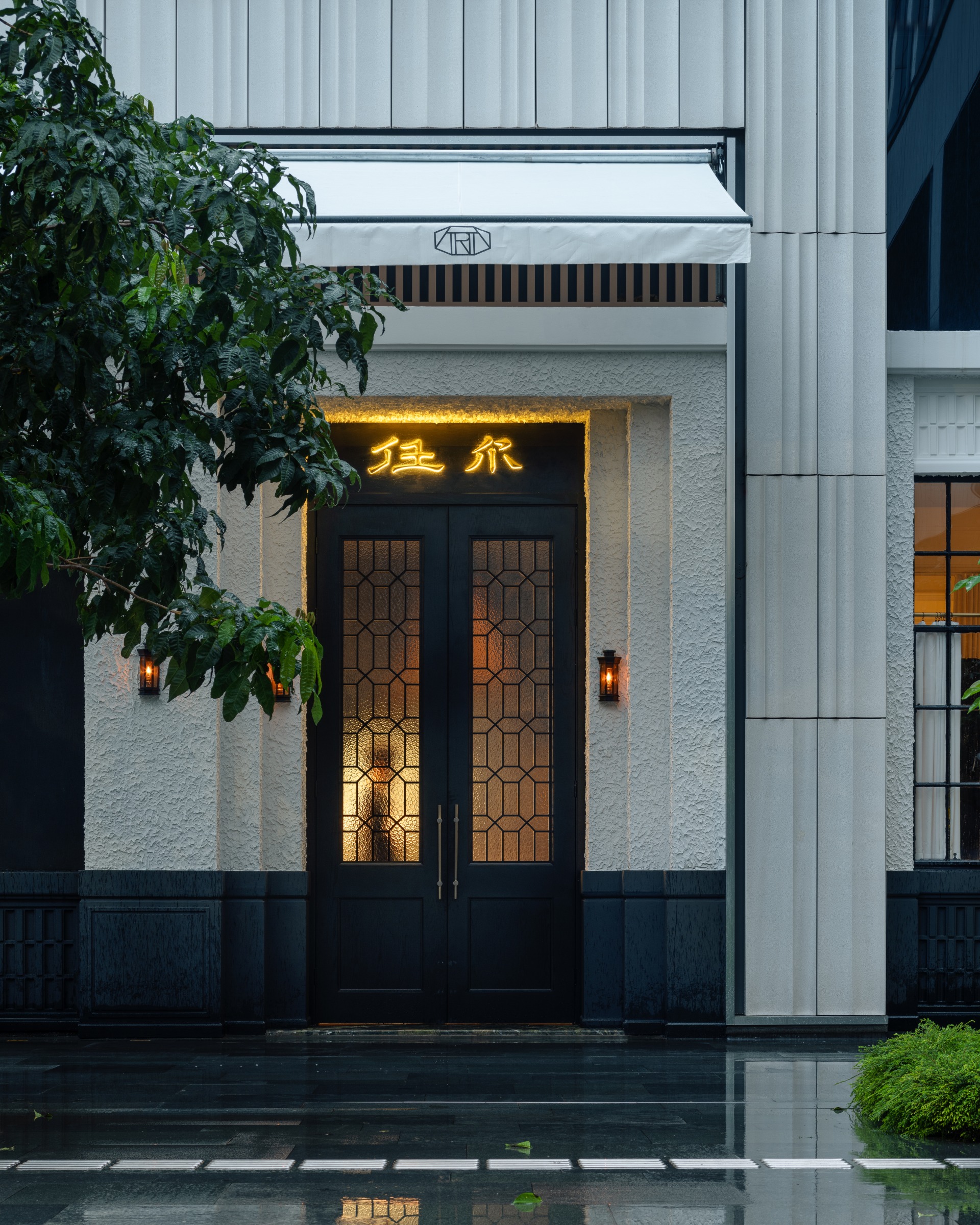
Evening guests are ushered through a dedicated south entrance into a foyer inspired by a modern black-box theater—dark, flexible, and anticipatory. The entry sequence culminates in the presentation of a "ticket," a conceptual gesture that introduces the evening’s tasting menu with small bites and drinks.
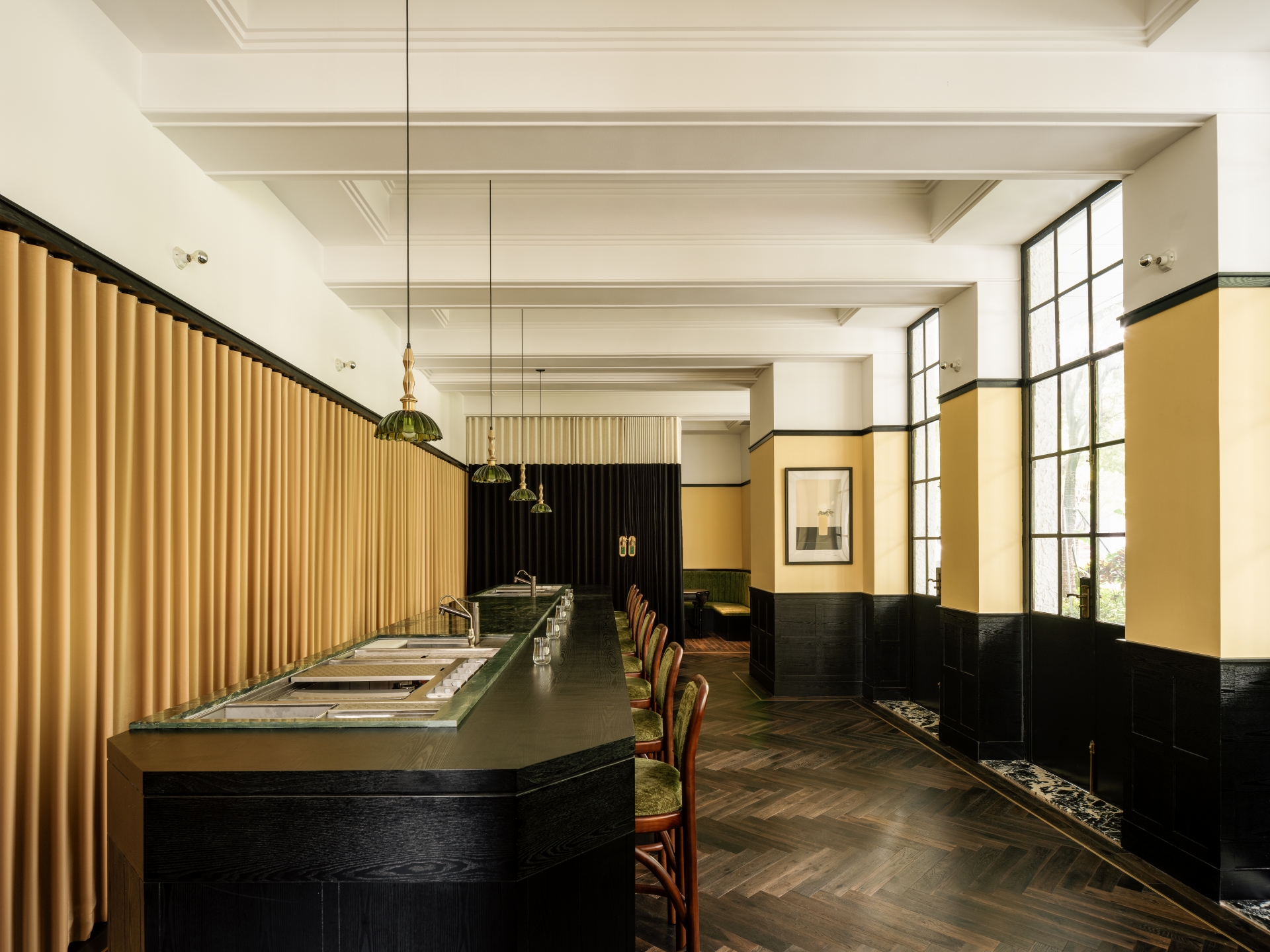
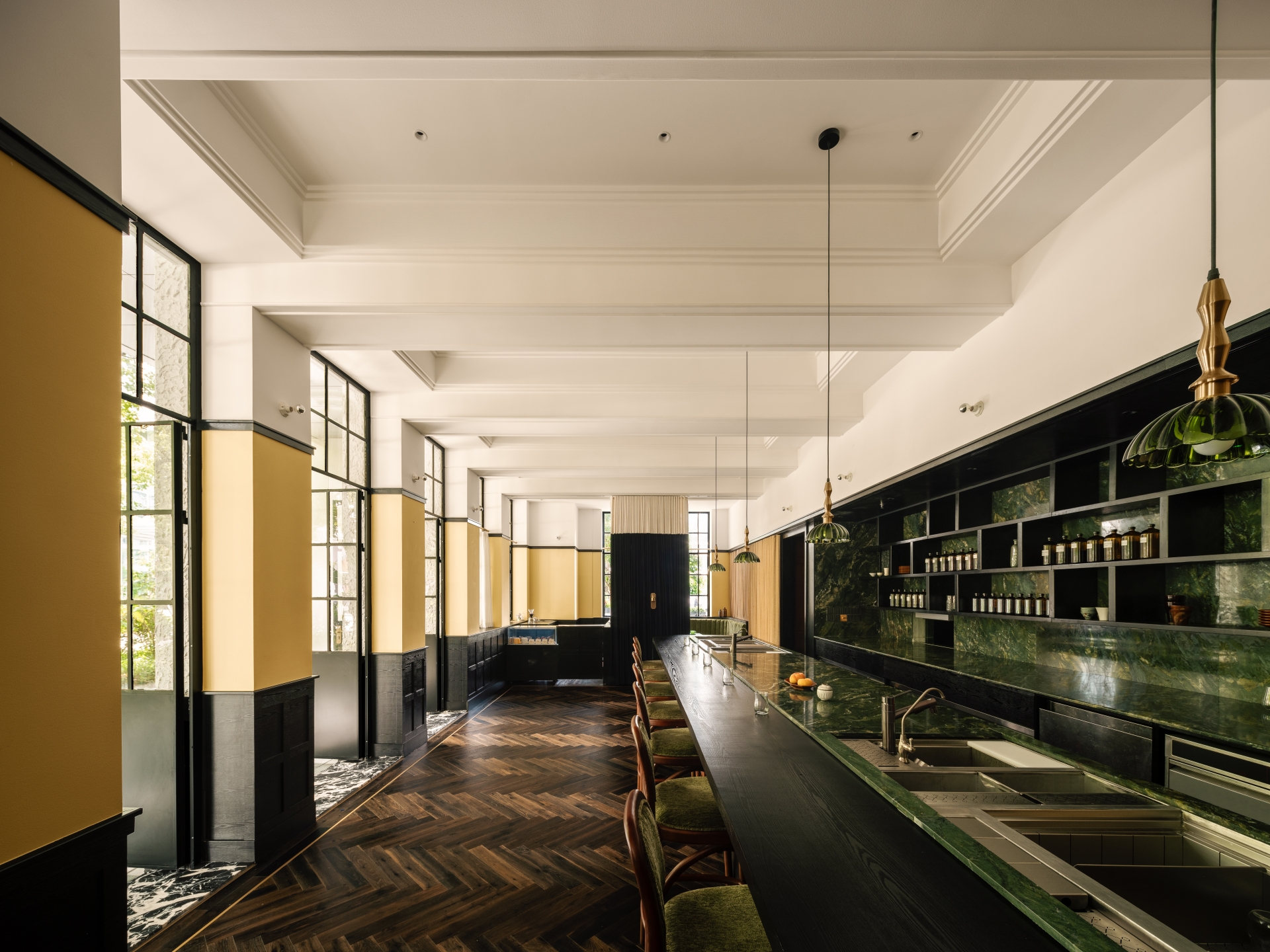
The space offers four distinct seating typologies, each supporting a different kind of social interaction. These include the bar counter designed for conversation and a view of the "performance”, semi-private banquette seating defined by soft, forming curtains, private booths providing intimate spaces for couples or small groups and the VIP 8-Seater Room which is a contemporary take on the traditional Chinese round table for larger gatherings.
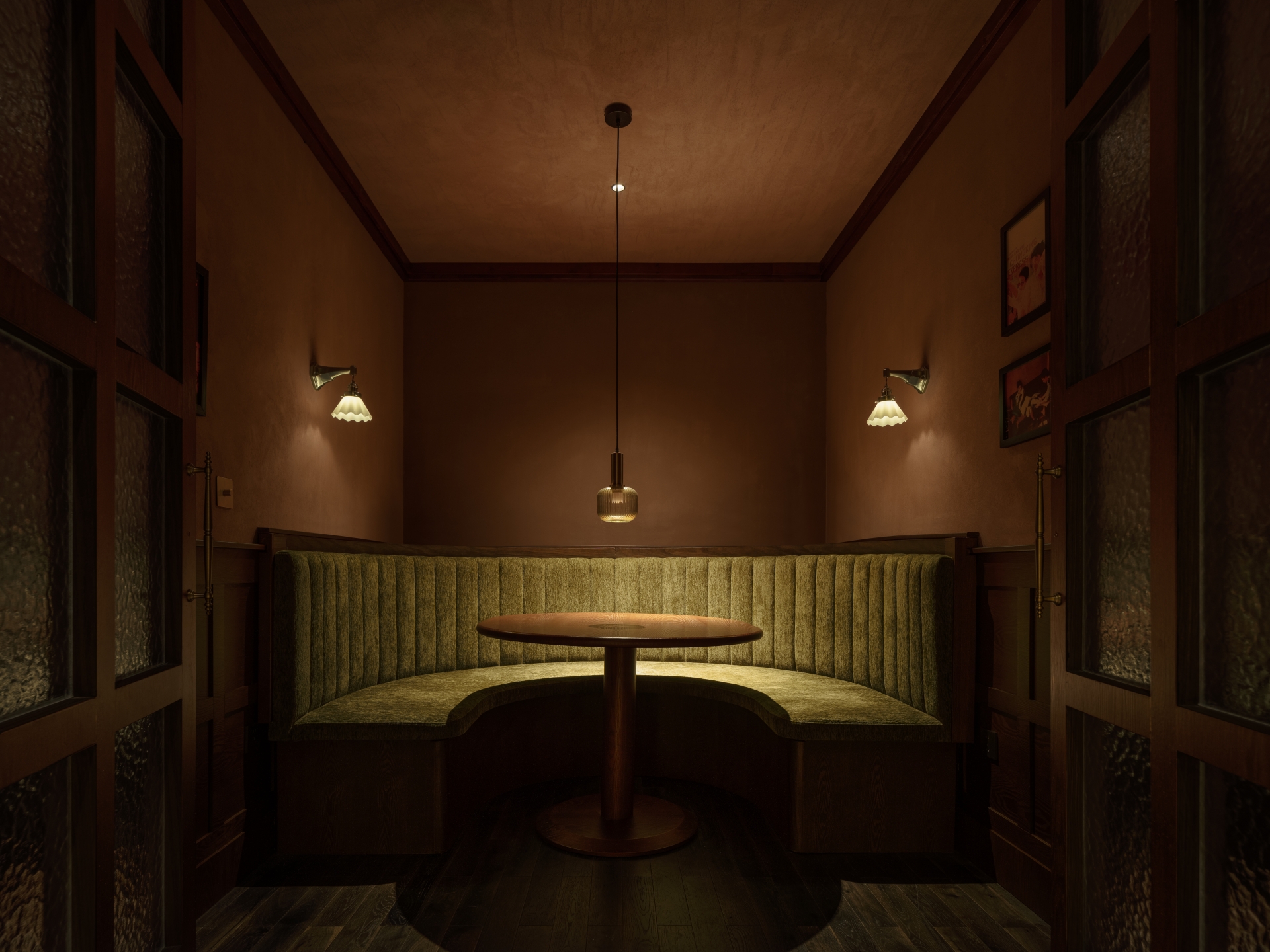
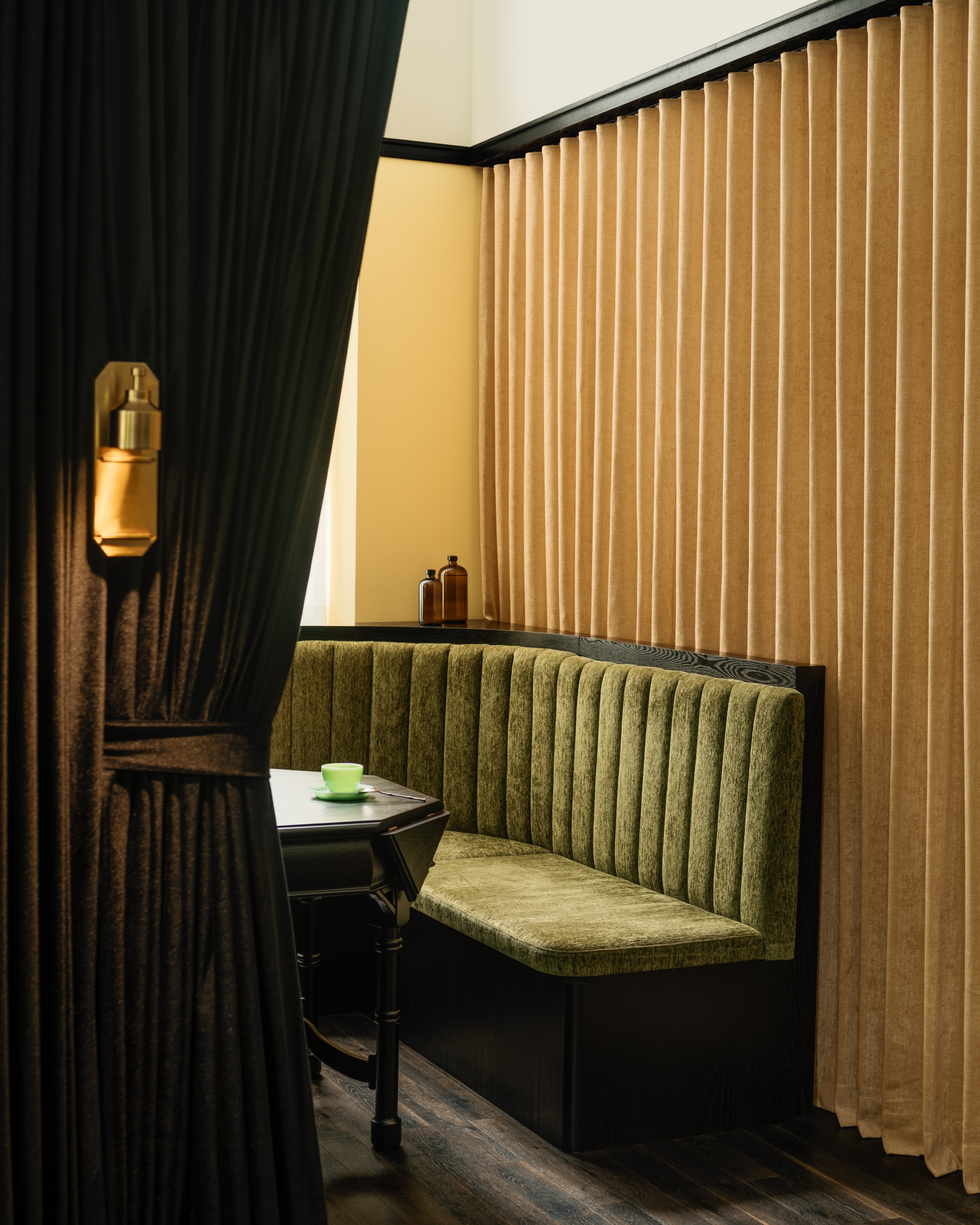
RENER's handcrafted, Art Deco-inspired façade provides a profound juxtaposition - a scene from a 1930s film inserted into the heart of a 21st-century urban landscape. The seasonal fine dining tasting menu, inspired by regional Chinese flavors and Zhou’s own travels, is complemented by custom cocktails, conscientiously crafted to deepen the narrative between food, emotion, and the design that houses them.